Vietnam
From Headlines to Hard Assets in Thai Nguyen
A recent groundbreaking for a new industrial park in Vietnam highlights the gap between foreign direct investment pledges and their real-world execution. While capital commitments make news, the complex work of securing land, permits, and talent is what truly drives growth.
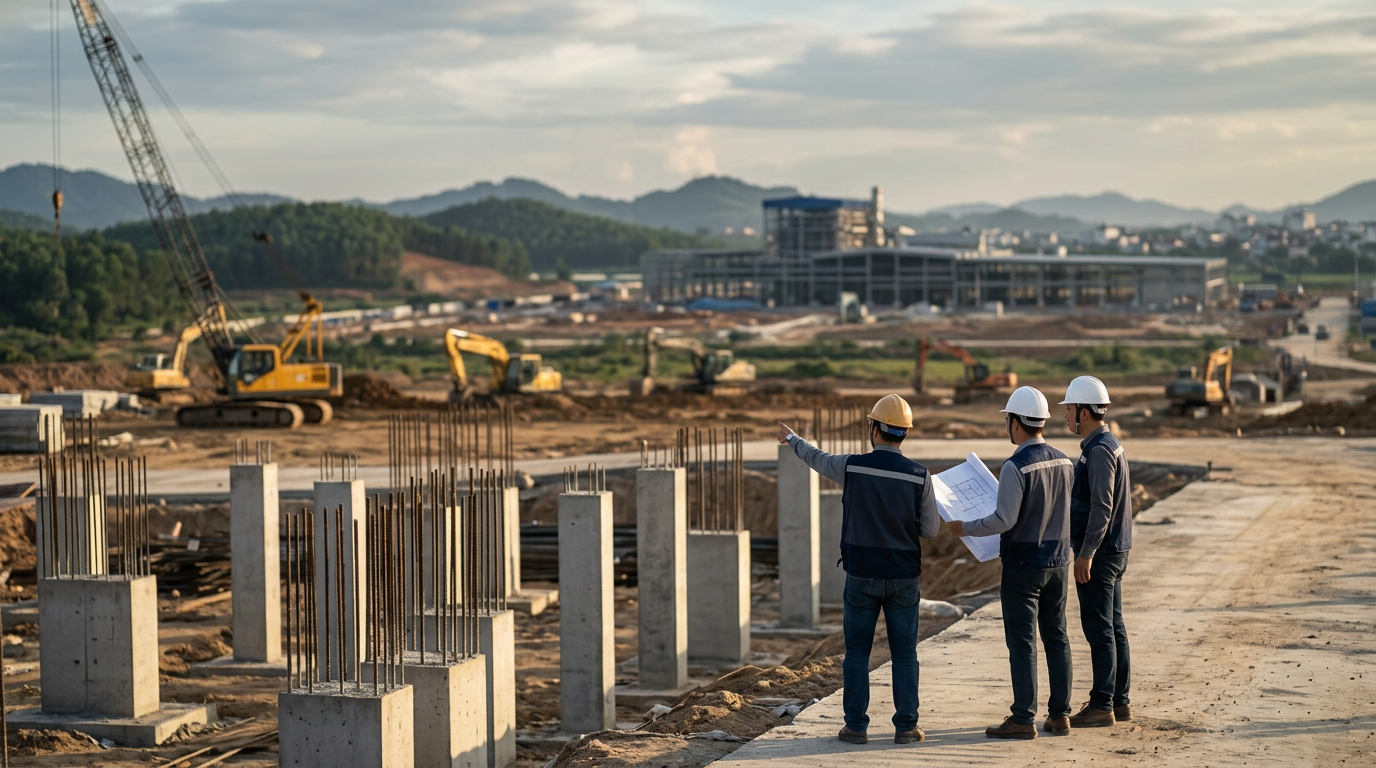
A recent groundbreaking for the Thuong Dinh Industrial Park in Vietnam's Thai Nguyen province is the latest example of the country's consistent appeal to industrial investors. As reported by VnExpress, Stavian Group has commenced work on the nearly 128-hectare site, a project with a total planned investment of approximately $95 million.
This development aligns with a broader pattern of foreign direct investment flowing into Vietnam, drawn by its workforce, strategic location, and integration into regional supply chains. The project in Thai Nguyen, a province that has become a significant industrial hub, is one of many such announcements that signal confidence in the Vietnamese economy.
From Announcement to Operation
Foreign direct investment announcements generate positive headlines, but the journey from a press release to a fully operational facility is long and complex. As the book "ASEAN Rising" notes, the conversion of investment pledges into realized projects depends on mastering the intricate details of execution. The headline figure of $95 million for the Thuong Dinh park is a commitment; its impact will be measured by the successful navigation of local regulations and logistics.
For any industrial project, the critical path involves securing land titles, obtaining necessary permits, ensuring reliable power and utility supplies, and assembling a skilled workforce. These are the tangible, on-the-ground factors that determine whether an investment materializes as productive capacity. While "FDI announcements travel quickly," the actual flow of capital and creation of jobs is tied to this slower, more methodical process.
The Role of Institutions
The ability to translate large-scale investment interest into economic depth is a function of institutional quality. Effective institutions provide a clear and predictable framework for investors, streamlining the process from initial investment approval to final commissioning. They ensure that regulations are applied consistently and that the necessary infrastructure is in place to support new industrial activities.
Vietnam has made significant strides in improving its investment climate, which is reflected in the steady stream of projects like the Thuong Dinh industrial park. The success of this and other similar projects depends on the continued ability of provincial and national bodies to manage the complex interplay of land use, infrastructure development, and labor market needs. The institutional capacity to manage these elements efficiently is what turns a country's scale into a durable economic advantage.
What to watch: The pace of tenant signings and the types of industries that locate in the Thuong Dinh Industrial Park will be a key indicator of its success. Observers should also monitor the project's timeline against its stated completion goals, as this will offer insight into the efficiency of project execution and the health of the broader industrial real estate market in northern Vietnam.