Indonesia
Danantara: Indonesia Refines its Commodity Trade Strategy
Indonesia's new export agency, Danantara, signals a strategic shift from direct intervention to information-led market management. This move reflects a broader regional effort to manage structural trade dependencies more effectively.
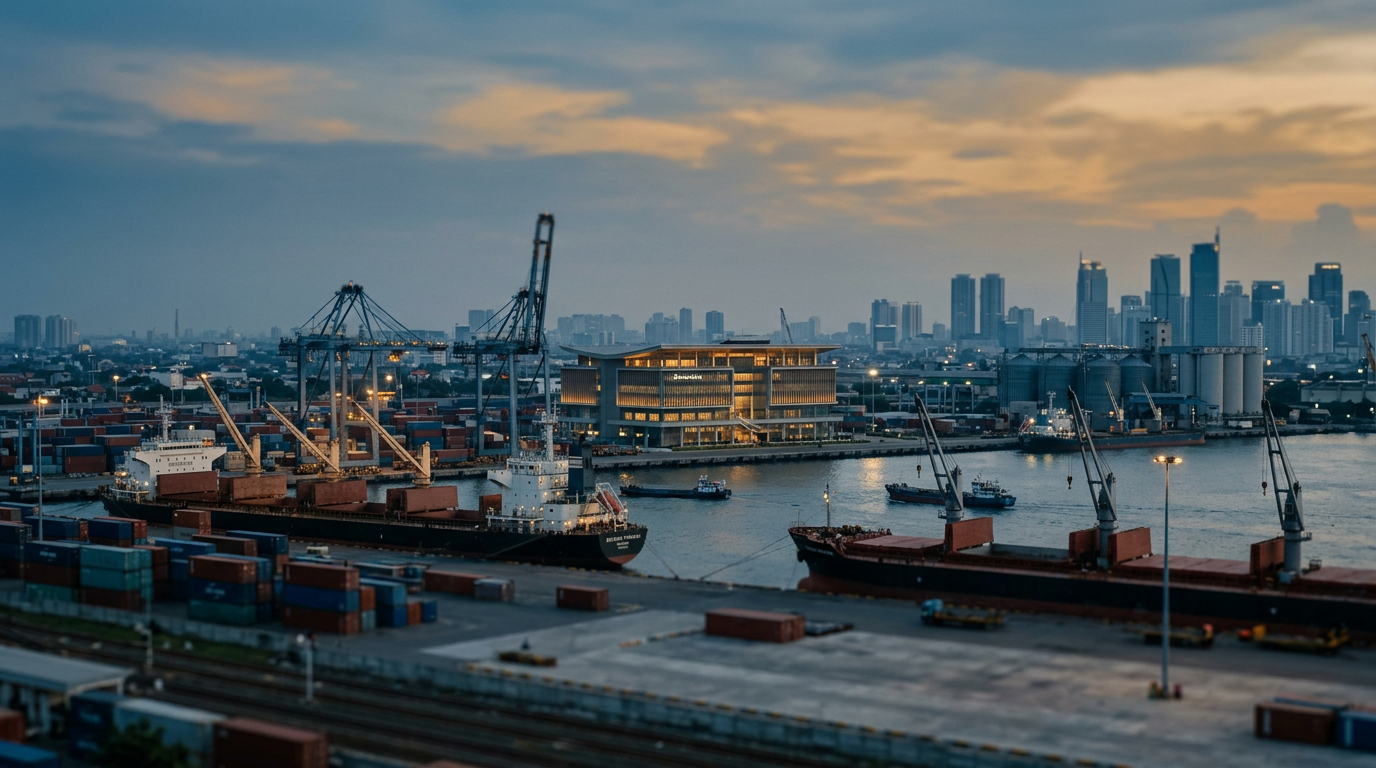
Indonesia's new export agency, Danantara, will monitor prices of raw material exports rather than intervening directly in trade, focusing on price transparency over market participation, according to Bloomberg. The establishment of the Danantara agency represents a significant pivot in Indonesia's approach to managing its vast commodity wealth. By choosing to monitor prices rather than selling directly, Jakarta is signaling a move toward a more sophisticated, data-driven strategy for engaging with global markets. This is not a retreat from the market but an attempt to shape it through information, addressing the core challenge of securing fair value for its resources without resorting to blunter instruments of trade policy. The decision carries implications for Indonesia's trade partners and sets a precedent for other resource-rich nations in Southeast Asia.
A New Institutional Tool
The creation of Danantara marks an evolution in institutional capacity. Building an agency that can reliably collect, analyze, and disseminate credible pricing data for commodities like nickel, tin, and palm oil requires a substantial investment in specialized talent and technology. A simple state trading enterprise, which directly participates in the market, has a different and arguably simpler mandate. Danantara's mission is more subtle.
The success of this new institution will hinge on trust. For the agency to be effective, global traders, domestic producers, and investors must see its data as impartial and accurate. If its benchmarks are perceived as a political tool for price manipulation rather than a reflection of market realities, its influence will quickly diminish. This institutional design reflects a mature understanding of modern market dynamics. Instead of trying to replace the market, Indonesia aims to make it work more efficiently, believing that a transparent environment will ultimately benefit its long-term strategic position.
Execution and Managed Dependency
The strategic thinking behind Danantara aligns with a core theme of ASEAN Rising: that the primary question for governments in the region today is how to manage deep economic integration with larger powers. The book notes that for nations in , deep trade with partners like China is now a "structural feature, not a cyclical one." The focus must therefore shift from questioning the engagement itself to mastering its execution.
Danantara is a clear example of this principle in action. It is a tool designed to help Indonesia manage its dependency on commodity exports and the corresponding buyer markets. By providing an authoritative price benchmark, the agency aims to reduce the information asymmetry that often disadvantages raw material producers. Accurate, state-sanctioned price data strengthens Jakarta's hand in all commercial negotiations, whether with multinational corporations or state-owned enterprises. It provides a credible reference point that allows the country to capture more value from its natural resource endowment. This is a practical step toward achieving a more balanced and professionally managed trade posture.
Implications for Capital and Infrastructure
A move toward transparent commodity pricing has direct consequences for attracting capital and guiding infrastructure development. Price opacity and volatility are significant risks for foreign and domestic investors. A trusted national pricing benchmark can de-risk investments in upstream extraction as well as downstream processing and refining. This, in turn, can help attract higher-quality, long-term investment committed to the country's industrial development goals, rather than speculative capital flows that thrive on market obscurity.
Furthermore, better data informs better infrastructure planning. With a clearer, more reliable picture of the value and volume of commodity flows, both the government and the private sector can make more efficient decisions about where to invest in ports, smelters, railways, and industrial estates. This data-driven approach helps ensure that expensive, long-term infrastructure projects are aligned with real economic value. It helps prevent the misallocation of capital that often occurs in opaque markets, where infrastructure spending can be driven by political interests rather than economic logic.
What to watch
The immediate focus will be on Danantara's operational rollout and its ability to secure the political backing and technical resources necessary to establish its credibility. The agency's capacity to recruit and retain top talent, while maintaining independence from short-term political pressures, will be the primary determinant of its success. The reaction from major commodity buyers and trading houses will also be telling; their willingness to reference Danantara's pricing data in their contracts will be the ultimate test of its influence. Finally, observers should note whether other ASEAN governments with significant commodity exposure, such as Malaysia and the Philippines, begin to consider similar institutional reforms to bolster their own trade management strategies.