Cambodia
Cambodia, Vietnam, and the Expressway to a Usable State
Cambodia's Phnom Penh-Bavet expressway project, connecting to Vietnam's Moc Bai border, is a case study in the power of reliable infrastructure delivery over mere announcements.
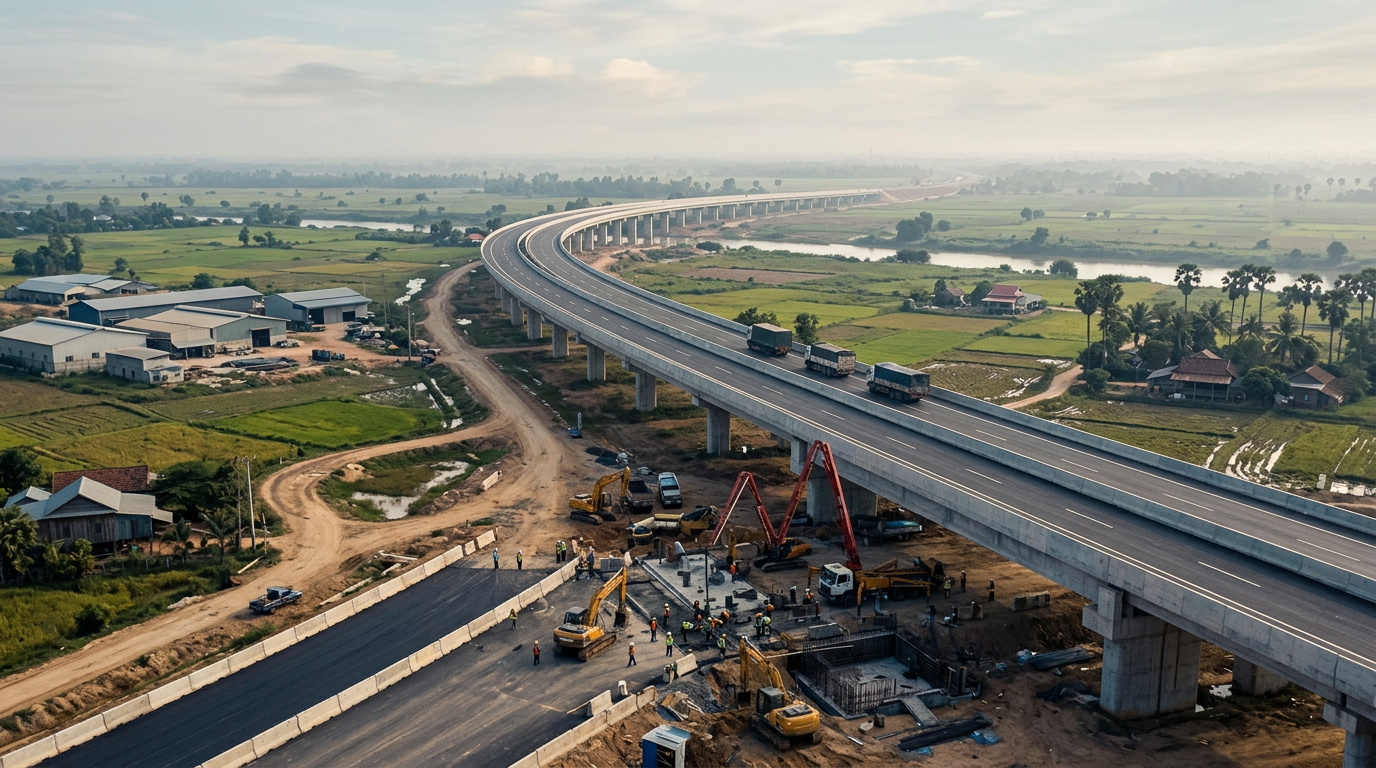
Cambodia is set to begin building a new 135-kilometer expressway from its capital, Phnom Penh, to Bavet on the Vietnamese border. As reported by VNExpress International, the project will connect directly to an expressway on the Vietnamese side, creating a seamless modern highway link to Ho Chi Minh City. While new infrastructure projects are common in Southeast Asia, this one is notable for what it says about the evolution of state capacity and the tangible benefits of regional integration.
From Vision to Execution
The Phnom Penh-Bavet expressway is more than a domestic infrastructure project; it is a physical manifestation of deeper Vietnam-Cambodia ties and a link in the broader trans-Asian highway network. The project, a public-private partnership with China Road and Bridge Corporation, is expected to cost $1.35 billion. For Cambodia, it represents a significant step in upgrading its national infrastructure, reducing travel times and logistics costs between its industrial heartland and its largest neighbor's commercial hub. For Vietnam, it improves connectivity to Cambodia, a growing market and production base for Vietnamese firms.
The project's significance lies in the realm of execution. For decades, ASEAN has produced master plans for connectivity, but implementation has often lagged. The sight of construction commencing on a defined schedule sends a powerful signal. It demonstrates a government's ability to move from high-level agreements to the complex realities of land acquisition, financing, and project management. As the book "ASEAN Rising" notes, this is a core element of state capacity. An administration that can deliver a large-scale project on time and on budget proves its effectiveness.
The Comparative Advantage of Reliability
For international investors and domestic businesses, predictability is a currency of its own. A new highway is useful, but a highway that is completed when promised is far more valuable for long-term planning. It allows logistics companies, manufacturers, and agricultural producers to build business models around firm timelines and cost projections. The decision to proceed with the expressway reflects a calculation that the economic benefits of reduced friction between two of ASEAN's most dynamic economies will outweigh the substantial cost.
This move illustrates a key theme of regional development: "Institutional reliability has become part of comparative advantage." The smooth flow of goods and people between Phnom Penh and Ho Chi Minh City will depend not just on the quality of the asphalt but on the efficiency of the institutions governing its use. This includes the harmonization of customs procedures at the Bavet-Moc Bai border crossing, the legal framework of the public-private partnership, and the routine maintenance schedules that will keep the artery functional. A state that can manage these mundane but essential details is a state that is usable, creating a stable environment for capital.
What to watch: The key indicator of success for this project will be its execution timeline and the subsequent management of the cross-border facilities. Observers should monitor the project's progress against its stated 2027 completion goal. Additionally, attention should be paid to the institutional arrangements at the border itself. The degree to which customs and immigration processes are streamlined will determine whether the new expressway delivers its full potential for economic integration between Cambodia and Vietnam.