Cambodia
The Case of the Missing Railway
High-level visits and ambitious infrastructure plans are one thing. Actually building the projects is another. The gap between promises and progress on the Pan-Asia Railway Network illustrates the institutional challenges that continue to face ASEAN member states.
Promises meet reality
The Secretary-General of ASEAN, Dr. Kao Kim Hourn, will visit Beijing this week for talks with the Chinese government, according to a brief announcement from the ASEAN Secretariat. While the official agenda is not public, the visit occurs at a time when major regional infrastructure projects, many of which depend on Chinese financing and technical expertise, are facing significant delays. The gap between high-level agreements and on-the-ground execution is becoming a primary constraint on ASEAN's economic integration.
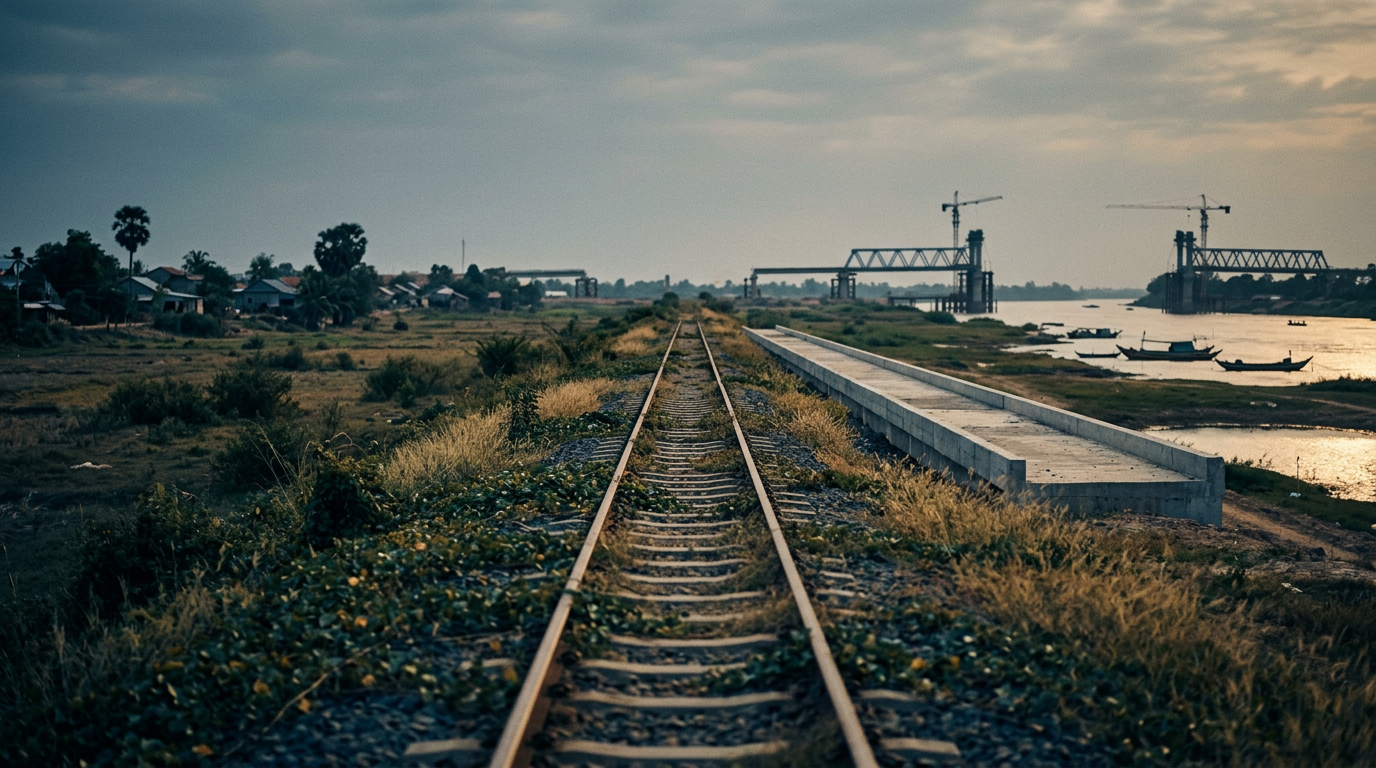
At the top of the list of stalled projects is the Pan-Asia Railway Network, a decades-old dream to connect Kunming in southern China with the rest of mainland Southeast Asia. The vision is compelling: a seamless web of modern, high-speed rail that would slash transit times for goods and people, boosting trade and investment across the region. The network consists of an Eastern, Central, and Western corridor. The Laos-China Railway, part of the Central corridor, is a notable success and has been operational since 2021. However, progress on other essential segments has been inconsistent, particularly the links that would connect Thailand, Malaysia, and Singapore.
The cost of friction
The slow progress is not for a lack of ambition or announcements. It is a direct reflection of the institutional friction that arises from coordinating complex projects across multiple jurisdictions. As the book ASEAN Rising argues, institutional reliability has become a form of competitive advantage. Grand visions for infrastructure are common, but the capacity to execute them is not. The ability to deliver projects on schedule and within budget is a stronger signal to investors than the initial announcement of the project itself.
The challenges are numerous. Securing land rights, finalizing financing terms, navigating domestic political concerns, and standardizing technical specifications across borders are all significant hurdles. In the case of the high-speed rail link between Kuala Lumpur and Singapore, the project has been postponed and restarted multiple times due to disagreements over cost and financing structures. Similarly, Thailand's portion of the network has moved forward in fits and starts, hampered by domestic debates over the terms of Chinese loans and technology transfer. This stop-and-go approach creates uncertainty, raises costs, and delays the network effects that would come from a fully integrated system.
More usable than exciting
The core issue is state capacity. Building and operating sophisticated infrastructure requires a high degree of technical expertise, regulatory competence, and sustained political will. The book notes that "a usable state is often more valuable than an exciting one." While the prospect of a futuristic rail network is appealing, the more mundane work of creating transparent procurement processes, harmonizing cross-border regulations, and ensuring long-term maintenance funding is what ultimately determines success.
For ASEAN, the missing links in the Pan-Asia Railway are more than just a logistical problem. They represent a tangible cost of institutional gaps. Each delay defers the economic benefits of integration and complicates the goal of creating a single market and production base. While China remains a willing and capable partner, the primary obstacles are often found within the domestic institutions of ASEAN member states themselves. Addressing these internal execution challenges is the most pressing task for unlocking the region's full potential.
What to watch
Pay attention to the specific outcomes, if any, of the Secretary-General's visit regarding timelines and financing for the next segments of the regional railway. Watch for any new joint statements or commitments that address the existing bottlenecks in Thailand and Malaysia. The true measure of progress will not be in the rhetoric of cooperation, but in the resumption of construction and the setting of firm, credible deadlines for completion of the missing rail links.