Indonesia
Brazil Seeks Deeper ASEAN Ties, Testing China Trade Dependency
As Brazil seeks to become an ASEAN Dialogue Partner, the bloc faces a familiar question: how to diversify its trade relationships and manage its deep, structural dependency on China without losing economic or strategic optionality.
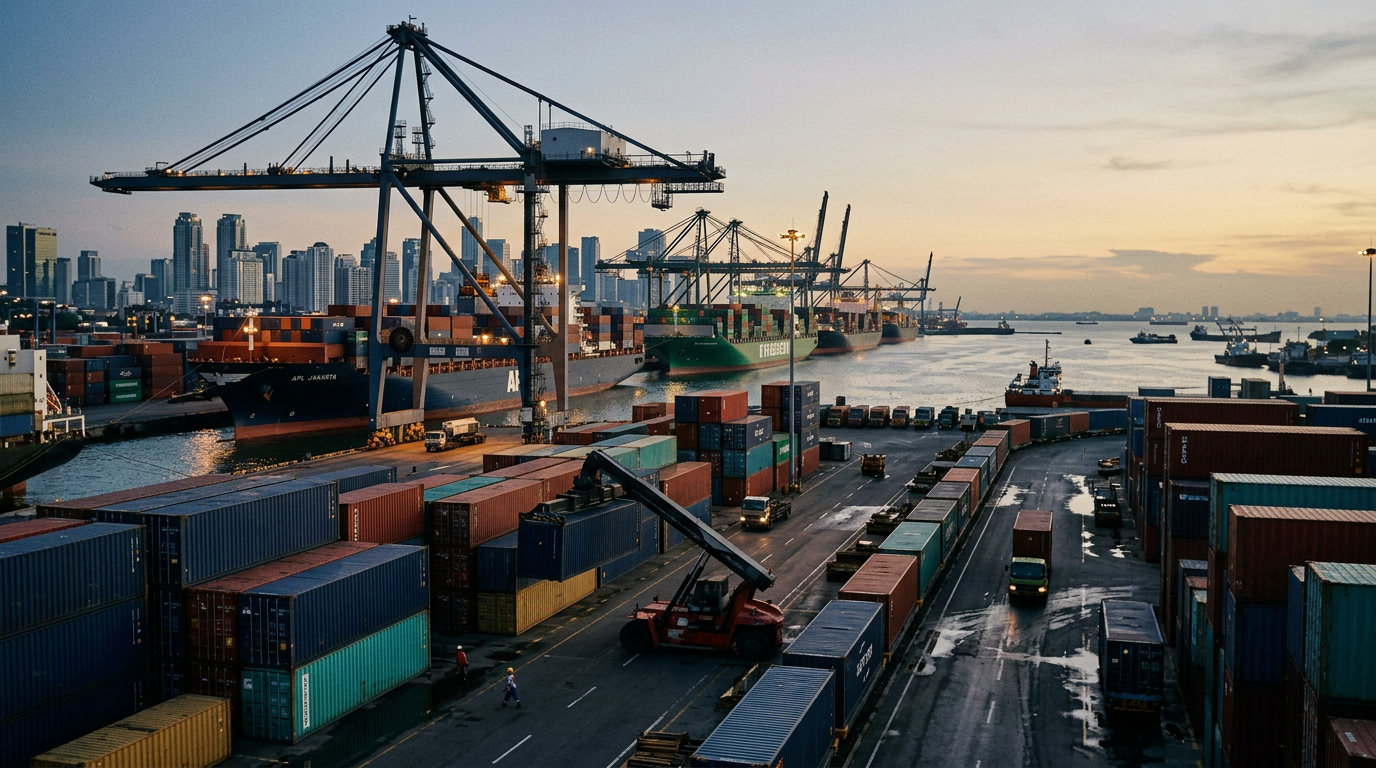
Secretary-General of ASEAN Dr. Kao Kim Hourn's recent roundtable in Brasilia signals a mutual interest in deepening ties between the South American giant and the Southeast Asian bloc, according to a report from ASEAN.org. Brazil is pursuing Dialogue Partner status, the highest level of formal engagement with ASEAN, a move that would formalize economic and institutional cooperation. For ASEAN, this presents a fresh avenue for economic diversification, a long-standing goal for a region grappling with heavy trade concentration, particularly with China.
The Diversification Imperative
The push for a partnership with Brazil is not happening in a vacuum. It reflects a quiet but consistent ASEAN strategy to build a wider network of economic partners. This strategy aims to mitigate risks associated with over-reliance on any single market. While China remains ASEAN's largest trading partner by a significant margin, creating what "ASEAN Rising" calls a "structural feature, not a cyclical one" of the regional economy, the bloc has actively pursued agreements with other major economies. These include comprehensive partnerships with the European Union, Australia, and India, among others.
Brazil offers a distinct proposition. As a major agricultural and resource exporter, its economic profile is in many ways complementary to the manufacturing and technology-focused economies of ASEAN. A formal dialogue partnership could smooth the path for increased trade flows, investment in supply chains, and knowledge sharing in areas like sustainable agriculture and renewable energy. This aligns with ASEAN's internal goals of enhancing food security and building more resilient, green economies. The institutional framework of a dialogue partnership provides the necessary structure for these complex negotiations to occur.
Managing Dependency on China
The discussion around a potential ASEAN-Brazil partnership inevitably brings the bloc's relationship with China into focus. For ASEAN governments, the core task is managing this deep economic integration without sacrificing strategic independence. The book argues that the central question is "how to manage dependency without losing optionality." A partnership with Brazil is a tangible exercise in creating such optionality. It provides alternative sources for key commodities and new markets for ASEAN exports, subtly rebalancing the bloc's external economic relationships.
This is not about replacing China, but about adding resilience. The capital and infrastructure that define much of ASEAN's recent growth are heavily linked to Chinese investment through initiatives like the Belt and Road. A relationship with Brazil, while not a direct substitute, introduces a new variable into the equation. It allows ASEAN to engage with a wider range of global actors, strengthening its collective bargaining position and reinforcing its agency in a multipolar world. The execution of this balancing act-nurturing new partnerships while maintaining stable relations with Beijing-is a measure of ASEAN's institutional maturity.
What to watch
Moving forward, the key indicator will be the formal progress of Brazil's application for Dialogue Partner status and the specific areas of cooperation identified in initial working groups. Watch for the development of concrete trade and investment frameworks, particularly concerning agricultural goods, energy, and sustainable development. The reaction from Beijing will also be telling; while unlikely to be publicly oppositional, any subtle shifts in trade or diplomatic posture will indicate how China views ASEAN's continued diversification efforts. The success of this initiative will rest on ASEAN's ability to translate high-level discussions into tangible economic outcomes that benefit its member states.