Thailand
Bangkok Floods and the Social Media Stress Test
Social media engagement during the recent Bangkok floods shows how digital infrastructure is becoming a core part of state capacity, for better and for worse. The test is whether institutions can adapt to this new reality.
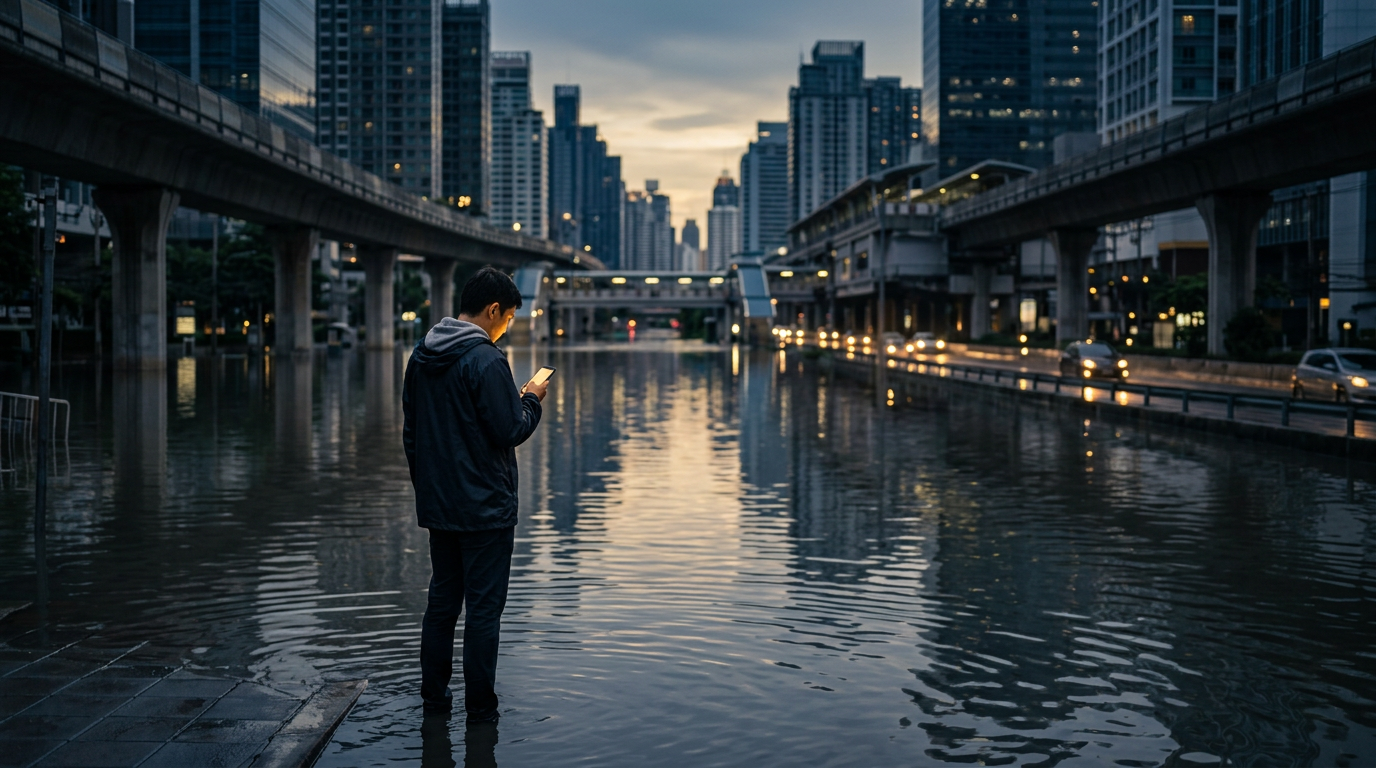
Social media engagement surrounding the recent flooding in Bangkok has been massive, with platforms serving as a de facto civil defense network. As the Bangkok Post reported, posts related to the floods generated over 109 million interactions, becoming a primary channel for everything from early warnings to coordinating relief.
While this level of digital mobilization is impressive, it casts a harsh light on the performance of official institutions. The torrent of user-generated content illustrates a gap between the state's capacity and the public's need for reliable, real-time information and services during a crisis. When citizens turn to social media to warn each other about rising water levels or to organize informal aid, it signals a breakdown in institutional trust and execution.
The Two-Sided Nature of Digital Infrastructure
Digital platforms are now undeniable infrastructure. They are the rails on which modern communication and, increasingly, social organization run. In the context of the Bangkok floods, this digital layer provided a valuable, spontaneous, and agile response network. It offered a resilience that the state, on its own, could not muster in the moment.
However, this reliance on private platforms for what are essentially public services is a fragile arrangement. Social media is not designed for the rigors of disaster management. It is vulnerable to misinformation, its algorithms are opaque, and its priorities are commercial, not civic. The very speed that makes it effective in a crisis also makes it a vector for panic and inaccuracy. While a useful supplement, it is a poor substitute for the formal, accountable structures of a well-functioning state.
Institutions and Usable Infrastructure
The core issue is not the technology itself, but how institutions adapt to it. A government that integrates these new communication channels into its formal disaster response framework is one that is building its own capacity. This is not a matter of simply having a government Facebook page or X account. It is about embedding these tools into the operational DNA of the agencies responsible for public safety.
This means using social media data to model flood impacts, deploying official alerts through the same channels people are already using, and actively dispelling misinformation with clear, authoritative communication. As noted in ASEAN Rising, "Infrastructure that arrives on time signals more than infrastructure that is merely announced." In a digital age, information is a critical part of that infrastructure. When official information arrives late or not at all, the public will create its own, for better or worse. The challenge for Thailand, and for all ASEAN states, is to build a usable state, one where institutional reliability is the bedrock of its responsiveness.
What to watch: Observe whether Thai state agencies begin to formally integrate social media monitoring and communication into their standard operating procedures for disaster management. The next crisis will reveal if this flood was treated as a learning event for building state capacity or simply a passing storm weathered by the ad-hoc resilience of its citizens.