Timor-Leste
After the Expo, the Execution
The China-ASEAN Expo is a fixture on the regional calendar. But trade and investment depend less on the vision than on the execution. Trust in institutions and infrastructure is what separates a usable state from an exciting one.

The Secretary-General of ASEAN, Dr. Kao Kim Hourn, recently toured the pavilions of the 23rd China-ASEAN Expo (CAEXPO) in Nanning, China. The annual event is a fixture on the regional calendar, intended to deepen trade and investment ties between the ten-member bloc and its northern neighbor. According to a report from the event organizer, this marked his fourth appearance at the expo, a sign of its diplomatic continuity. Source
Grand expositions and high-level meetings are a staple of regional diplomacy. They produce memoranda of understanding and ambitious joint statements. While these events successfully signal intent, they have less to say about the capacity of the parties to follow through. The long-term value of these agreements depends entirely on what happens after the signing ceremonies are over.
Institutions and Infrastructure
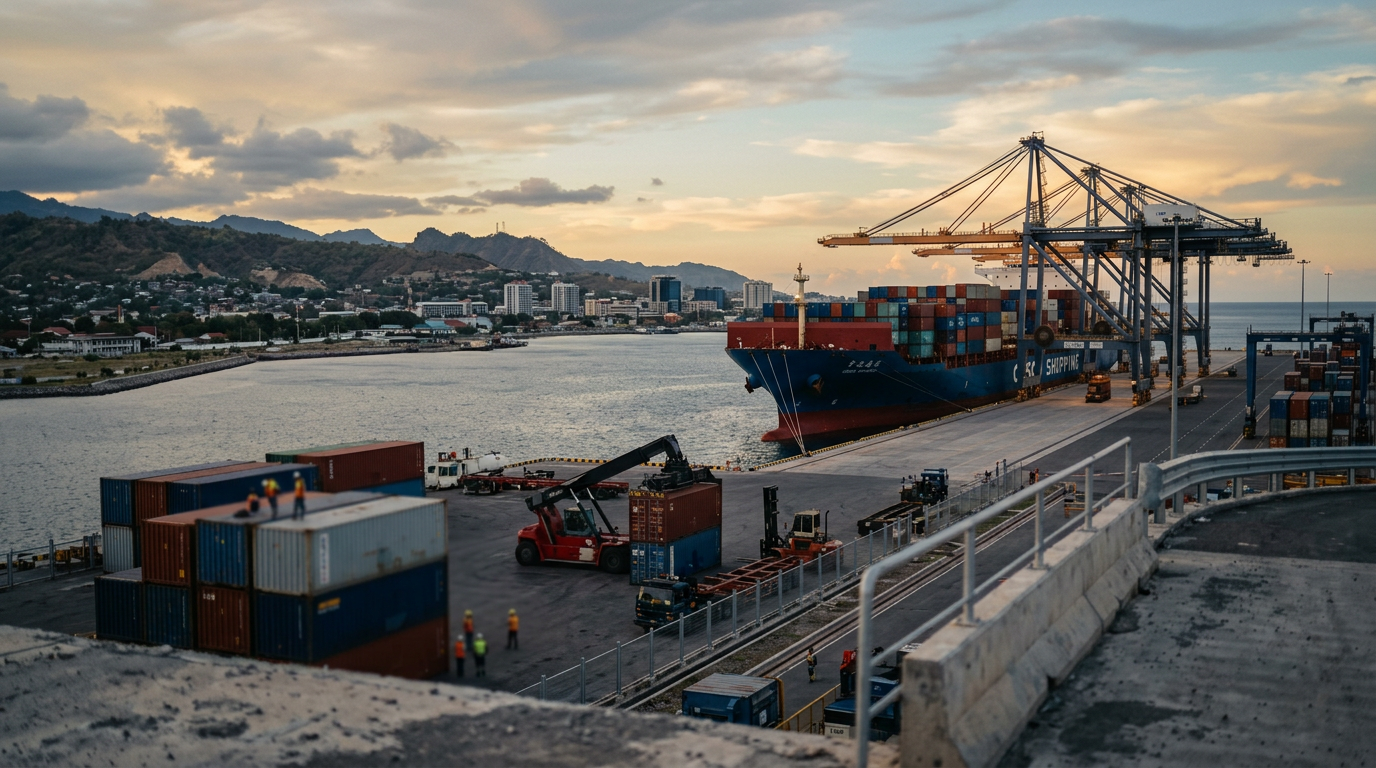
The gap between announcement and delivery is a familiar story in regional infrastructure. For years, investors and development banks have pointed to a pipeline of projects that, if completed, would improve connectivity, lower trade costs, and raise productivity. But many of these projects have been slow to start or have stalled altogether. The reasons are complex, involving everything from land acquisition and permitting to financing and political risk.
This is where institutional quality becomes a core economic factor. As the book "ASEAN Rising" notes, "Institutional reliability has become part of comparative advantage." A government that can reliably manage a complex infrastructure tender, for example, has an edge over a government that cannot. A predictable regulatory environment, a competent civil service, and a trusted legal system for resolving disputes are not just matters of good governance. They are economic assets. They lower the cost of doing business and reduce the friction that slows down investment.
From Announcement to Advantage
Translating the potential of an event like CAEXPO into tangible economic gains requires a focus on the mechanics of execution. For ASEAN members, the challenge is to build state capacity that can absorb and effectively deploy the capital and technology that China and other partners offer. This is not about generating excitement, but about building functional systems. A usable state that delivers projects on schedule is more valuable to investors than one that only offers a compelling vision.
This applies across sectors. In manufacturing, it means having industrial parks with reliable power and logistics. In the digital economy, it means having data protection laws that are both clear and consistently enforced. For agriculture, it means having sanitary and phytosanitary (SPS) standards that align with export markets and can be verified by a trusted authority. In each case, the underlying theme is the same: the quiet work of building institutions is what turns opportunity into advantage.
What to watch
The aftermath of this year's CAEXPO will provide clues about progress. Observers should track the conversion of specific memoranda of understanding into financed projects. The pace of implementation for ongoing infrastructure initiatives, such as those under the Master Plan on ASEAN Connectivity (MPAC) 2025, will also be a key indicator. Pay attention not to the size of the initial announcements, but to the flow of capital, the start of construction, and the steady, unglamorous work of regulatory reform. This is where the real economic story of the region is being written.