Vietnam
Vietnam's Trade Diplomacy and the ASEAN Hedging Imperative
Vietnam's reassurance to the US over industrial capacity highlights a structural challenge for the entire region: managing deep economic ties with China while navigating US pressure. This is less about choosing sides and more about building institutional trust.
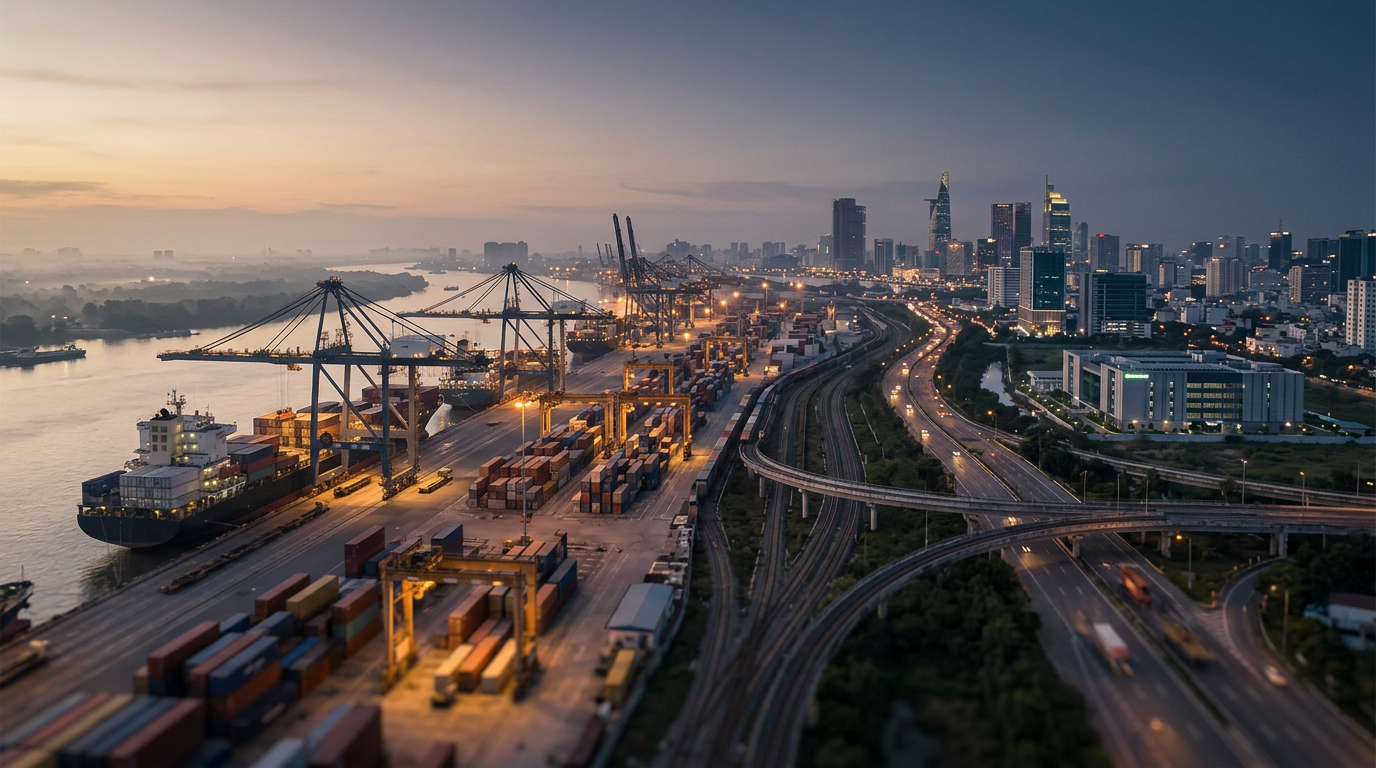
Vietnam's Prime Minister has stated the country does not have a policy of creating excess industrial capacity, a direct response to planned tariff actions from the United States, according to Reuters. The statement aims to soothe American concerns that Chinese goods are being funneled through Vietnam to circumvent US tariffs. The episode is a microcosm of the tightrope that governments across Southeast Asia must walk. As Washington and Beijing remain locked in economic competition, nations like Vietnam find themselves in a delicate position, balancing their integration into China-centric supply chains with their strategic and commercial relationships with the United States. This is not a temporary geopolitical squall but a long-term structural reality that demands sophisticated statecraft.
Overcapacity and Interdependence
Washington's anxiety is not unfounded. The deep integration of ASEAN economies with China means that shifts in production and trade flows are inevitable. As the book ASEAN Rising notes, for the region's economies, "trade depth with China is now a structural feature, not a cyclical one." The presence of Chinese capital and manufacturing inputs across Southeast Asia means that any US policy aimed at Chinese industrial output will invariably affect its ASEAN partners.
Vietnam's proactive diplomacy is an acknowledgment of this fact. The government's statement is an attempt to differentiate its own industrial policy from that of China and to signal that it is a responsible actor in the global trading system. It is a declaration that Vietnam seeks to build genuine production capacity, not simply act as a conduit for transshipped goods. The core of the issue lies in proving that distinction.
A Test of Institutions
This situation moves beyond mere trade statistics into the realm of institutions and trust. A verbal assurance from a head of government is the first step, but durable trust is built on verifiable evidence. For Vietnam, this means having the institutional capacity to monitor, regulate, and report on its industrial base and export origins. It requires robust customs enforcement, transparent data sharing, and a legal framework that can hold non-compliant firms accountable.
This is a measure of governmental execution. The challenge, as outlined in ASEAN Rising, is for the region's governments to manage their profound economic dependency on China without sacrificing their strategic and economic optionality. By engaging directly with the US on the specifics of its industrial policy, Vietnam is attempting to preserve its economic maneuverability. Strong domestic institutions are the primary tools for this task, as they provide the credibility needed for such diplomatic assurances to be effective.
The Role of Capital and Infrastructure
The controversy over excess capacity is also intrinsically linked to capital and infrastructure. A significant portion of the industrial parks and manufacturing facilities across the region has been developed with or is sustained by Chinese investment. This infrastructure is the bedrock of the modern supply chains that have powered Southeast Asia's growth. However, this also means that the region's economies are sensitive to disruptions in the US-China relationship.
US tariffs, or the threat of them, introduce a layer of political risk for investors, complicating decisions about where to allocate capital. For Vietnam and its neighbors, the imperative is to direct investment, both foreign and domestic, toward building more resilient and diversified industrial ecosystems. This involves fostering local talent and promoting research and development to move up the value chain, reducing reliance on any single country for inputs or end markets. It represents a strategic evolution from being a link in a supply chain to becoming a hub of industrial innovation.
What to watch
Moving forward, the key indicators to monitor will be the concrete actions that follow this diplomatic statement. Observers should watch for any new regulations or enforcement mechanisms that Vietnam puts in place to enhance supply chain transparency. A focus will be on how US customs authorities treat goods from Vietnam and whether they issue specific guidance on rules of origin. Finally, note if other ASEAN governments adopt a similar posture of proactive communication with Washington to pre-emptively address concerns about their own industrial links to China.