Vietnam
Vietnam's Semiconductor Ambition and the Test of Execution
A new USD500 million Meiko semiconductor plant in Vietnam is a positive sign, but the real test lies in translating such announcements into operational reality through institutional strength, infrastructure development, and talent cultivation.
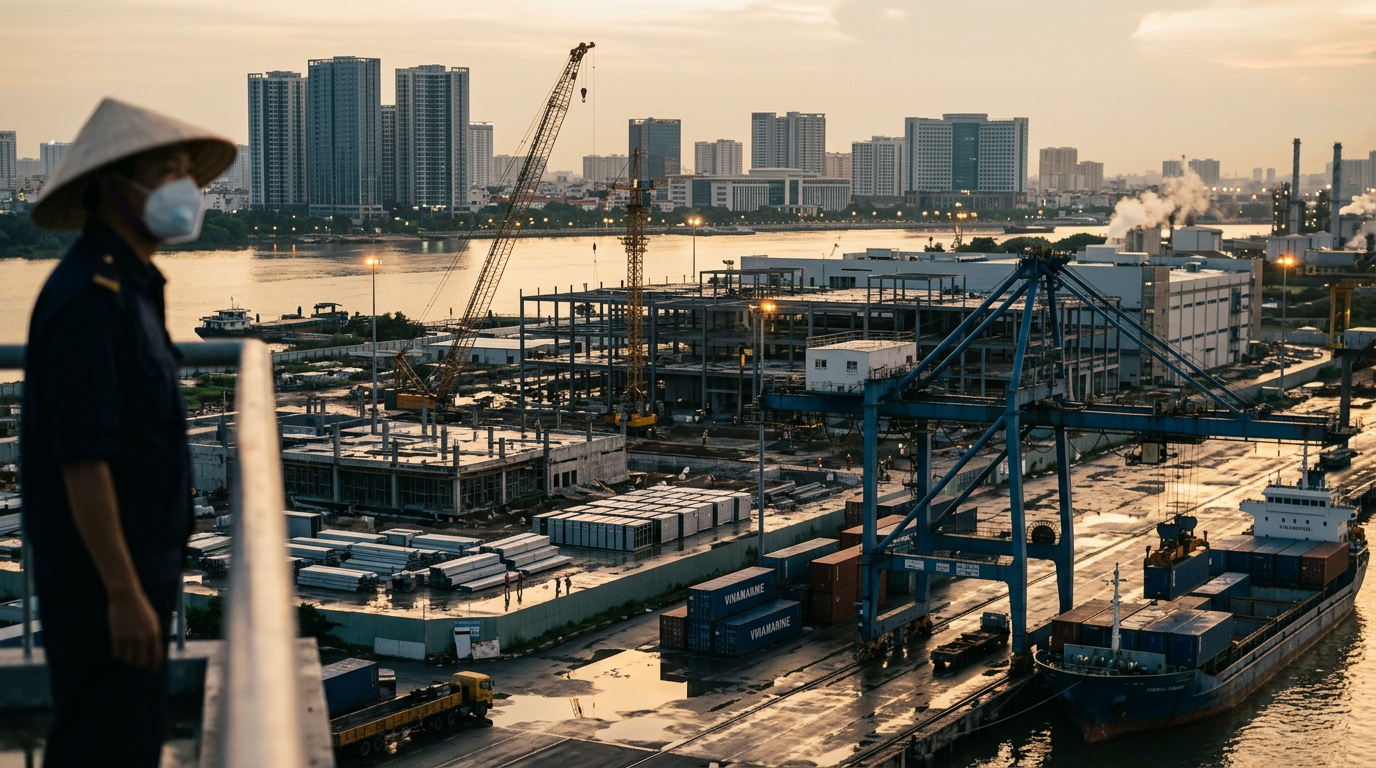
The recent start of construction on a USD500 million Meiko Electronics semiconductor facility in Vietnam's Phu Tho province is a notable event in the country's push to climb the electronics value chain. The investment by the Japanese firm, as reported by VietnamPlus, aims to produce printed circuit boards (PCBs) and eventually branch into semiconductor assembly, marking a significant addition to the nation's industrial base.
This development moves a major foreign direct investment (FDI) from a paper announcement to a physical asset. It also illuminates a central theme of economic development across the Association of Southeast Asian Nations (ASEAN) : the gap between ambition and execution. As detailed in the book ASEAN Rising, headline-grabbing investment pledges are one thing; turning them into productive, operational capacity is another entirely. The book notes that scale is only an advantage when effective institutions can convert it into deep, investable markets. The journey from a press release to a functioning factory is long, and as the book states, "Realised flows depend on the slower work of land, permits, power and talent reaching the ground."
The Execution Front
The Meiko project serves as a case study for this "slower work." The success of this half-billion-dollar facility rests not just on the capital committed but on the institutional competence that surrounds it. This includes the national government's ability to maintain a stable and predictable policy environment for high-tech investors and the capacity of provincial-level bodies in places like Phu Tho to manage the intricate logistics of industrial development.
This work involves securing land titles, processing construction and environmental permits, and ensuring reliable infrastructure connections. Each step is a test of institutional quality. For international firms operating on tight schedules and within complex global supply chains, delays and administrative friction can erode the initial investment case. How efficiently Vietnamese authorities navigate these processes for Meiko will send a strong signal to other prospective investors in the semiconductor and electronics sectors about the country's readiness to host sophisticated manufacturing operations. It is this on-the-ground execution that builds trust with foreign capital far more effectively than any investment roadshow.
Infrastructure and Talent
Beyond administrative efficiency, hard infrastructure and human capital are the bedrock of industrial capability. The Meiko plant will require a consistent and high-quality supply of electricity-a non-negotiable for advanced manufacturing. Vietnam has made substantial progress in expanding its power generation, but grid stability and the integration of renewable energy sources remain ongoing priorities. Likewise, the facility will depend on a network of roads and ports to connect it to suppliers and global markets, testing the logistical infrastructure that underpins the country's export-oriented model.
Perhaps the most defining factor will be talent. A semiconductor facility needs a workforce with specialized technical skills, from equipment maintenance to process engineering. While Vietnam has a large and youthful labor pool, the supply of experienced engineers and technicians for the semiconductor industry is finite. The Meiko investment, and others like it, will increase demand for these skills. This puts pressure on the nation's educational and vocational training systems to produce graduates who can meet the demands of a modern, high-tech factory floor. The long-term success of Vietnam's semiconductor ambitions depends on building a self-sustaining pipeline of local talent.
What to watch
Observers should monitor the tangible progress of the Meiko facility's construction against its projected 2026 completion date. Pay attention to government initiatives aimed at streamlining administrative procedures for high-tech projects and any new public or private investments in vocational training programs specifically targeting the electronics industry. The true measure of success will not be the next major FDI announcement, but the steady, methodical work of turning existing commitments into operational realities.