Vietnam
Vietnam's My Thuan 2 Bridge: A Lesson in State Capacity
The near-completion of Vietnam's My Thuan 2 bridge, after years of delays, offers a case study in the importance of reliable state institutions for delivering complex infrastructure projects and bolstering investor confidence across the region.
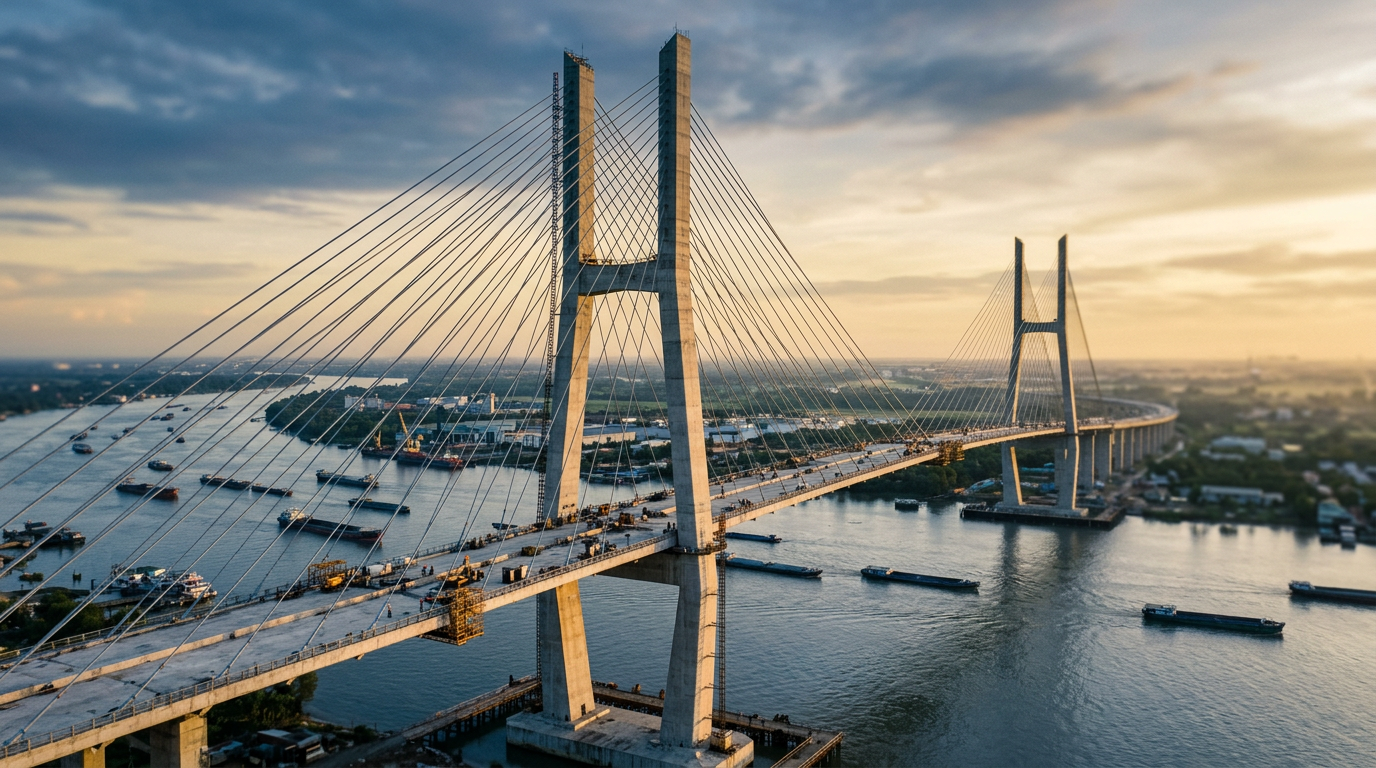
The anticipated September completion of Vietnam's My Thuan 2 bridge, a major infrastructure project on a southern expressway, offers a tangible conclusion to a project stalled for years. According to a report from e.vnexpress.net, new construction arrangements have put the bridge on track for finalization after construction had been suspended with the project 80% complete. While the opening will be a welcome development, the history of the project offers a case study in the institutional friction that can constrain national development.
The Cost of Friction
The delay of a major public works project like the My Thuan 2 bridge is more than an inconvenience for commuters. It is a visible indicator of institutional friction. Such delays increase costs, not just in direct financial terms but also in the form of diminished public trust and deferred economic benefits. For international investors and development partners, project interruptions can signal underlying issues in state capacity, from bureaucratic infighting to problems in capital allocation and project management. As detailed in ASEAN Rising, the ability to execute and deliver projects on schedule is a core component of a country's competitive advantage. A state that can reliably build what it says it will build is one that attracts and retains capital more effectively.
Infrastructure and Institutions
Infrastructure is the physical manifestation of a state's capacity. The successful completion of a complex engineering feat like a cable-stayed bridge sends a strong signal about a country's ability to manage large-scale, long-term initiatives. The resolution of the My Thuan 2 bridge's delays suggests a renewed focus within Vietnam on overcoming these institutional hurdles. The ability to renegotiate terms, allocate necessary resources, and coordinate among various state and private actors to get the project moving again is a positive sign. However, the initial long pause remains a cautionary tale. For ASEAN as a whole, the capacity to deliver on ambitious infrastructure plans is fundamental to achieving deeper economic integration and realizing the region's growth forecasts. As the book notes, "Infrastructure that arrives on time signals more than infrastructure that is merely announced."
Execution as Strategy
The story of this bridge is ultimately about the gap between ambition and execution. Announcing a multi-year national infrastructure plan is a statement of intent, but delivering those projects is a measure of capability. The Vietnamese government's ability to push the My Thuan 2 bridge over the finish line is a practical demonstration of its focus on execution. For the broader ASEAN region, which has a collective infrastructure deficit measured in the trillions of dollars, the lessons are clear. Stable, predictable, and transparent institutions are the bedrock upon which successful infrastructure development is built. Without them, even the most ambitious plans risk remaining just plans, and capital will hesitate.
What to watch
Observers of Vietnam's economic development should watch for how the government applies the lessons from the My Thuan 2 project to its larger portfolio of infrastructure initiatives, including the extensive North-South high-speed rail project. The degree to which it can streamline project management and financing, and minimize the types of delays that plagued the bridge, will be a key indicator of the country's institutional maturity and its ability to sustain high levels of economic growth. The focus will be on consistent execution rather than grand announcements.