Vietnam
Vietnam's Mekong Rail Plan Tests a Core ASEAN Premise
Vietnam announced a USD6.5 billion rail link to the Mekong Delta. The project's success hinges not just on capital, but on the institutional capacity to deliver-a core theme of regional development.
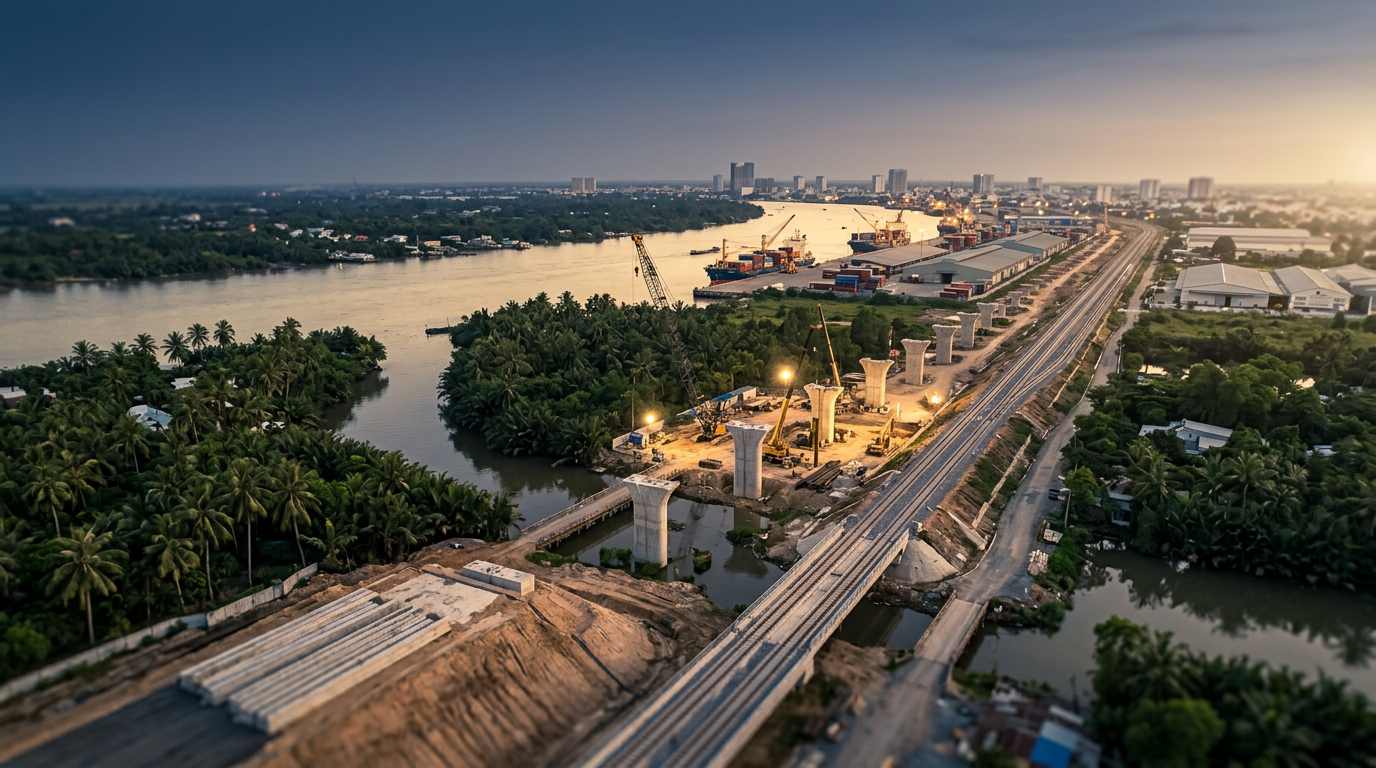
Vietnam has proposed a USD6.5 billion rail link between Ho Chi Minh City and the Mekong Delta, the region's first new railway in 70 years, according to VnExpress. The announcement of a major rail project connecting Ho Chi Minh City with the Mekong Delta is a significant statement of intent from the Vietnamese government. This is not merely a domestic infrastructure plan; it is a signal to foreign capital and a test of the state's ability to execute complex, long-term projects. The delta, a vital economic zone for agriculture and manufacturing, has long been hampered by logistical bottlenecks. The proposed railway addresses a clear economic need, but the project's true weight lies in its execution. For observers of the ASEAN region, this is a case study in the making.
A Question of Capacity
The Mekong Delta is a cornerstone of Vietnam's economy, yet its transport infrastructure has not kept pace with its productive capacity. Over-reliance on road and waterway transport has led to congestion and higher logistics costs, eroding the region's competitiveness. A modern rail link promises to alleviate these pressures, offering a more efficient and reliable corridor for goods and people moving between the country's commercial center and its agricultural heartland.
The project carries a proposed budget of USD6.5 billion, a substantial figure that will require a sophisticated approach to securing and managing capital. Most likely, this will take the form of a public-private partnership (PPP), bringing its own set of complexities. The government's ability to structure a bankable and transparent PPP agreement will be the first major test, determining whether international investors and lenders will commit to the project's multi-decade timeline. This is where state capacity moves from the theoretical to the practical. It involves the competence of government agencies to negotiate contracts, manage land acquisition, and coordinate a vast array of technical and financial inputs.
Execution Over Announcements
Grand infrastructure plans are common across Southeast Asia, but their successful completion is less so. As the book ASEAN Rising notes, the region's development is often a story of navigating the friction between ambition and execution. Institutional reliability has become a decisive factor in attracting and retaining investment. The difference between a project that is announced and one that is delivered on schedule and on budget is a measure of this reliability.
The axiom that "Infrastructure that arrives on time signals more than infrastructure that is merely announced" is a central theme. Vietnam's rail proposal has generated excitement, but its ultimate value will be determined by the steady, unglamorous work of project management and institutional coordination. A usable state, one that can follow through on its commitments, creates a stable and predictable environment for business. The successful delivery of the HCMC-Mekong Delta line would do more to build investor trust than any number of promotional summits or glossy brochures.
Building Trust Through Steel and Concrete
This project is about more than just logistics; it is an exercise in building trust. For the companies operating in the Mekong Delta, a functioning railway would provide certainty and lower operational costs. For international investors, it would serve as tangible proof of Vietnam's capacity to absorb and effectively deploy large-scale capital. For the public, it is a direct measure of the government's ability to deliver on its promises and improve economic livelihoods.
The path to completion will be fraught with challenges common to large infrastructure works: land disputes, technical hurdles, and the risk of corruption. Overcoming these requires robust institutions and a clear political will to enforce transparency and accountability. A failure to deliver, or a project bogged down in delays and cost overruns, would send a negative signal about the country's investment climate.
What to watch
The immediate items to monitor will be the release of the detailed feasibility study and the government's proposed financing structure. The specific terms offered to private partners in a PPP arrangement will be a strong indicator of the project's direction. Beyond the financing, observers should track the establishment of a dedicated project management authority and the initial progress on land acquisition, which is often the first and most difficult hurdle in realizing infrastructure ambitions of this scale.