Vietnam
Vietnam's Green Finance Move Highlights the Value of Usable States
A recent US$30 million credit facility for Vietnam's Nam A Bank from Proparco to expand green lending shows how institutional reliability is becoming a key part of comparative advantage in Southeast Asia.
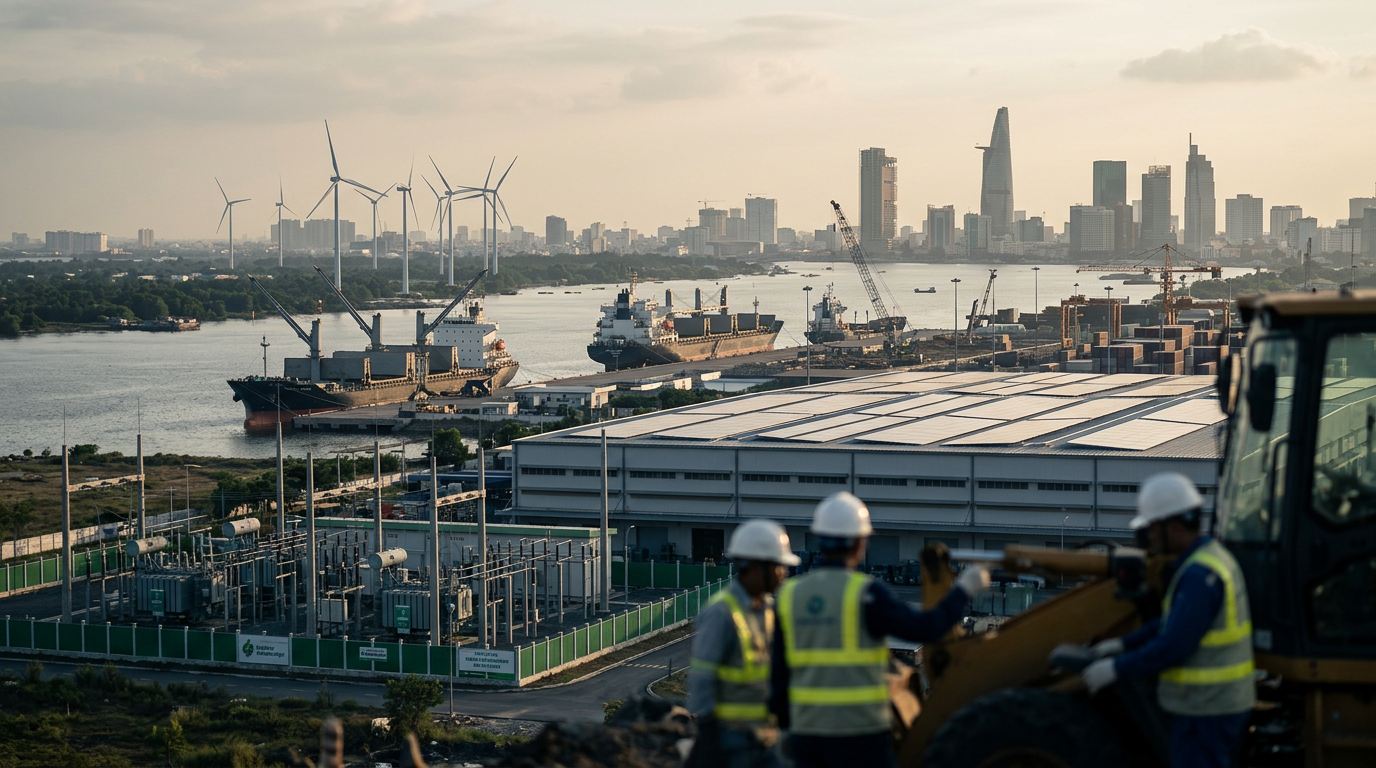
Vietnam's Nam A Bank has secured a US$30 million credit facility from Proparco, the private sector financing arm of the French Development Agency, to expand its lending for green projects. The deal, reported by VNExpress, will channel capital towards renewable energy, energy efficiency, and sustainable agriculture in the country.
While the sum is modest in the context of Vietnam's overall capital needs, the transaction is a noteworthy indicator of how international development finance institutions are collaborating with local commercial banks to advance national policy goals. It reflects a growing confidence in the execution capacity of certain Vietnamese institutions.
Institutions and Execution
The Proparco facility is a case study in the power of reliable institutions. For a development finance institution like Proparco, selecting a local partner is not just about financial returns. It is also a judgment on the partner's ability to manage funds, report on their use, and deliver projects that meet specific environmental and social criteria. The decision to work with Nam A Bank suggests a belief in the bank's capacity to execute on the ground.
This aligns with a central theme of ASEAN Rising: effective state capacity and dependable institutions are significant economic assets. The book argues that in the context of intense global competition for capital, "a usable state is often more valuable than an exciting one." Vietnam's ability to provide a predictable environment where financial agreements can be structured and implemented gives it an advantage. It is this perceived reliability that attracts partners like Proparco, which are instrumental in transferring both capital and technical expertise into the local market.
Capital and Infrastructure
Vietnam has ambitious goals for its green transition, outlined in its National Green Growth Strategy. These include reducing greenhouse gas emissions and increasing the share of renewable energy. Achieving these targets requires immense investment in new infrastructure, from solar farms and wind turbines to energy-efficient manufacturing plants and climate-resilient agriculture.
The government cannot finance this transition alone. Private capital, both domestic and international, is essential. The arrangement between Proparco and Nam A Bank illustrates a practical mechanism for mobilizing this capital. By providing a credit facility to a local bank, Proparco is effectively using the bank's network and local knowledge to identify and fund viable green projects that might be too small or too specialized for a large international institution to finance directly.
This model of blended finance, where development funds are used to de-risk and attract private investment, is a pragmatic approach to the region's infrastructure deficit. The book ASEAN Rising notes that infrastructure that arrives on time creates more value than ambitious projects that are only announced. This US$30 million facility is a tangible step toward building out Vietnam's green infrastructure, one targeted loan at a time.
What to watch
Observe how Vietnam's government continues to refine the institutional and regulatory frameworks that govern green finance and foreign investment. The ability of other local banks to secure similar credit lines will be a strong indicator of the sector's maturity. Also, watch for the specific types of projects funded through this facility, as they will signal which green technologies and business models are gaining commercial traction within the country. The success of these initial projects will be key to attracting larger flows of private capital for Vietnam's sustainable development goals.