Philippines
The Philippines: Turning Energy Ambition into Investable Grid Depth
Planned power projects are a strong signal, but converting them into realised investment flows will depend on the slower work of institutions and execution.
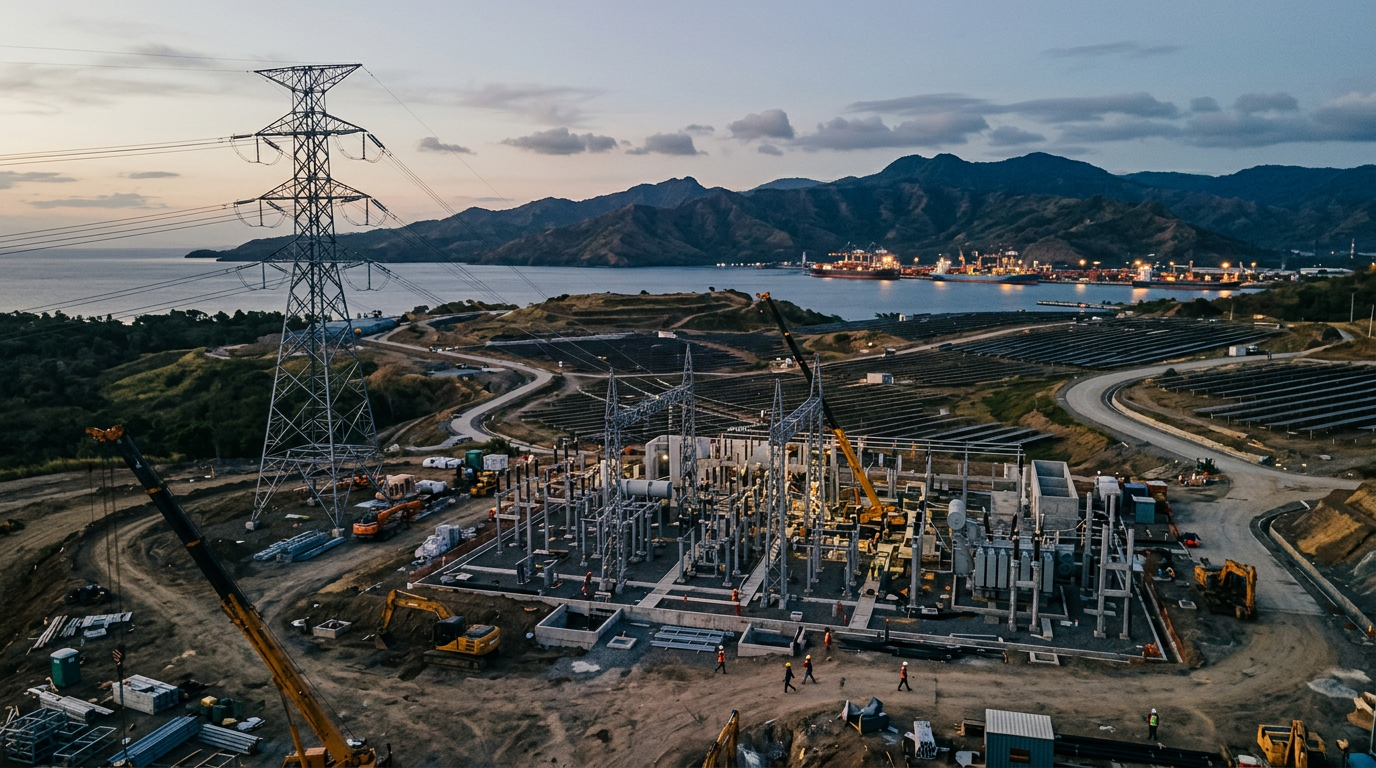
A recent Department of Energy announcement in the Philippines highlights a substantial pipeline of power projects, with over 17.8 gigawatts (GW) endorsed for system impact studies in the first half of the year. As reported by philstar.com, this queue of potential generation capacity signals significant investor interest in the country's energy sector. However, the journey from a project proposal to an operational power plant is long, and success hinges on the capacity of national institutions to translate ambition into reality.
From Endorsement to Execution
The endorsement for a system impact study is a preliminary, yet necessary, step. It allows the National Grid Corp. of the Philippines (NGCP) to assess the effect of a new power plant on the stability and reliability of the electricity grid. While a positive assessment is a good indicator, it does not guarantee that a project will be built. The real work begins after the study is complete.
Developers must navigate a complex process of securing land rights, environmental clearances, and various permits from local and national government agencies. These institutional processes are where many promising projects face delays or abandonment. The speed and predictability of these steps are a direct reflection of institutional strength and are closely watched by investors. Capital is mobile, but large-scale energy infrastructure is not. Investors commit funds only when they have confidence that the foundational work of permits and land acquisition can be completed in a timely manner.
Infrastructure and Investable Depth
Scale is a clear attribute of the Philippine energy market, but as the book ASEAN Rising notes in its analysis of similar large-scale economies, "Scale matters only when institutions can turn it into investable depth." The nearly 18 GW of proposed projects represent immense scale, but true investable depth comes from the grid's ability to absorb this new capacity and the government's ability to facilitate its construction. Without a robust and modern transmission network, new generation assets, particularly intermittent renewable sources like solar and wind, can strain the grid to the breaking point, leading to inefficiencies and curtailment.
The system impact studies are the first part of this equation, evaluating the grid as it exists today. The second part is ensuring the grid of tomorrow is ready. This requires significant public and private investment in transmission lines, substations, and modern grid management technology. The NGCP's capacity to execute on its own infrastructure development plans is as important as the generation companies' ability to build their power plants. A failure in either area leaves announced foreign direct investment (FDI) as just that: an announcement, not a realised flow of capital contributing to national development.
Talent and Trust
Beyond the physical infrastructure and regulatory paperwork, there is a critical human element. Building and operating sophisticated power infrastructure requires a deep pool of skilled engineers, technicians, and construction workers. Developing this talent is a long-term national project that intersects with education policy, vocational training, and immigration rules. A shortage of qualified personnel can drive up costs and extend project timelines, eroding investor returns and confidence.
Ultimately, the entire process rests on a foundation of trust. Investors must trust that the regulatory framework is stable, that contracts will be honored, and that the institutions overseeing the sector are competent and transparent. The steady progression of projects from the drawing board to commercial operation is the strongest signal a country can send to the global investment community. Each successful project builds this trust, making it easier and cheaper to finance the next one.
What to watch: The key indicator of progress will not be the volume of projects entering the system impact study queue, but the conversion rate of these projects into operational assets. Observers should monitor the pace of regulatory approvals for endorsed projects, the NGCP's progress on grid upgrades to support new capacity, and the actual volume of realised foreign direct investment flowing into the energy sector over the next 24-36 months.