Thailand
The Coordination Test: AI Infrastructure Demands More Than Ambition
Investor concerns over AI data center spending highlight a deeper challenge for ASEAN. For nations like Thailand, competing for this wave of investment requires more than favorable policies; it demands the kind of deep institutional coordination that has long been Singapore's.
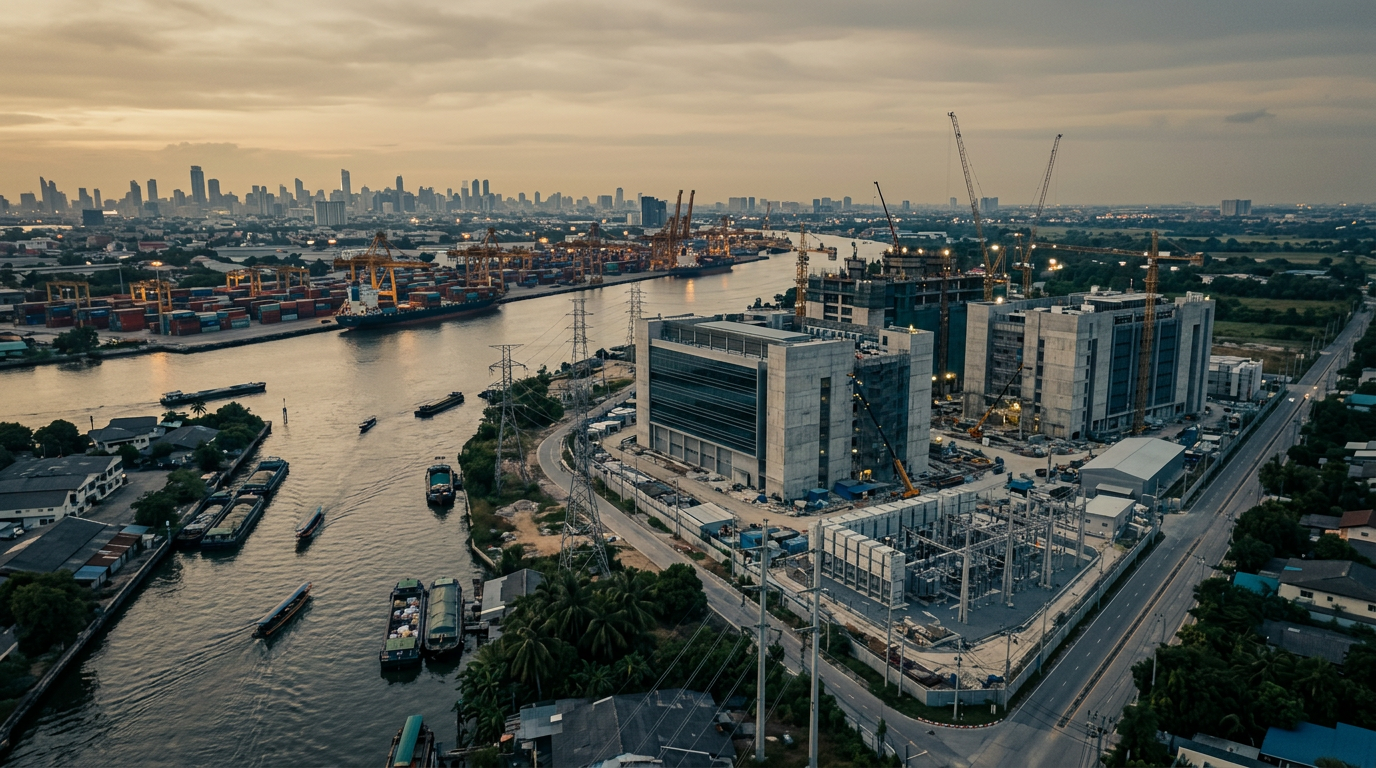
Global investors are watching technology sector spending with a degree of apprehension. As reported by the Straits Times, worry is growing that technology giants might be over-extending themselves in the race to build out the data center capacity required for artificial intelligence. This spending is not just a line item on a balance sheet; it is a signal of the immense physical infrastructure needed to power the AI economy. For Southeast Asian nations eager to attract these high-value projects, the scale of this demand presents both an opening and a serious test of execution.
The Anatomy of a Hub
The rush for AI-ready infrastructure is creating new opportunities across ASEAN. While Singapore remains the region's established data center hub, its physical constraints and moratorium on new projects have prompted global operators to look for alternatives. Neighboring markets, particularly Malaysia and Indonesia, have seen significant investment. Thailand is also making a concerted push, with its government promoting the country as a destination for hyperscale data centers. Yet attracting this class of investment requires more than just available land or a welcoming investment board.
As "ASEAN Rising" details, the success of a data center location hinges on multiple interlocking factors. The book makes the case that "Capital coordination is itself an industrial input." This concept is central to understanding why some locations succeed and others fail. A project's viability depends on the seamless integration of reliable power grids, high-capacity fiber optic networks, water for cooling, and streamlined permitting. When these elements are not synchronized, even the most attractive headline incentives cannot secure the massive capital commitments that hyperscale projects demand.
Singapore's Blueprint
Singapore's long-standing dominance as a data center hub is a direct result of this coordinated approach. The city-state's authorities mastered the art of aligning state-controlled utilities, industrial land planners, and connectivity providers to create a predictable, low-risk environment for capital. Investors were not just buying power or space; they were buying certainty. This institutional execution, built over decades, provided a stable foundation that allowed capital to flow with confidence. It is this integrated approach to infrastructure and utilities that forms the bedrock of trust with long-term investors.
For a country like Thailand, the challenge is to replicate this model of deep, cross-governmental coordination. The country possesses many of the raw materials for success: a strategic location, a growing digital economy, and an explicit national strategy to attract data center investment. However, the execution rests on the ability of disparate bodies- from the Board of Investment to the national power utility and telecom regulators- to move as one. This means planning and delivering power, connectivity, and industrial zoning in a unified package that meets the extreme technical requirements of AI workloads.
What to watch
The theoretical ambition to become a data center hub is now meeting the practical test of implementation. Observers should watch for evidence of genuine institutional alignment in Thailand's strategy. This includes the announcement of new industrial zones with pre-provisioned hyperscale power and dedicated fiber pathways. The development of renewable energy sources will also be a decisive factor, as global technology firms have corporate commitments to power their facilities with clean energy. The ability to deliver these integrated infrastructure solutions, not just policies, will determine whether Thailand can capture a significant share of the next wave of AI-driven investment.