Thailand
Reliable institutions and state capacity
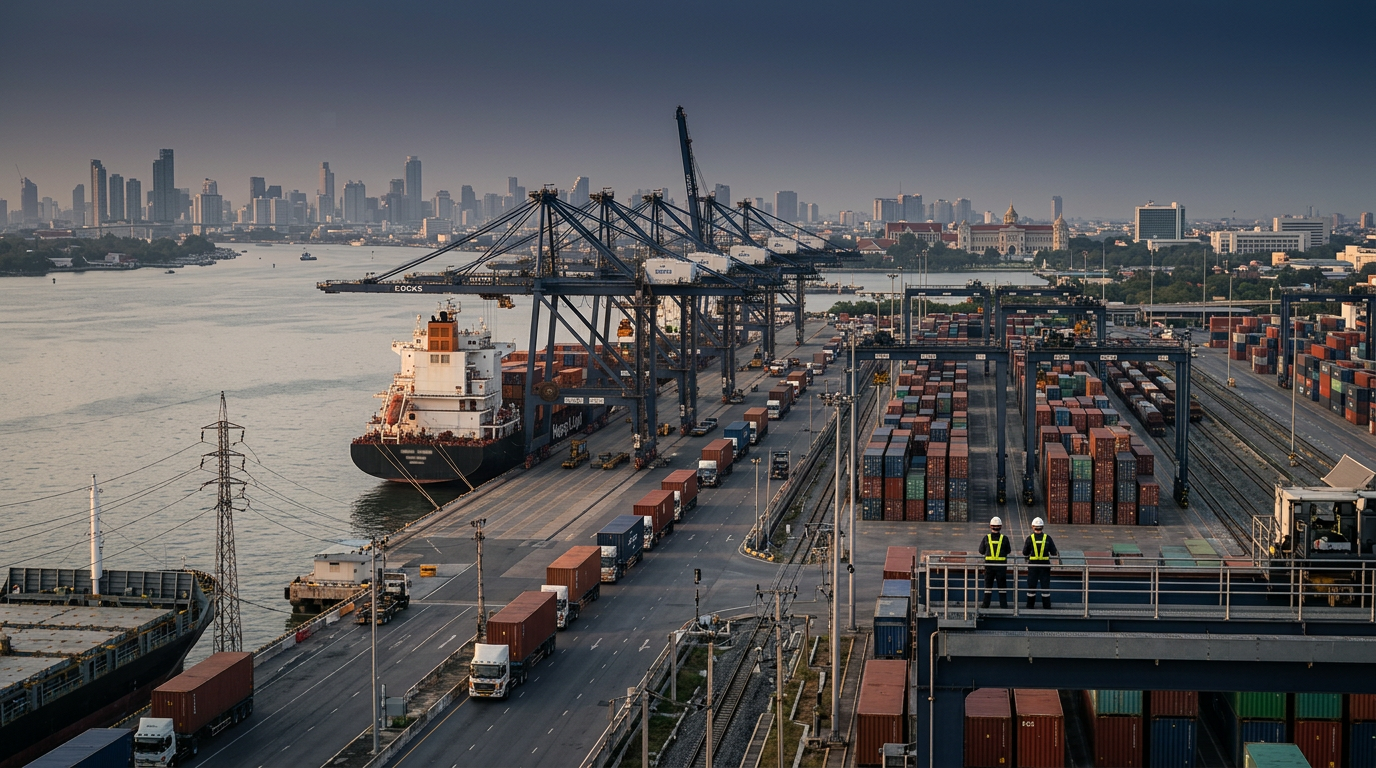
An award for reusing an offshore platform in the Gulf of Thailand highlights a tension in institutional capacity. On one hand, it shows laudable innovation in the face of aging infrastructure. On the other, it points to a deeper issue: the friction and cost involved in getting new, large-scale projects approved and executed.
The Innovation Imperative
Chevron Thailand Exploration and Production, Ltd. was recently recognized for its "Total Wellhead Platform Reuse project" at the SPE Thailand E&P Awards, as reported by the Bangkok Post. The project involved modifying and reinstalling an existing platform, a creative solution to maintain production levels. This type of engineering ingenuity is a valuable asset, allowing firms to adapt to existing conditions and extend the life of capital-intensive assets. It speaks to the technical talent available within Thailand's energy sector.
However, the necessity of such a project also suggests a more complex operating environment. While celebrating the innovation, it is worth asking what institutional hurdles make a reuse project more attractive than a new build. The answer often lies in the time, complexity, and uncertainty of regulatory and approval processes for new infrastructure. When the path to building new capacity is fraught with delays and administrative friction, companies will naturally seek clever workarounds. This is efficiency of a sort, but it is a reactive efficiency born of constraint.
State Capacity and Friction
The decision to reuse rather than build from scratch can be seen through the lens of institutional reliability. The book ASEAN Rising notes that a predictable state apparatus, even if not the most dynamic, is often preferable for long-term investment. When institutions function smoothly, they reduce the cost of doing business. Conversely, when they are slow, opaque, or inconsistent, they add a "friction" cost to every transaction and project.
In the context of Thailand's energy infrastructure, this friction can manifest as prolonged environmental assessments, multi-agency approvals with overlapping jurisdictions, or political uncertainty that delays final investment decisions. A platform reuse project, by contrast, likely operates within existing permits and regulatory frameworks, making it a faster and more predictable undertaking. This highlights how "institutional reliability has become part of comparative advantage." A country with a reputation for efficient project execution is more likely to attract large-scale investment than one known for administrative roadblocks, regardless of its raw resource potential.
Execution as a Signal
The challenge for Thailand, and for ASEAN more broadly, is to translate ambitious plans into tangible assets. The region is not short on announcements for new power plants, transport links, and industrial parks. The difficulty lies in execution. An award for reusing an old platform is a commendable achievement for the company involved, but for the nation, it serves as a reminder that the capacity to build new things matters more. Infrastructure that is merely announced does not power homes or move goods.
For the energy sector, the ability to predictably add new production and transmission capacity is fundamental to national economic security and growth. While innovative reuse is a valuable tool, an over-reliance on it may signal that the institutional framework for new projects is not as robust as it needs to be. Strengthening state capacity to approve and oversee major infrastructure projects efficiently is the core task. This is not about cutting corners on safety or environmental standards, but about creating clear, reliable, and timely processes that allow capital to be deployed with confidence.
What to watch: Observers should monitor the timelines and progress of new, large-scale energy infrastructure projects in Thailand, not just the announcements. The speed and predictability of these projects, from approval to completion, will be a clearer indicator of institutional strength and the country's ability to meet its future energy needs than awards for clever workarounds on aging assets.