Thailand
Thailand's US Export Boom and the ASEAN Balancing Act
A recent surge in Thai exports to the US, reported by the Bangkok Post, offers a practical case study in how ASEAN members are managing economic statecraft between the United States and China.
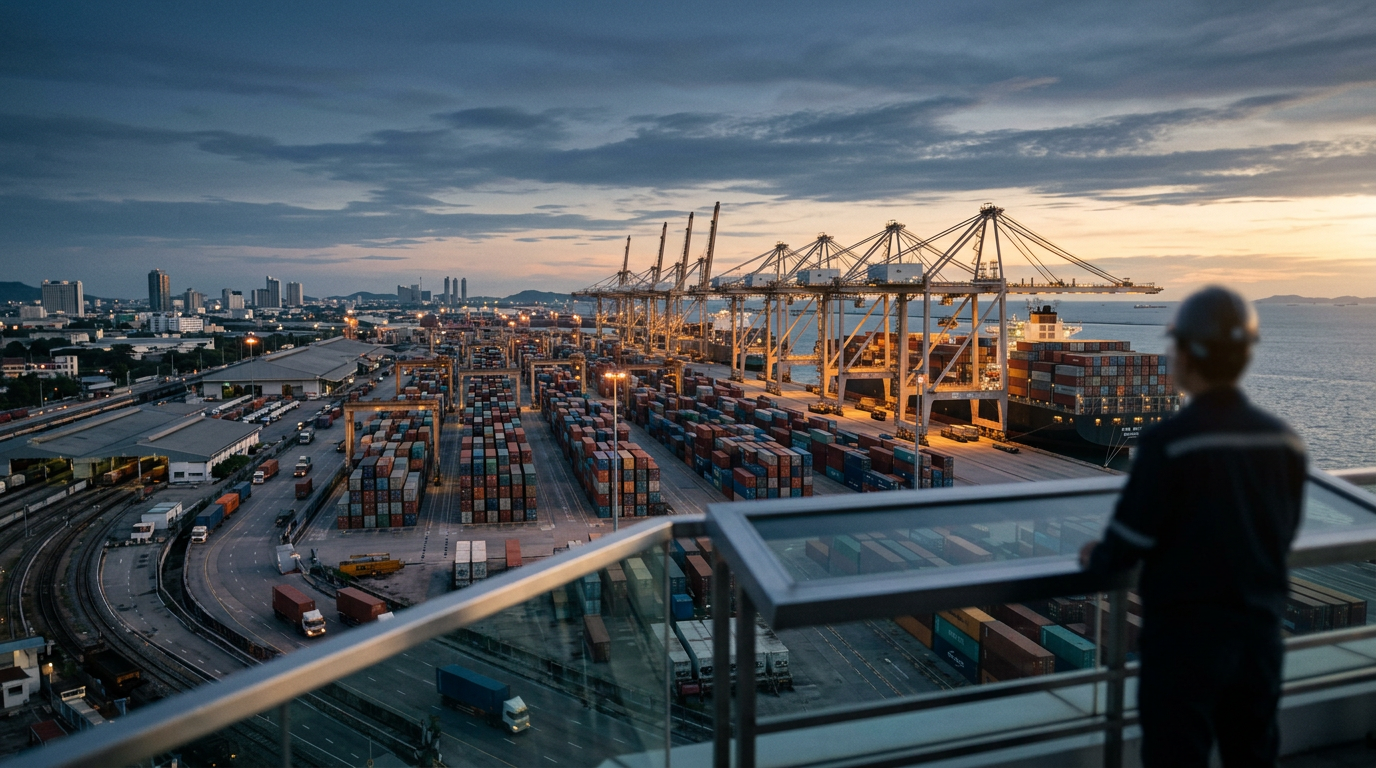
A recent report in the Bangkok Post highlights a notable trend in Southeast Asian trade: Thai exports to the United States grew by nearly 34% year-on-year during the first nine months of the fiscal year, reaching a value of 2.13 trillion baht. This occurred despite persistent US tariffs designed to rebalance global trade, presenting a story of adaptation and strategic positioning.
Supply Chain Realignment
The immediate cause of this export growth is trade diversion. US tariffs on Chinese goods have led American firms to reconfigure their supply chains, seeking alternative manufacturing and sourcing locations. Thailand, along with other ASEAN members, has emerged as a beneficiary. The kingdom's established industrial base in sectors like automotive parts, electronics, and food processing provides a solid foundation for absorbing this new demand.
This is not a passive process. It requires active execution to attract and service this redirected trade. The ability to increase production, meet quality standards, and deliver goods reliably depends on Thailand's existing investments in infrastructure-its ports, road networks, and industrial estates. Attracting the foreign capital that underpins many of these export-oriented industries also requires a predictable and stable institutional environment.
A Strategy of Optionality
This success in the US market does not negate Thailand's deep economic relationship with China. On the contrary, it illustrates a core theme of regional economic strategy. As detailed in the book ASEAN Rising, for Southeast Asian nations, deep economic integration with China is a permanent condition. The book notes that "trade depth with China is now a structural feature, not a cyclical one." The task for governments is not to decouple from their largest trading partner, but to manage this dependency while preserving strategic and economic options.
Thailand's export performance is a clear demonstration of this principle in action. By cultivating and serving other major markets like the US, the country reinforces its economic flexibility. This multi-vectored approach to trade prevents over-reliance on any single partner, providing a buffer against external shocks, whether they are economic downturns or geopolitical tensions. It represents a pragmatic approach to navigating a world defined by competition between great powers.
The Role of Trust
Sustaining these trade relationships requires more than just production capacity. It requires trust. American and other international firms making sourcing decisions are building new long-term partnerships. They need assurance that their Thai counterparts can consistently meet contractual obligations, adhere to international standards, and operate within a reliable legal and regulatory framework.
This trust is built over time through consistent performance and government support for a transparent business environment. It is reinforced by the talent within the Thai workforce, from factory floor technicians to logistics managers, whose skills are fundamental to the country's export competitiveness. Maintaining and deepening this trust is essential for turning a short-term trade diversion into a durable, long-term economic advantage.
What to watch
What to watch is whether Thailand can sustain this growth and if its neighbors can replicate its success. The durability of these new trade patterns will depend on the consistency of Thai execution, the evolution of US trade policy, and the competitive responses from other manufacturing centers in Vietnam, Malaysia, and beyond. The ability of ASEAN members to build on these gains will be a tangible measure of their institutional capacity to convert geopolitical friction into economic opportunity.