Thailand
Thailand's EV Network and the Sovereignty Question
Thailand's plan to unify its EV charging network is more than an infrastructure project; it's a test case for digital sovereignty and who controls the data layer of the new economy.
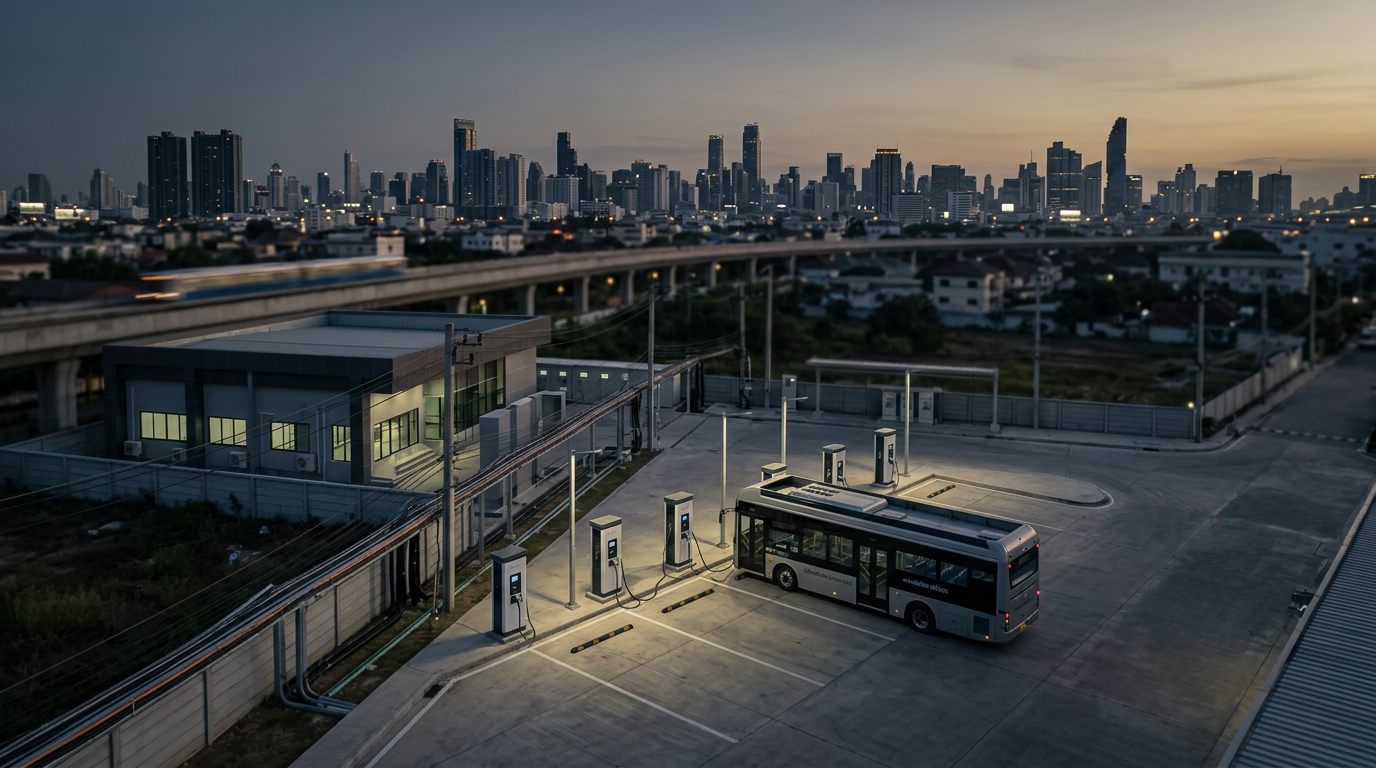
Thailand's Energy Policy and Planning Office (Eppo) is leading an initiative to standardize the nation's electric vehicle (EV) charging infrastructure, according to a report from the Bangkok Post. The project aims to simplify the charging process for motorists, who currently contend with a fragmented market of different providers, apps, and payment methods. While the immediate goal is user convenience, the project is a substantive test of national policy and its ability to shape the digital foundations of a new industrial sector.
The Interoperability Challenge
The current state of EV charging in Thailand reflects a market-led but uncoordinated approach. With numerous operators in the market- an expected 12,000 charging outlets by 2027- drivers face a confusing array of choices. Each operator often requires its own proprietary application for locating chargers, initiating sessions, and processing payments. This lack of interoperability creates friction, discourages prospective EV buyers, and results in an inefficient allocation of capital and infrastructure. A driver might find a nearby charger but be unable to use it without first downloading a new app and creating an account.
To address this, Eppo is promoting the development of a central platform, tentatively named "E-Roaming". This platform would act as a clearinghouse, allowing a driver to use a single app to access chargers from any participating operator. It is a direct institutional intervention designed to guide the market towards a common standard. Success requires not only technical execution but also the alignment of commercial interests among competing charging network operators, a substantial task for any state agency.
Beyond the Plug
A unified network for EV charging is about more than the flow of electricity; it is about the flow of data. Each charging session generates a stream of information: the vehicle's location, the time and duration of the charge, the amount of energy consumed, and the payment transaction. In a fragmented system, this data remains siloed within individual private companies. A centralized platform, however, aggregates this information at a national scale.
This elevates the project from a simple infrastructure upgrade to a matter of digital governance. The core question becomes who controls this new data layer. As the book ASEAN Rising notes, the development of sovereign digital systems will be determined by who controls "the compute, the data layer and the digital identity rails that sit underneath everyday economic life." The E-Roaming platform is a perfect example of these rails. The data it processes can inform urban planning, grid management, and national energy policy. It also contains sensitive personal information that requires robust security and privacy protections. Building trust in the platform's governance is as important as building the physical chargers themselves.
A Regional Template
Thailand's push for a unified EV charging network is not happening in a vacuum. Governments across ASEAN are encouraging EV adoption to meet climate goals and participate in new global supply chains. These countries will inevitably face the same challenges of network fragmentation and data governance. Thailand's approach- a state-led effort to create a common digital utility- could serve as a template for its neighbors.
By establishing a national-level roaming platform, the government retains a degree of sovereignty over a foundational part of its future transport economy. It provides an alternative to ceding control over this data-rich system to a handful of foreign technology firms or vehicle manufacturers. The project is a practical application of building sovereign capacity in the digital economy. It is less about grand pronouncements and more about the difficult work of execution- building the institutions and technical infrastructure to manage the digital sinews of a modern economy.
What to watch
The near-term focus will be on the execution of the E-Roaming platform and the willingness of private operators to connect to it. Attention should be paid to the governance framework established for the platform, particularly the rules around data access for public and private entities. Whether other ASEAN member states observe and adopt a similar model of a state-facilitated, interoperable network for distributed infrastructure will indicate if this approach has regional salience. The balance Thailand strikes between central oversight and market competition will offer lessons for the entire region.