Thailand
Thailand's Data Center Push Tests Infrastructure Coordination
GDS's new $1 billion campus in Chonburi is a major investment win for Thailand, but its success will depend on the government's ability to coordinate power, connectivity, and planning-a test of its institutional capacity.

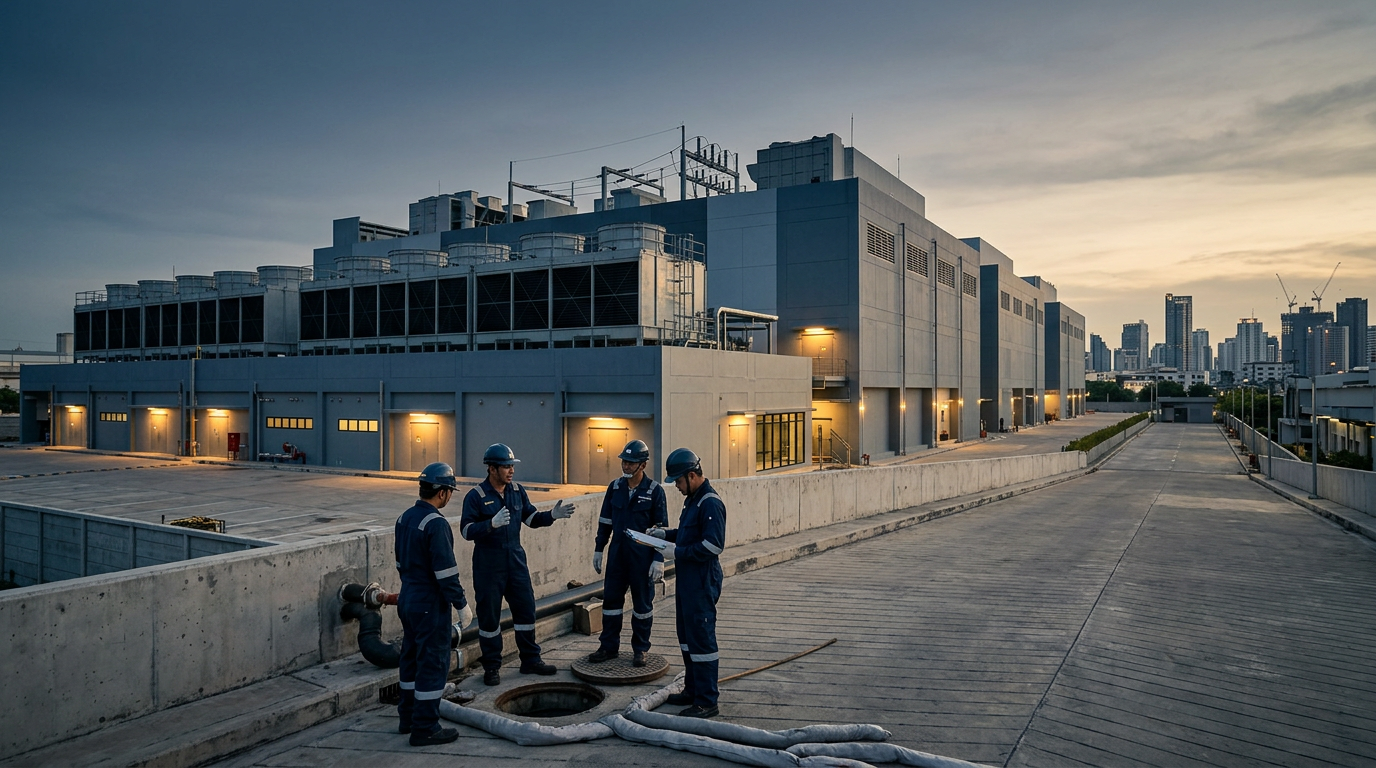
GDS Holdings has started construction on a large data center campus in Thailand, a project with a projected investment of $1 billion. The news, reported by Data Center Dynamics, marks a significant step in Thailand's effort to become a major hub for digital infrastructure in Southeast Asia. The campus is located in Chonburi province, part of the country's Eastern Economic Corridor (EEC) special economic zone.
A New Hub for Hyperscalers
For years, Singapore was the undisputed center for data centers in the region. However, a moratorium on new builds (since partially lifted with strict new standards) and high operating costs have prompted hyperscale operators and investors to establish footprints in other ASEAN markets. While Johor in Malaysia has captured a large share of this displaced investment, Thailand is actively working to present itself as a compelling alternative.
The Thai government, through its Board of Investment, has offered incentives to attract data center developers. This push is part of the broader "Thailand 4.0" initiative, which aims to elevate the nation's economy through technology and innovation. The GDS Chonburi Tech Park is a tangible result of this strategy, representing one of the largest single commitments to the country's digital economy to date. Its location within the EEC is designed to provide it with favorable regulations and access to modern infrastructure.
The Primacy of Coordination
Attracting a billion dollars in capital is a noteworthy achievement, but it is only the first step. The ultimate success of this and similar projects depends on a less visible, though more complex, factor: execution. As explored in the book ASEAN Rising, the development of world-class digital infrastructure is not simply a matter of pouring concrete and installing servers. It requires a deep integration of multiple inputs.
The book makes the point that "Capital coordination is itself an industrial input." This perspective argues that the ability of state institutions to ensure that high-capacity power, dense fiber-optic connectivity, water, and transport infrastructure all arrive at the same place at the same time is a decisive factor. Where this coordination exists, large-scale investment follows. Where it is absent, projects can falter regardless of other incentives. The GDS project will serve as a direct test of the EEC's ability to deliver this synchronized infrastructure and regulatory support.
Beyond the Physical Build
Advanced data centers are not static assets; they are complex industrial facilities that require a steady supply of specialized human capital to operate and maintain. The long-term viability of Thailand's position as a data center hub will depend on its ability to develop a local talent pool of technicians and engineers with the requisite skills. This involves education, training, and creating an environment where skilled professionals can build a career.
Furthermore, hyperscale clients-the global technology companies that will be the main tenants of these facilities-place a high value on trust. This trust is built on a foundation of regulatory predictability, clear data governance laws, and political stability. For international firms, confidence in the legal and operational framework of a country is as important as the reliability of its power grid. Thailand must provide assurance on these software issues in addition to delivering on the hard infrastructure.
What to watch
What to watch is how smoothly the Thai government and its agencies, particularly within the Eastern Economic Corridor, can deliver the promised utility and connectivity upgrades for the GDS project. The speed and efficiency of this execution will be a major signal to other international investors considering Thailand for similar large-scale infrastructure projects. The development of a local skilled talent pool to operate these advanced facilities will also be a key indicator of long-term success.