Thailand
's Data Center Boom and the Industrial Squeeze
A rapid rise in demand for advanced semiconductors from data centers and AI applications is creating supply challenges for the oil and gas industry in Thailand.
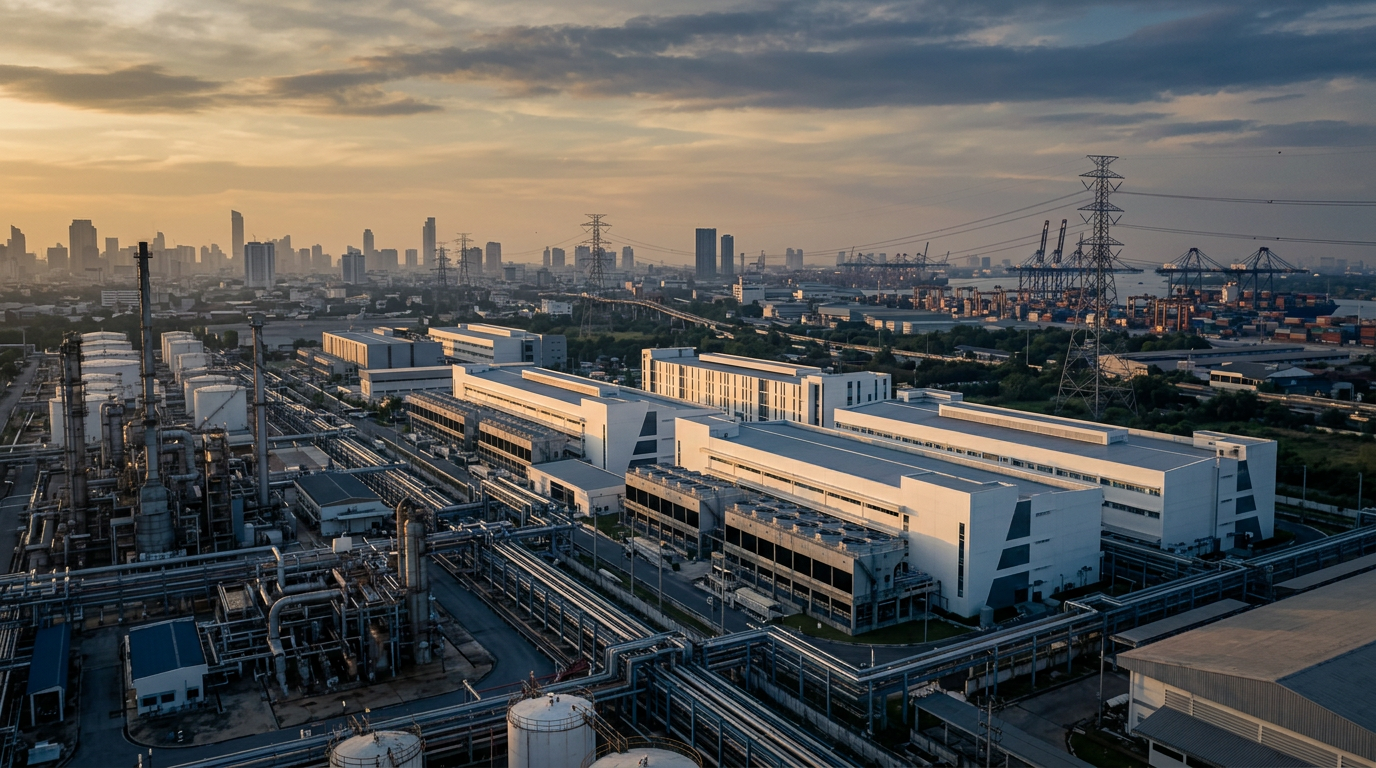
A rapid rise in demand for advanced semiconductors from data centers and AI applications is creating supply challenges for Thailand's oil and gas industry, impacting critical industrial systems, according to a recent report from the Bangkok Post. The squeeze on chip availability highlights the growing competition for high-technology components as Thailand pursues its goal of becoming a major data center hub.
The Hyperscale Demand
Thailand's ambition to attract hyperscale data center investment is a central part of its advanced economic strategy. The Board of Investment has extended tax exemptions and the government is actively promoting the sector. This push has been successful, attracting significant commitments from global technology firms. These facilities, which power AI and cloud computing services, are voracious consumers of not only power and land but also the specialized semiconductors needed for their servers.
The demand for these advanced chips is now rippling through other foundational sectors of the economy. As the oil and gas industry finds itself competing for the same electronic components, it faces potential disruptions to its own technology-dependent operations. This creates a tension between developing a modern digital infrastructure and maintaining the health of established industrial sectors.
The Coordination Challenge
Successfully developing a data center ecosystem requires more than just attracting investment. As detailed in "ASEAN Rising," the alignment of utilities, government planning, and digital connectivity is essential. "Capital coordination is itself an industrial input," and its absence can hinder projects even where other factors like cheap power are present.
The current chip shortage is a clear example of this principle. The uncoordinated demand between the burgeoning data center industry and established industrial players like oil and gas creates friction in the supply chain. For Thailand to sustain its growth, it must ensure that the development of one high-priority sector does not inadvertently starve another of critical components. This requires a holistic approach to industrial planning that accounts for the interconnectedness of supply chains.
What to watch
As Thailand continues to build out its data center capacity, observe how the government and industry address these supply chain conflicts. The key will be whether industrial policy can move beyond simply attracting investment to actively managing the cross-sectoral impacts on resources, from semiconductors to talent and power. The ability to coordinate these complex demands will determine the long-term success and stability of Thailand's economic diversification.