Thailand
Thailand
Thailand has set up a national committee to coordinate its fast-growing data centre industry. The move acknowledges that attracting hyperscale investment is not just about incentives, but about managing the complex interplay of power, water, and land resources.
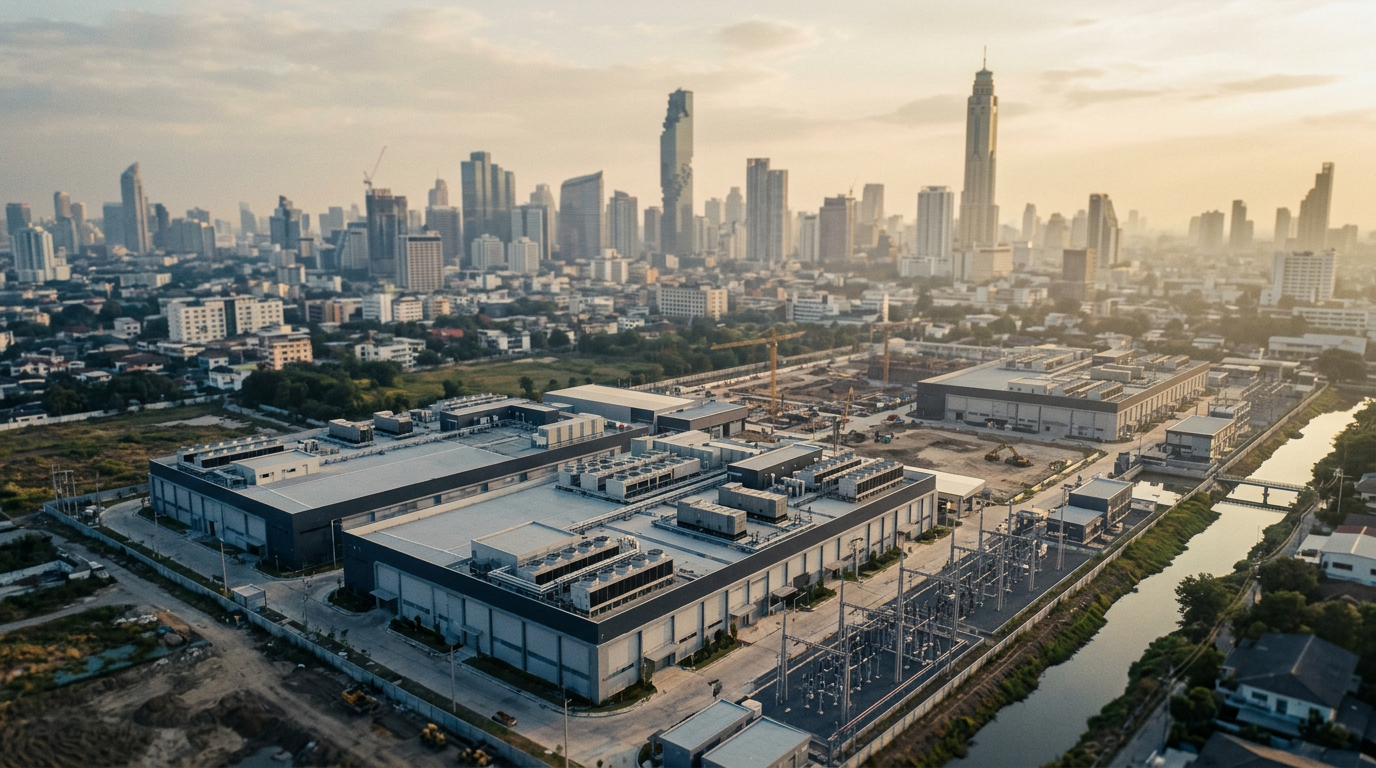
Thailand's cabinet has approved the formation of a national policy committee to oversee the country's data centre industry, a sector experiencing rapid growth. As reported by the Bangkok Post, the new body is tasked with balancing investment promotion against national concerns regarding energy security, water resources, and environmental sustainability.
Coordination as Industrial Policy
The creation of a dedicated national committee for data centres in Thailand is a significant policy development. It shows a sophisticated understanding of the requirements for attracting hyperscale operators. The decision moves beyond simple investment incentives and acknowledges the complex logistical and resource challenges involved in developing these large-scale facilities. By centralizing oversight, the Thai government aims to streamline the coordination of power, water, land, and fiber optic connectivity.
This approach aligns with the core argument in ASEAN Rising that "capital coordination is itself an industrial input." The book argues that providing cheap power or land is insufficient to secure major data centre investments. Hyperscale operators are drawn to locations where government agencies work in concert to provide utilities, execute planning, and deliver connectivity seamlessly. Without this synchronized approach, even the most attractive-sounding projects can fail to materialize.
Institutions and Execution
The new committee's mandate will involve multiple government agencies, including the Ministry of Digital Economy and Society, the Ministry of Energy, and the Board of Investment. The success of this initiative will depend on the committee's ability to execute its policies effectively and avoid bureaucratic friction. Its primary function will be to act as a single point of contact and coordination, ensuring that the necessary infrastructure and resources are available to meet the demands of new data centre projects.
This focus on institutional capacity is a recurring theme in the development of advanced industries across ASEAN. For Thailand, the committee represents a structured attempt to build a durable competitive advantage in the digital economy. It is a recognition that investors in capital-intensive, long-term projects value predictability and operational efficiency as much as, if not more than, fiscal incentives.
Managing Resource Constraints
The committee's remit explicitly includes managing the strain that data centres can place on national resources. Data centres are famously intensive consumers of electricity and water for cooling. In a region grappling with the effects of climate change and fluctuating energy markets, the Thai government's proactive stance is a prudent measure. The policy aims to ensure that the growth of the data centre industry does not come at the expense of energy security or environmental stability for the wider population.
This balancing act is not unique to Thailand. Singapore, a regional leader in the data centre market, has previously implemented a moratorium on new data centre construction due to concerns about power consumption. The city-state has since shifted its focus to attracting higher-value, more efficient facilities. Thailand's strategy appears to be learning from this, aiming to manage growth from the outset rather than reacting to its consequences.
What to watch: The immediate focus will be on the composition and authority of the new committee. Its first set of policy directives and its ability to fast-track inter-agency decisions will signal to the market how effectively Thailand can translate its strategic plan into tangible projects. The success of this body will be measured by its capacity to attract new hyperscale investment while adhering to its own sustainability and resource management guidelines.