Thailand
Thailand, Mars, and the China Question
Mars's new Pringles factory in Thailand is a win for the country's food processing sector, but it also highlights the economic reality of China's central role in regional supply chains.
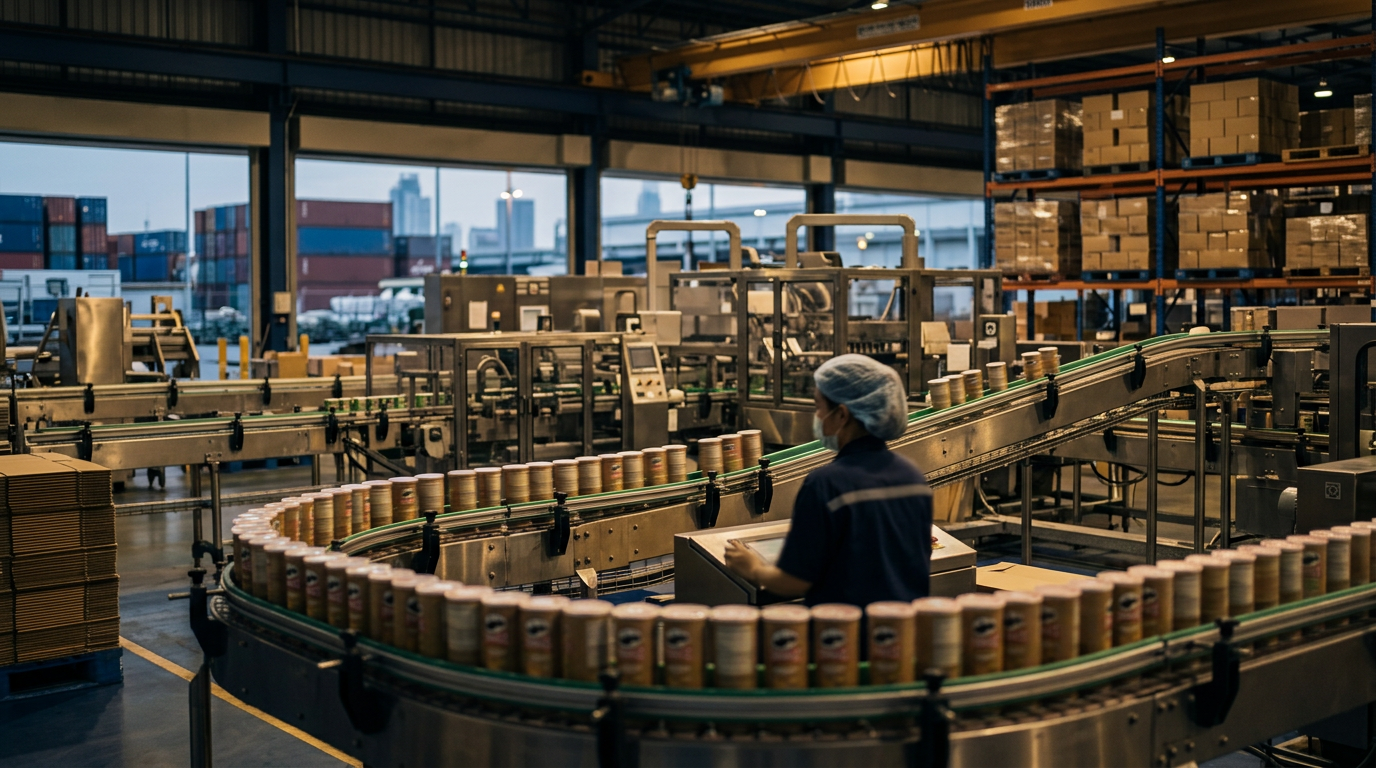
A new factory from Mars, opened in Chon Buri, will position Thailand as a key export hub for the Pringles brand, according to a recent report in the Bangkok Post. The facility is a significant foreign direct investment for Thailand's Eastern Economic Corridor and a vote of confidence in the country's food processing capabilities. It also serves as a case study in how global firms and ASEAN states navigate the region's complex trade relationship with China.
Institutions and Infrastructure
The Mars investment leans heavily on the institutional and physical infrastructure that Thailand has built over decades. The factory's location in Chon Buri places it squarely within the Eastern Economic Corridor (EEC), a zone designed to attract high-value industries with a mix of tax incentives, streamlined regulation, and world-class logistics infrastructure, including the nearby Laem Chabang deep-sea port. This strategic development allows a global company like Mars to efficiently import raw materials, process them, and export finished goods to markets across the region. The project demonstrates the power of a well-executed national industrial strategy that connects infrastructure investment to specific economic outcomes.
Trade, Talent, and Trust
This single investment touches on several core themes of regional development. For Mars, the decision required trust in the stability of Thailand's investment policies and the quality of its local talent pool, from factory-floor technicians to supply chain managers. The factory will create local jobs and integrate Thai suppliers into a global value chain.
At the same time, the facility's operations will inevitably be linked to China, which is the dominant regional player in everything from raw material sourcing to equipment manufacturing and, increasingly, end-market consumption. As noted in ASEAN Rising, this economic integration with China presents a balancing act for all member states. The reliance on Chinese inputs or market access is a structural reality. For Thailand and its neighbors, the goal is to deepen industrial capacity and infrastructure to ensure they are indispensable partners, not just dependent spokes, in a regional network where China is the hub. The "trade depth with China is now a structural feature, not a cyclical one," compelling governments to focus on managing this dependency.
What to watch
As the Mars factory ramps up production, the key indicator to watch will be the composition of its supply chain. The extent to which the facility sources its raw materials, from potatoes to packaging, from within ASEAN versus importing them from China will be a practical measure of the region's industrial self-reliance. This will also reflect on the success of the EEC's framework in fostering a deeper local supplier ecosystem capable of meeting global quality standards, a test of institutional execution that has implications for all of ASEAN.