Thailand
Thailand: Beyond Vehicle Sales Forecasts
Thailand's ambitions in the electric vehicle sector depend on more than just sales projections. The country's ability to translate policy into real investment hinges on the slower, harder work of building institutional capacity.
A recent forecast from Krungsri Research, as reported by the Bangkok Post, projects a gradual recovery for Thailand's automotive market over the next three years. The report attributes this anticipated growth to a rebound in the broader economy and government policies supporting the transition to electric vehicles (EVs). While positive sales forecasts are welcome news, they do not guarantee the long-term success of Thailand's push to become a regional EV hub. The real work lies in converting policy pronouncements into tangible, large-scale investment, a process that is far slower and more complex than market forecasting.
Institutions and Execution
Thailand's "30@30" policy, which aims for 30% of car production to be zero-emission vehicles by 2030, is a clear statement of intent. The government has backed this with consumer subsidies and incentives for automakers to establish or expand production facilities. However, as the book ASEAN Rising notes, successful economic development requires more than just top-level directives. While "FDI announcements travel quickly," the actual flow of capital depends on the ground-level work of institutions. For Thailand, this means translating national EV policy into a coordinated effort across multiple government agencies responsible for everything from customs and industrial estates to energy and labor.
Automotive manufacturing is a capital-intensive industry with complex supply chains. Investors, both foreign and domestic, need assurance that the operating environment is predictable and efficient. This requires institutions that can execute on policy, streamline regulatory processes, and provide consistent support. Without this institutional depth, ambitious national targets risk remaining just that-targets. The journey from a policy announcement to a fully operational production line is fraught with administrative hurdles that can delay or deter investment.
Capital and Infrastructure
The transition to electric mobility is not simply about swapping internal combustion engines for batteries; it requires a fundamental shift in infrastructure. A successful EV ecosystem needs a dense, reliable, and accessible charging network. It requires a modernised electrical grid capable of handling the increased demand. It also necessitates investment in new manufacturing capabilities, from battery production and assembly to the sourcing of critical minerals. These are massive, long-term undertakings that require immense capital investment from both public and private sectors.
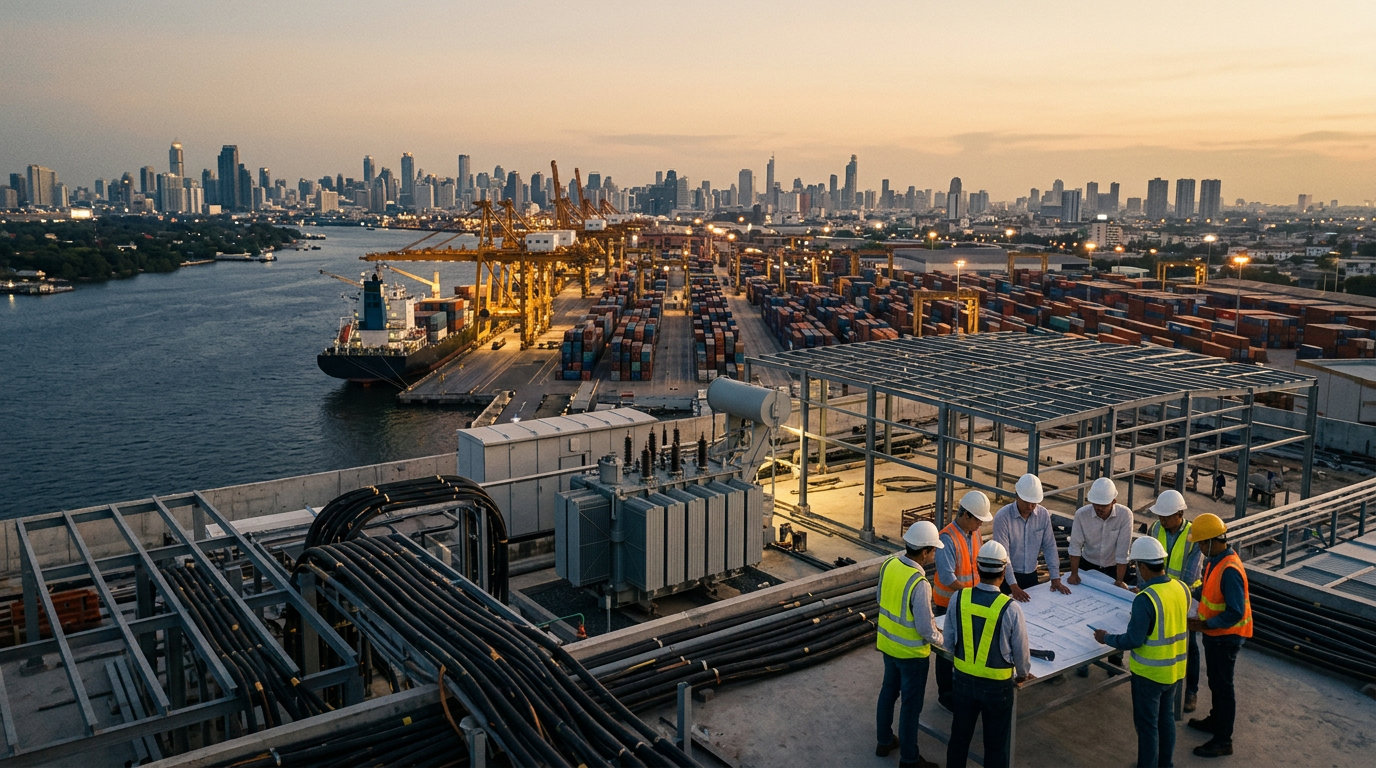
The Krungsri forecast is encouraging, but it largely reflects expected consumer demand. The supply side of the equation is more challenging. Building the physical infrastructure to support a nationwide EV fleet is a multi-decade project. Attracting the necessary capital for factories, charging stations, and grid upgrades will test the country's capacity to create bankable projects and a stable investment climate. The success of Thailand's EV ambitions will be measured not by vehicle sales figures alone, but by the kilometers of powered-up cable, the number of new charging points, and the megawatts added to the national grid.
What to watch
The key indicator of Thailand's progress will be the rate at which announced investments in EV production and infrastructure translate into completed projects and operational assets. Observers should monitor the rollout of the national charging network, the pace of regulatory reforms designed to support the automotive supply chain, and the development of training programs to equip the workforce with the skills needed for EV manufacturing. The gap between announced foreign direct investment and realised capital flows will be the ultimate measure of the country's institutional effectiveness.