Thailand
 Defines Hyperscale in New Regulations
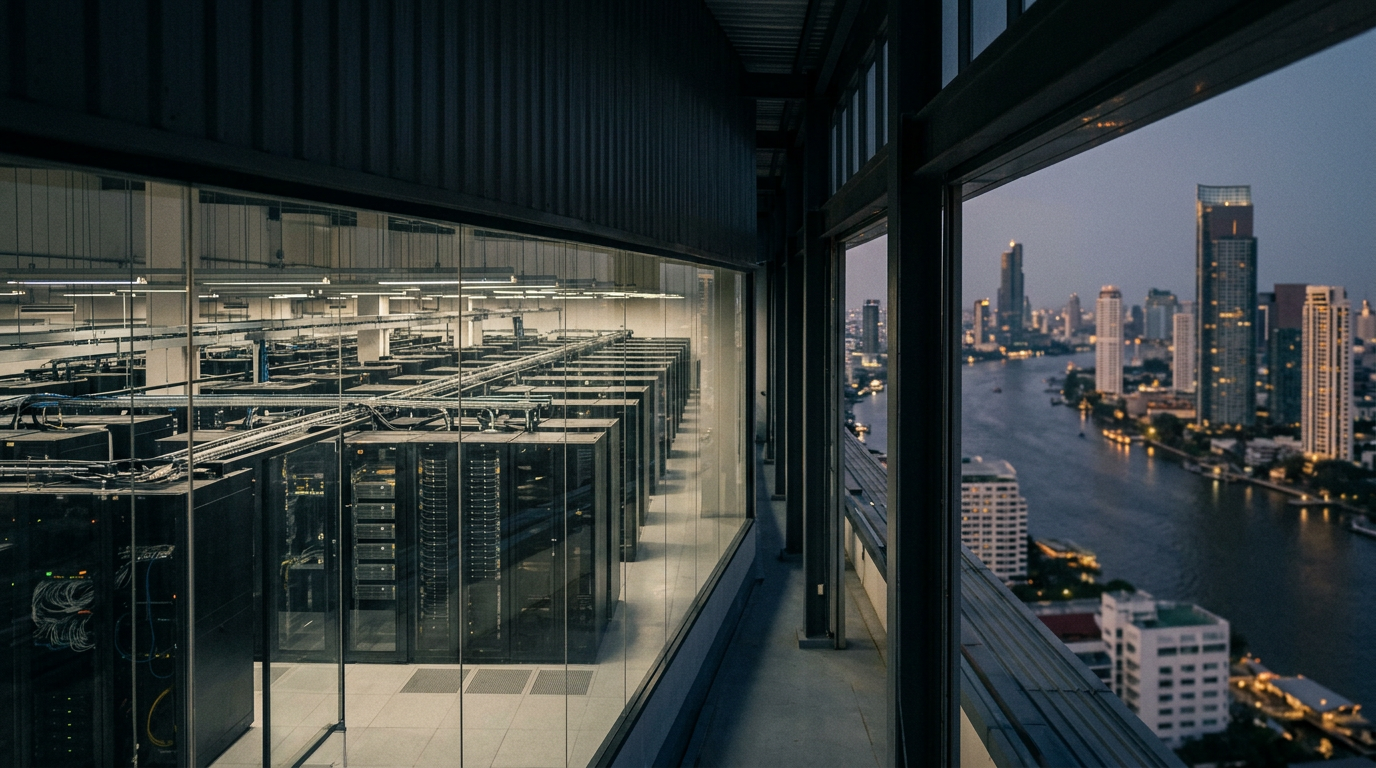
Thailand is set to introduce new data center regulations that classify facilities over 100MW as hyperscale, a move that highlights the critical role of state and utility coordination in attracting digital infrastructure investment.
Thailand is preparing to finalize new data center regulations by mid-October, a move that will formally classify facilities with over 100MW of capacity as hyperscale. As reported by Data Center Dynamics, the new rules aim to streamline development for large-scale operators. This policy development in Thailand reflects a broader regional trend where industrial-scale digital infrastructure is becoming a cornerstone of national economic strategy. The success of these strategies, however, depends on much more than just regulatory definitions.
The Importance of Coordinated Inputs
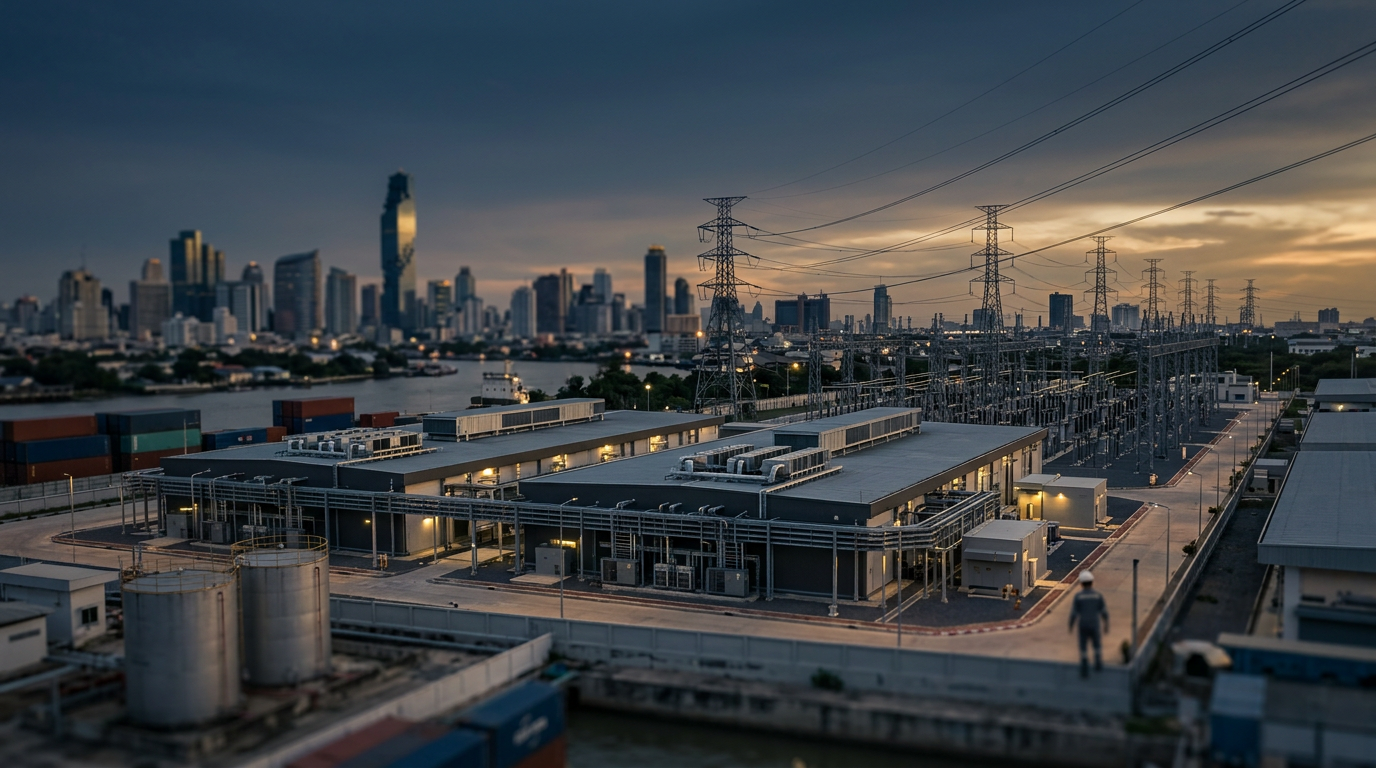
The rise of hyperscale data centers in Southeast Asia is contingent on the coordinated delivery of several key inputs: land, power, and connectivity. As examined in ASEAN Rising, Singapore's success as a data center hub was not accidental. It was the result of deliberate, long-term planning where state agencies and utility providers worked in concert to ensure that all necessary components were available simultaneously. This integration is a powerful attractant for capital. The book notes that "capital coordination is itself an industrial input." When these elements are aligned, hyperscale investment tends to follow. When they are not, projects can falter, even in locations with cost advantages like inexpensive electricity.
Thailand's new regulations are a necessary step, providing clarity for investors and developers. By defining what constitutes a hyperscale facility, the government creates a distinct category for projects that have vastly different requirements from smaller enterprise data centers. This allows for more targeted policy and incentives. However, the regulations themselves are only one part of the equation. The real work lies in the execution-ensuring that a 100MW site has access to a reliable grid, sufficient water for cooling, and robust fiber optic networks. This requires a high degree of cooperation between the Board of Investment, the Energy Regulatory Commission, and various state-owned utilities.
Emulating the Singapore Model
Countries across ASEAN are competing to attract the wave of data center investment currently flowing into the region, driven by the expansion of cloud computing and artificial intelligence. While Singapore has historically dominated, its recent moratorium and subsequent focus on high-value, energy-efficient projects have created opportunities for its neighbors. Malaysia, particularly in Johor Bahru, has seen a surge in development by offering a compelling combination of proximity to Singapore, available land, and government support.
For Thailand to successfully compete, it must demonstrate a similar capacity for execution. The new regulations suggest a clear intent to do so. The framework is a signal to the market that Thailand understands the scale and complexity of hyperscale projects. The government's ability to follow through with streamlined permitting and the guaranteed provision of utilities will determine its success. Investors in this space prioritize certainty and operational resilience. They are drawn to environments where the state actively de-risks development by ensuring that all foundational infrastructure is in place.
What to watch: The implementation of Thailand's new regulations will be a key indicator of its ambition to become a major data center hub. Observers should monitor how effectively the Thai government coordinates its various agencies to facilitate the development of hyperscale projects. The first few projects approved under the new framework will demonstrate whether the country can translate regulatory intent into the seamless delivery of power, land, and connectivity that large-scale operators require.