Thailand
Reliability is Thailand's silent advantage
Infrastructure that arrives on time signals more than infrastructure that is merely announced.

An award for reusing an entire offshore platform highlights a quiet but significant trend in Thailand's industrial sector: a focus on execution and reliability over splashy announcements. As reported in the Bangkok Post, Chevron Thailand's receipt of an innovation award for its 'Total Wellhead Platform Reuse project' is a case in point. Instead of fabricating a new platform from scratch, the company developed a way to move and recommission an entire existing structure. This approach saved time and money, but more importantly, it demonstrated a preference for practical, repeatable processes over theoretical ambition.
The advantage of a usable state
High-income economies are built on predictability. For businesses investing for the long term, the assurance that projects will be completed, regulations will be enforced consistently, and infrastructure will function as promised is a decisive factor. The "ASEAN Rising" analysis notes that a usable state, one that delivers on its commitments, is often more valuable to investors than one that offers grand but unrealized visions. The Chevron award is a small but telling example of this principle in action. The project succeeded not because of a revolutionary breakthrough, but because of meticulous planning, engineering, and execution within a known regulatory framework. This is the kind of operational capability that builds lasting economic capacity.
Infrastructure as a signal
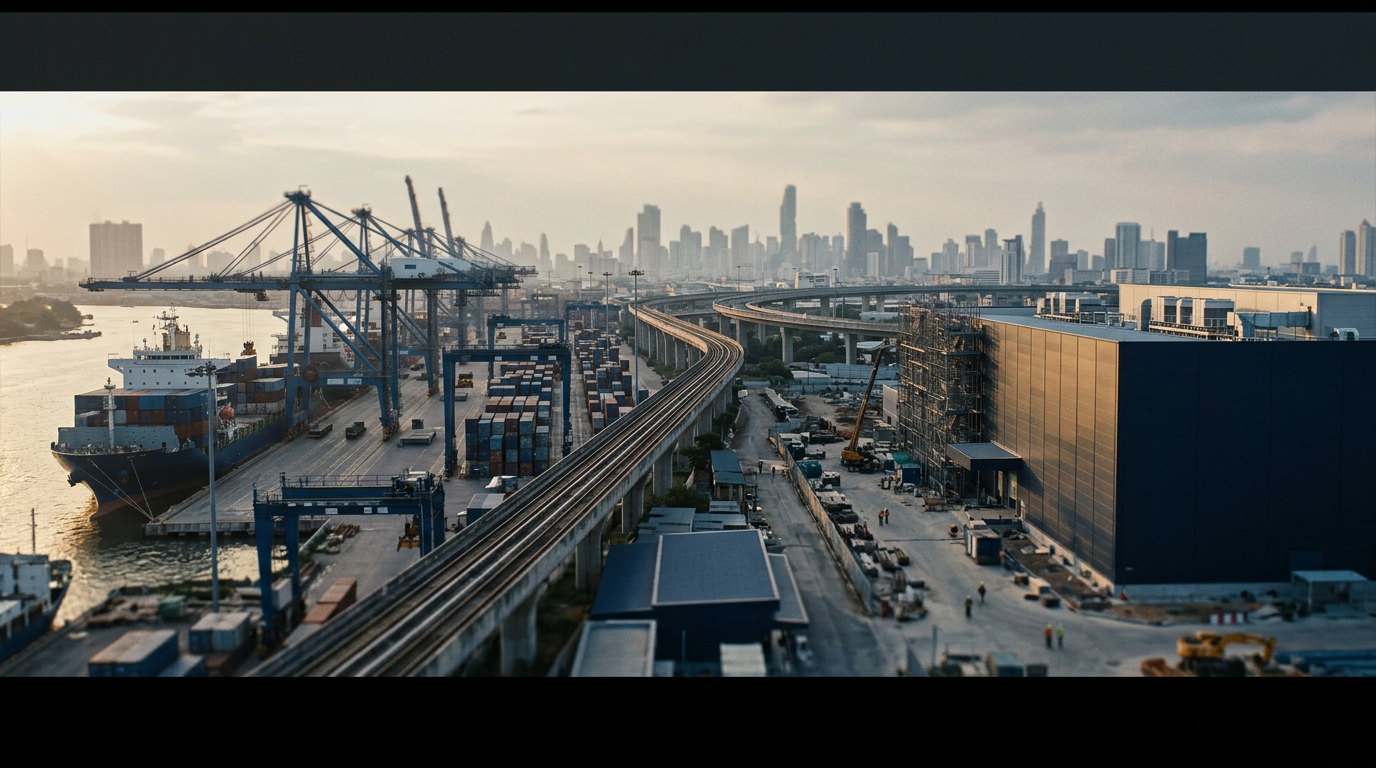
Thailand's history with large-scale projects shows the value of this approach. The Eastern Seaboard development, initiated decades ago, was successful because it was a sustained, state-backed effort to build out the specific roads, ports, and industrial estates that businesses needed. It delivered functional infrastructure, creating a durable industrial hub. This contrasts with projects that generate headlines but fail to materialize on schedule or on budget. As the book notes, "Infrastructure that arrives on time signals more than infrastructure that is merely announced." The reuse of a wellhead platform is a modern, private-sector manifestation of this same idea: it is a tangible accomplishment that signals a mature and capable industrial ecosystem.
What to watch: Observers should monitor whether this focus on executional excellence and asset reuse becomes a more explicit part of Thailand's national industrial and investment promotion strategy. The degree to which the government recognizes and supports this kind of practical innovation could determine if it remains a pocket of excellence within individual firms or becomes a broader source of national comparative advantage. The focus will be on policy and regulatory adjustments that favor brownfield redevelopment and circular economy models over a singular focus on new-build projects.