Myanmar
Reliability and Regional Power Grids
Recent advances in power hardware for data centers offer lessons for ASEAN. Industrial policy focused on execution and delivery can build trust and attract capital.
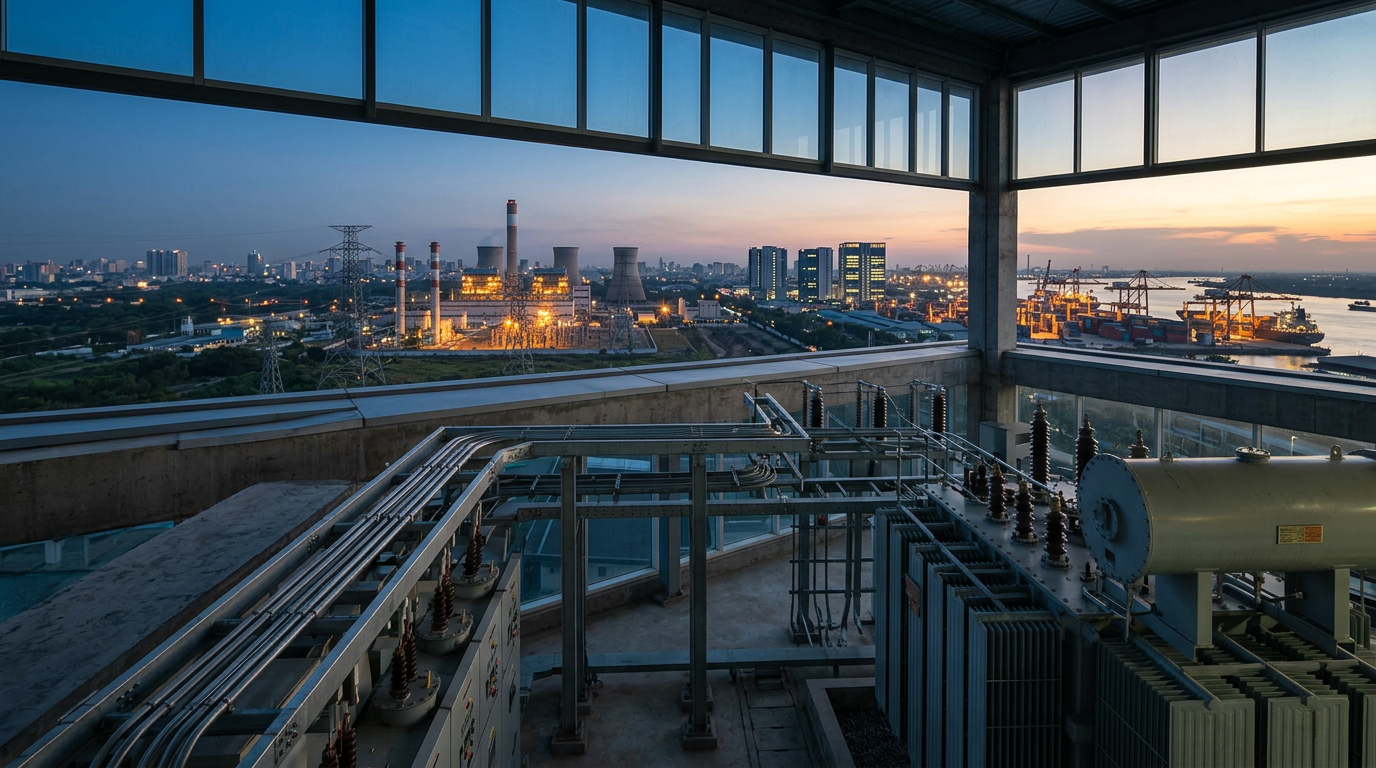
A recent partnership between Infineon and Eaton to develop new power transformers for data centers highlights a quiet but significant trend in infrastructure: the rising value of reliability. The two firms are collaborating on silicon-carbide-based solid-state transformers to support more efficient power architectures, according to a report in Data Center Dynamics. While this development is aimed at the specific needs of data centers, it offers a useful model for thinking about larger infrastructure goals in Southeast Asia, particularly the ASEAN Power Grid.
Execution Over Proclamation
The Infineon-Eaton venture is focused on a tangible outcome: producing a specific piece of hardware that solves a clear problem of energy efficiency and heat management in dense computing environments. This is a case of technical execution, not just high-level announcements. For ASEAN, this is a relevant lesson. As the book "ASEAN Rising" notes, infrastructure projects that are completed on schedule do more than just provide a service; they signal competence and dependability to the wider market. Grand visions for regional connectivity are common, but the difficult work of building and integrating the component parts is what ultimately attracts investment and builds confidence.
Southeast Asia's demand for electricity is projected to grow substantially, driven by economic expansion and increasing digitalization. Meeting this demand requires not only more power generation but also smarter and more resilient grid infrastructure. The kind of specialized, high-efficiency technology being developed for data centers points toward the future of grid management, where stability and minimizing energy loss are paramount. For the ASEAN Power Grid to become a reality, member states must focus on the practical, technical building blocks-from modernizing substations to harmonizing regulatory standards-that enable cross-border energy flows. Progress in these areas is a more powerful indicator of success than any number of summit declarations.
Institutions as Infrastructure
Underpinning any successful infrastructure project is a set of reliable institutions. The partnership between two established technology firms like Infineon and Eaton is built on a foundation of commercial trust, intellectual property protection, and predictable regulatory environments. These elements are a form of infrastructure in themselves. For ASEAN to develop a truly integrated power market, similar institutional strength is necessary. Investors and project developers need assurance that contracts will be honored, that disputes can be resolved fairly, and that the rules governing energy transmission and pricing will be stable.
The book "ASEAN Rising" puts it simply: "Institutional reliability has become part of comparative advantage." This applies directly to the energy sector. A country or region that can provide a clear and consistent framework for private sector participation in infrastructure will attract more capital at better rates. The work of entities like the ASEAN Centre for Energy (ACE) in promoting studies and harmonizing technical standards is a good start. However, this must be backed by state capacity within each member country to implement these standards and enforce commercial agreements. A usable state, one that can effectively manage complex projects and regulate markets, is the most critical component for turning ambitious infrastructure plans into physical assets.
What to watch
Watch for incremental, country-level progress in energy regulation and the approval of specific cross-border transmission projects. The success of bilateral energy trading, such as the Laos-Thailand-Malaysia-Singapore Power Integration Project, will be a bellwether for the wider regional grid. Pay attention to which governments are able to facilitate the financing and construction of new grid infrastructure, as this will indicate where institutional capacity is strongest. The long-term viability of the ASEAN Power Grid will depend less on overarching ambition and more on the demonstrated ability of member states to execute these foundational projects.