Malaysia
Penang's LRT Project and the Long Road to Usable Infrastructure
The Penang Mutiara Line LRT project is a multi-year effort to improve urban mobility. While the project promises long-term benefits, the immediate 322-day traffic diversion on Jalan Sultan Azlan Shah highlights the immense coordination and state capacity required to deliver.
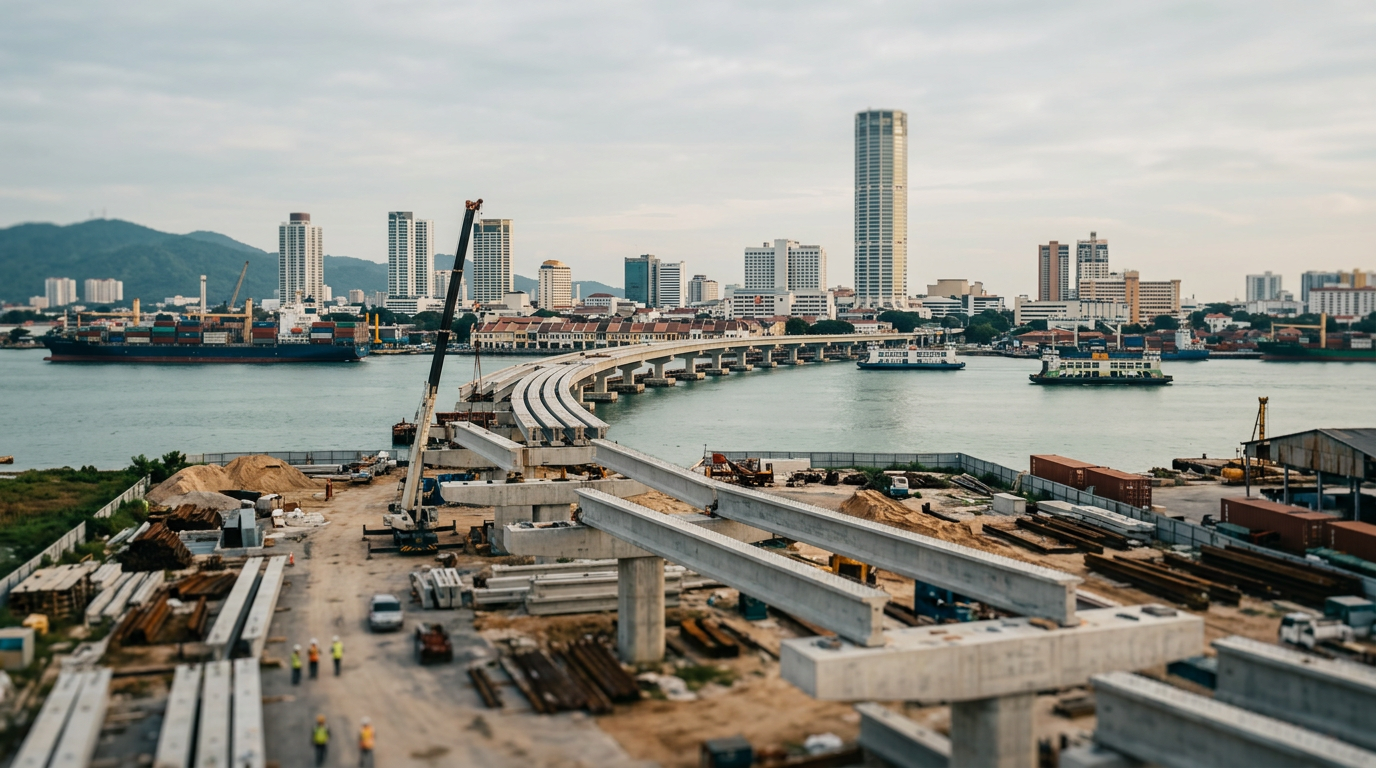
A significant traffic diversion is scheduled for Jalan Sultan Azlan Shah in Penang, lasting 322 days from September 12, 2026, to facilitate construction of the Mutiara Line Light Rail Transit (LRT) project. As reported by The Star, this phase involves crucial piling and permanent works, representing a tangible step in a project that has been discussed for many years.
While the Mutiara Line promises to enhance Penang's urban mobility and economic competitiveness, the long road to its completion is paved with practical governance challenges. The upcoming traffic disruption is a reminder that large-scale infrastructure projects are measured not only by their ambitious vision but also by the quality of their execution and the management of their public impact.
Institutions and Execution
The successful delivery of a project like the Penang LRT is a direct reflection of institutional quality. It requires seamless coordination between multiple state and federal agencies, private contractors, and the public. The management of traffic flows, public communication, and adherence to timelines are all tests of state capacity. As ASEAN Rising notes, effective governance transforms ambitious blueprints into functioning assets. The ability to manage the complexities of a 322-day diversion without causing undue economic or social friction is a measure of this capacity.
For residents and businesses in Penang, the disruption is a temporary but significant cost. The project's planners have an obligation to mitigate these costs through clear communication, alternative routing, and efficient work schedules. This is where the abstract concept of institutional reliability becomes concrete. A well-managed diversion builds public trust and confidence in the state's ability to deliver on its promises. Conversely, a poorly managed one erodes that trust and can create opposition to future development.
Infrastructure and Capital
The Mutiara Line is a significant capital investment aimed at future-proofing Penang's economy. Modern, efficient public transportation is a core component of a competitive city, attracting talent and investment. However, the book "ASEAN Rising" observes that "infrastructure that arrives on time signals more than infrastructure that is merely announced." The timeline, from initial announcement to the projected completion in 2030, is a long one. Each milestone, including this necessary but inconvenient construction phase, is an indicator of the project's momentum.
Investors and businesses watch these projects closely. The ability to execute complex engineering tasks within a dense urban environment, while managing the logistical and social side effects, sends a powerful signal about the reliability of the local investment climate. The physical piling work on Jalan Sultan Azlan Shah is as much a test of engineering as it is a demonstration of the government's ability to translate capital allocation into tangible progress. The smooth execution of this phase is vital for maintaining the confidence of the capital markets and the public alike.
What to watch: As the diversion begins, the key indicators of success will be the effectiveness of the traffic management plan, the frequency and clarity of public updates from project managers, and the adherence to the stated 322-day timeline. Any significant delays or widespread public complaint could signal underlying issues in project coordination and execution, potentially affecting public trust and the overall project schedule.