Malaysia
Malaysia's Data Center Buildout Tests Its Coordination Capacity
Johor's rise as a data center hub is a test of Malaysia's ability to coordinate capital, infrastructure, and talent. A recent series of subcontracts for a hyperscale project highlights the opportunities and the execution risks.

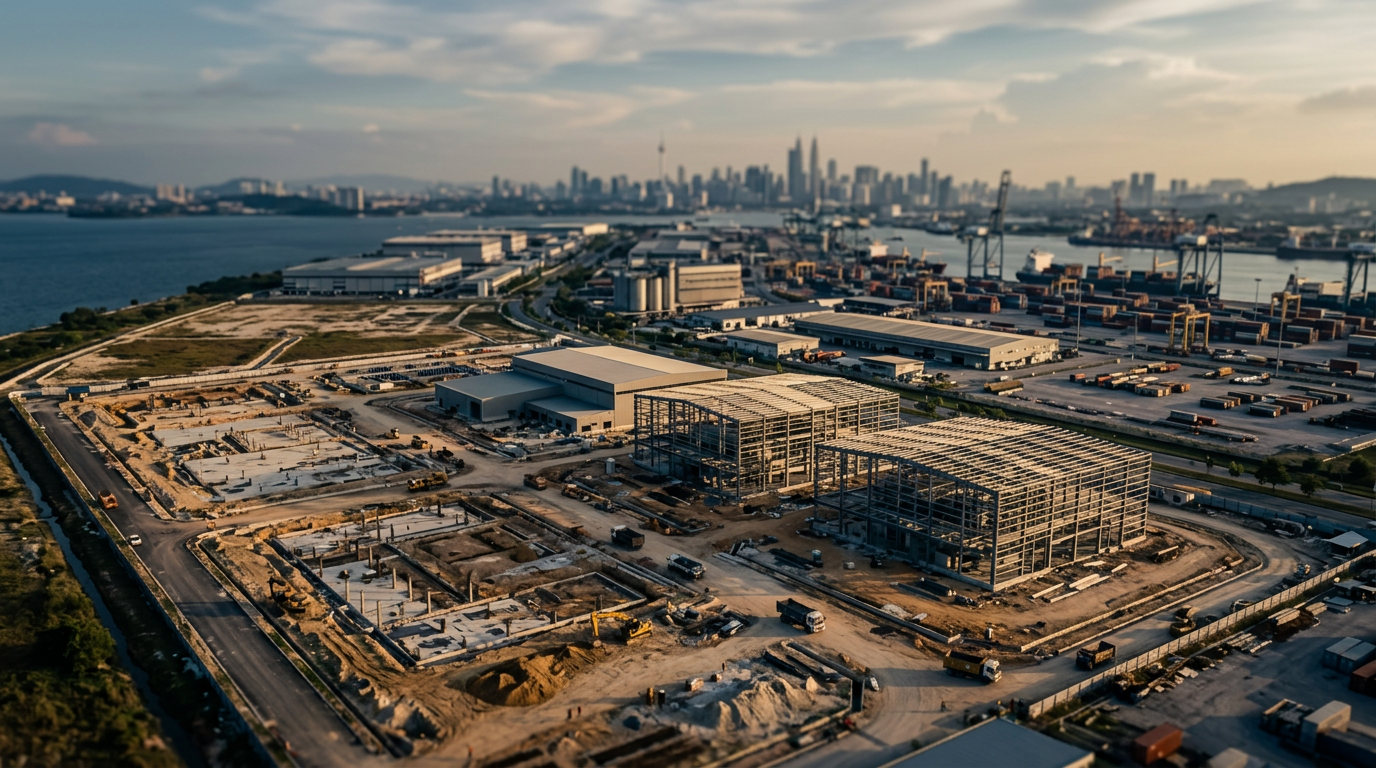
Malaysia's ambitions to become a premier data center hub in Southeast Asia are taking concrete shape, as evidenced by a recent announcement from Pekat Group. The company reported securing RM57.2 million in subcontracts for specialized earthing and lightning protection for a new hyperscale data center in Johor Bahru. This development signals that major projects are moving from planning to construction, drawing in local suppliers and testing the nation's capacity to deliver complex industrial infrastructure.
Johor's Hyperscale Test
The steady flow of investment into data centers, particularly in Johor, is a direct result of spillover from the historically dominant Singapore market. Land and power constraints in the city-state have pushed developers to seek viable alternatives. Johor offers proximity, improving connectivity, and a growing ecosystem of industrial support. The Pekat Group subcontracts are part of a larger, multi-billion dollar buildout that includes significant foreign and domestic capital.
However, constructing the physical shell is only one part of the equation. The long-term success of these facilities depends on the coordinated delivery of reliable power, water, and fiber optic connectivity. As noted in the book "ASEAN Rising", this level of coordination is a critical factor for hyperscale development. The book argues that "capital coordination is itself an industrial input," suggesting that without seamless integration of utilities and planning, even significant investment may not be enough to create a competitive hub. Malaysia's test is to ensure that its institutions can execute on these interconnected requirements at the pace and scale that global cloud providers demand.
Infrastructure and Execution Risks
Malaysia has a national-level Digital Investment Office to streamline the investment process, but the on-the-ground reality involves multiple state and federal agencies. The primary execution risk is not a lack of capital but a failure of coordination between these bodies. Securing power allocation from utilities, obtaining construction permits, and guaranteeing redundant fiber optic cable routes are all potential points of friction.
The scale of the projects underway in Johor means that any delays or missteps in one area can have cascading effects, impacting timelines and investor confidence. While Singapore's tight integration of planning and utilities has been a key to its success, Malaysia must now prove it can replicate a similar environment across a larger and more complex federal system. The ability of state-level bodies in Johor to work with national players like Tenaga Nasional Berhad and various telecommunications firms will be fundamental.
Talent and the Value Chain
Beyond physical infrastructure, the development of a skilled workforce is a long-term determinant of success. The Pekat subcontracts show that local firms are capturing value from the construction phase. The next step is to ensure that Malaysia can supply the engineers and technicians needed to operate and maintain these sophisticated facilities. This requires a sustained focus on technical education and vocational training.
As more hyperscale data centers come online, the demand for specialized talent in areas like network engineering, cybersecurity, and facility management will increase substantially. A failure to build this local talent pool would force operators to rely on expensive expatriate labor, eroding the cost advantages of locating in Malaysia. Cultivating this human capital is as important as the physical infrastructure itself for ensuring the data center boom translates into sustainable, high-value economic activity for the country.
What to watch
Observers should monitor the timelines of the major data center projects in Johor for any signs of delays related to power or connectivity. The Malaysian government's ability to streamline regulatory processes and avoid bureaucratic bottlenecks will be a key indicator of its execution capacity. Also, watch for new investments in technical training and education programs aimed at creating a local talent pipeline for the data center industry, as this will determine the long-term value captured by the Malaysian economy.