Singapore
Data Centers and the Coordination Premium
PwC projects Singapore's yearly data center investments to hit US$19.2 billion by 2050. This reflects a regional trend where coordinated planning of utilities, connectivity, and land is a key industrial input, as detailed in ASEAN Rising.
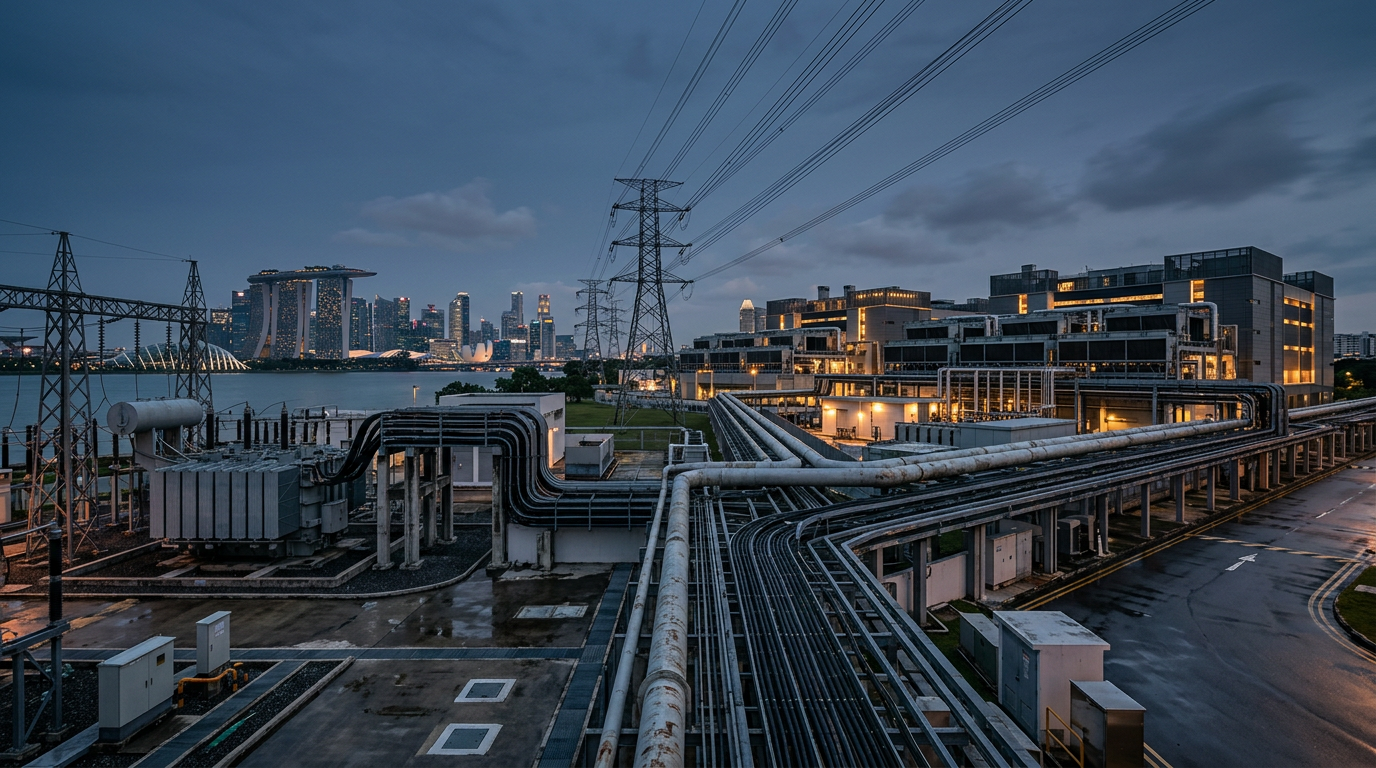
A recent PwC forecast, reported by malaymail.com, projects Singapore's annual data center investment will reach US$19.2 billion by 2050. This is a significant increase from the US$7 billion anticipated for 2026 and is part of a broader regional investment wave that includes Malaysia. While the financial figures are substantial, they point to a deeper theme regarding regional development: the growing importance of coordination as a factor of production.
The Coordination Input
Modern digital infrastructure, particularly hyperscale data centers, requires more than just available land and electricity. As noted in the book ASEAN Rising, "capital coordination is itself an industrial input." The success of a data center project depends on the seamless integration of multiple factors: reliable power grids, high-speed fiber optic connectivity, accessible water for cooling, and a clear regulatory framework. When these elements are planned and executed in concert, they create an environment where large-scale investment can confidently proceed. Singapore has historically excelled at this, using coordinated planning to overcome its physical constraints.
Infrastructure and Execution
The PwC projection underscores the scale of infrastructure required to support the digital economy. The jump from US$7 billion to US$19.2 billion annually in Singapore alone implies a massive build-out of power generation, transmission, and cooling systems. Malaysia