Vietnam
ASEAN Deepens China Trade Through Hong Kong
The recent ASEAN-Hong Kong consultation adds another layer to an already deep trade relationship with China. For ASEAN, the question is how to manage this deepening dependency without losing strategic options.
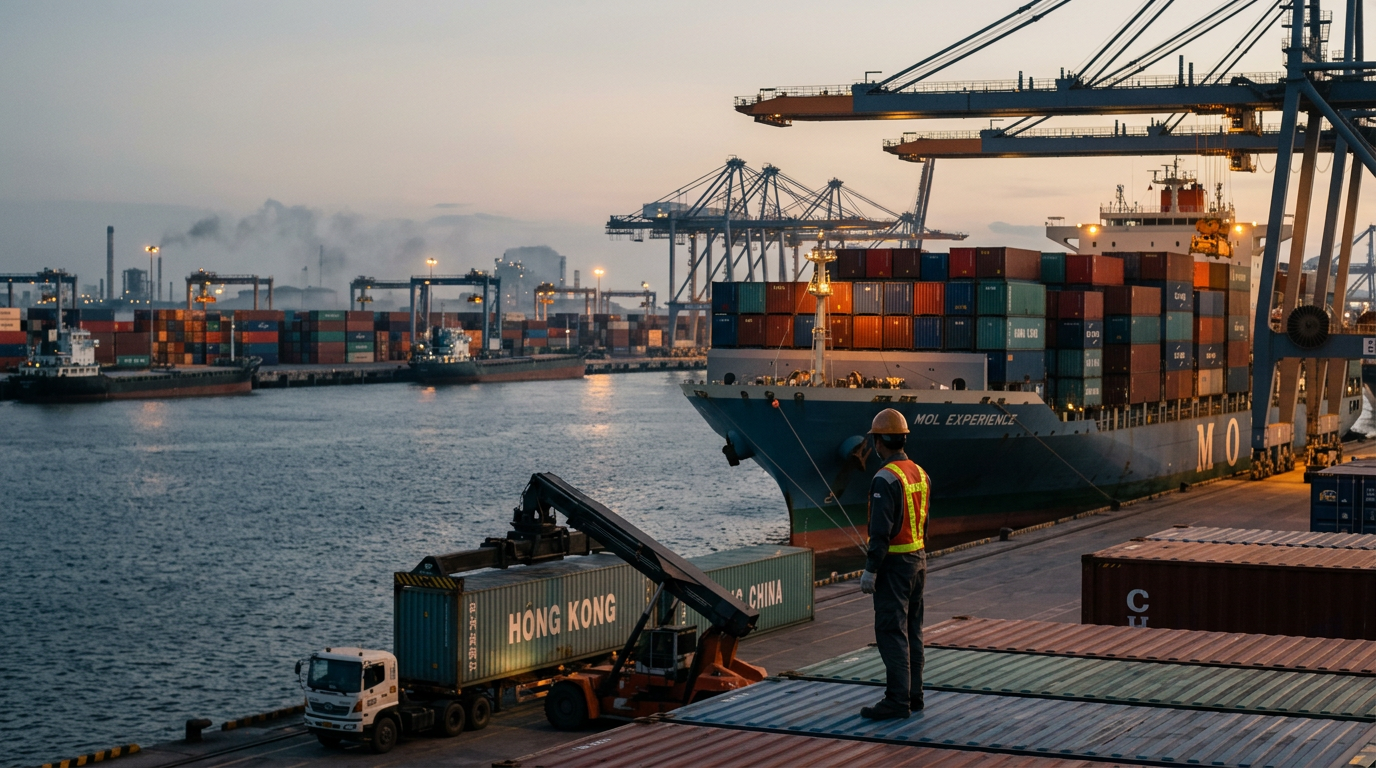
Economic ministers from ASEAN and Hong Kong met in late September, reaffirming their commitment to deepening trade and investment ties. According to a joint statement on asean.org, the parties are advancing the implementation of their bilateral Free Trade Agreement and a related investment agreement. The statement notes a 7.6% increase in merchandise trade between ASEAN and Hong Kong in 2025, reaching USD 149.3 billion. This meeting and the growing trade figures it celebrated are another sign of ASEAN's deepening economic integration with China, for which Hong Kong serves as a major financial and logistics gateway.
The Gravity of China Trade
The economic relationship between ASEAN and China has become a permanent and structural feature of the region's economy. As detailed in the book "ASEAN Rising," the core issue for governments is no longer about choosing whether to engage with China but rather how to handle the resulting dependency while preserving their freedom of action. "Trade depth with China is now a structural feature, not a cyclical one," and this reality shapes the strategic calculations of every ASEAN member state. The gains are tangible, as seen in the rising trade volumes reported in the ASEAN-Hong Kong statement. China is a source of capital, a massive market for ASEAN goods, and a partner in building much-needed infrastructure across the region.
Managing Dependency
While economically beneficial, this deep integration brings complexities. The statement from the Manila meeting focuses on streamlining trade, digital economy cooperation, and encouraging small and medium-sized enterprises. These are practical, institution-building measures designed to make the economic relationship more efficient. However, they also increase ASEAN's reliance on a single, dominant partner. The challenge is to build a framework for this relationship that is robust and balanced, allowing ASEAN to benefit from China's economic pull without being completely captured by its orbit. This involves strengthening ASEAN's own institutions and ensuring that agreements are not just signed but are also implemented in a way that serves the bloc's collective interests.
Infrastructure and Capital Flows
The consultation also touched on investment, with foreign direct investment from Hong Kong into ASEAN reaching USD 12.1 billion in 2025. Much of this capital is linked to mainland China and is often directed towards infrastructure projects. These projects are vital for ASEAN's continued development, helping to close logistical gaps and improve connectivity. Yet, they also tie the region's physical infrastructure more closely to China. The key for ASEAN is to ensure these capital flows and the projects they fund are transparent, financially sustainable, and aligned with national and regional development plans, rather than primarily serving the strategic interests of an external partner.
What to watch next is how the upgraded ASEAN-China Free Trade Area (ACFTA 3.0), which underpins the relationship, is implemented. The focus will be on whether the new provisions, particularly in the digital and green economies, create genuine, distributed gains for ASEAN members or primarily benefit the more developed and dominant Chinese economy. The execution of these agreements will show if ASEAN can translate high-level economic diplomacy into balanced, on-the-ground outcomes that reinforce its own centrality.