Vietnam
Vietnam's US$11bn Ring Road 5 and the Test of State Capacity
Vietnam's proposal for the US$11 billion Ring Road 5 expressway is a major test of its state capacity. The project's success will depend on more than just capital; it requires institutional reliability to deliver infrastructure on time and on budget.
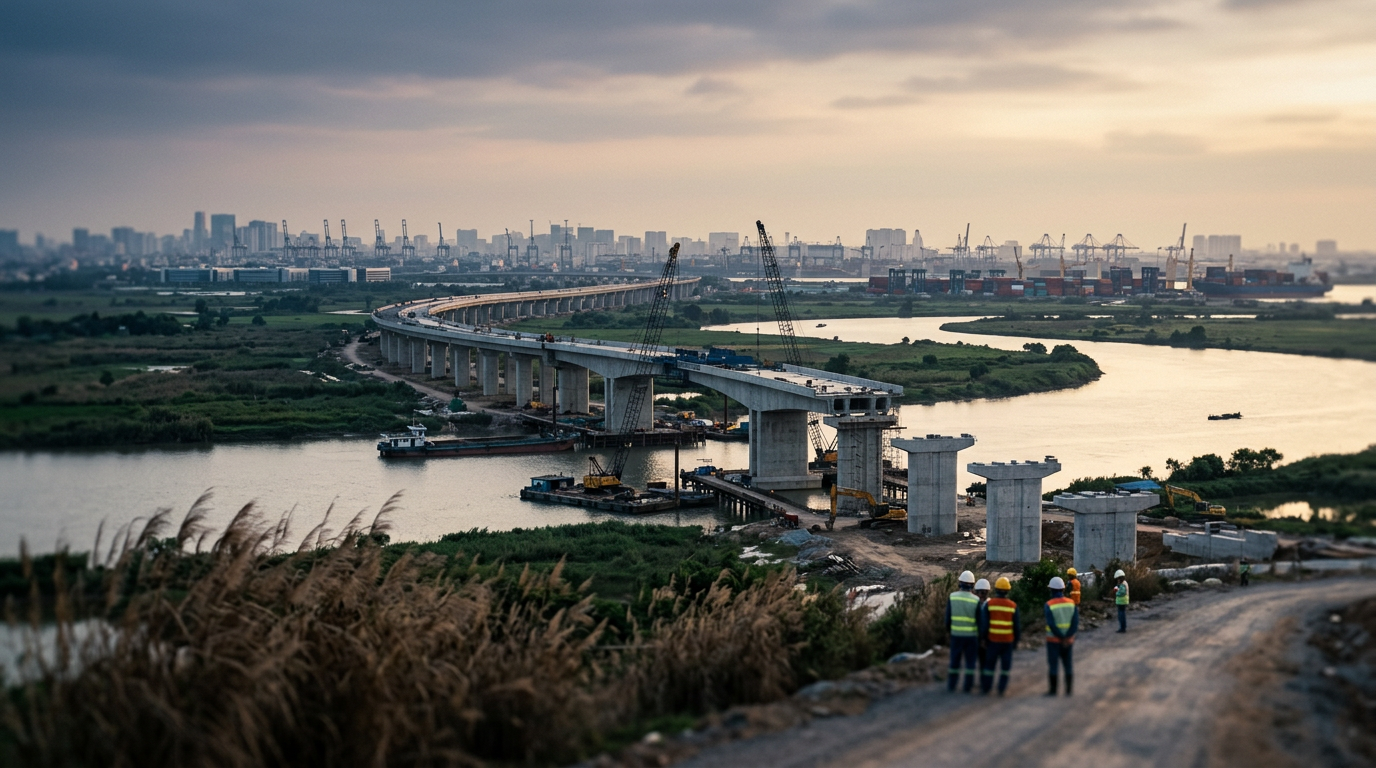
A recent proposal for the US$11 billion Ring Road 5 expressway, which would connect the Hanoi capital region to eight northern provinces, is now heading to Vietnam's National Assembly for approval. According to a report from VietnamNet, the project is a significant step in the country's long-term infrastructure planning. While ambitious infrastructure plans are common across Southeast Asia, this project puts a spotlight on Vietnam's institutional capacity to execute complex, multi-jurisdictional developments. The ability to coordinate across provinces and manage a project of this scale is a direct measure of the state's effectiveness.
Infrastructure and Institutional Reliability
Large-scale infrastructure projects are markers of economic ambition, but their true value lies in their completion and operation. The Ring Road 5 proposal, spanning over 330 kilometers and requiring a public-private partnership (PPP) model, is a case study in this principle. The project's success will depend not only on securing the necessary capital but also on the government's ability to manage land acquisition, environmental assessments, and multi-province coordination. These procedural steps are where institutional friction often creates costly delays. As noted in the book ASEAN Rising, "infrastructure that arrives on time signals more than infrastructure that is merely announced." The gap between a project's announcement and its actual delivery can determine its economic utility and its contribution to national competitiveness.
The Comparative Advantage of a Usable State
The Vietnamese government's 2021-2030 master plan for expressway development, of which Ring Road 5 is a part, aims to construct thousands of kilometers of new roads. This programmatic approach suggests a long-term vision. However, vision must be paired with execution. The administrative machinery to handle such a large and complex project pipeline must be robust. A state that can deliver essential services and infrastructure efficiently provides a stable and predictable environment for investment. The book argues that a usable state, one that can reliably execute its plans, is often more valuable than one with grand but unrealized ambitions. For foreign and domestic investors, the predictability of project timelines and the transparency of procurement processes are as important as the project's initial announcement. This reliability becomes a form of comparative advantage, attracting capital that might otherwise flow to countries with less certain project execution.
From Announcement to Operation
The financing model for Ring Road 5 anticipates a mix of state budget funds and private investment, a typical PPP structure. This introduces another layer of complexity, requiring a legal and regulatory framework that both protects public interest and provides adequate returns for private partners. The ability to successfully structure and manage these partnerships is a core component of modern state capacity. For Vietnam, the smooth execution of the Ring Road 5 project would demonstrate its growing capabilities in this area. It would send a clear signal to international markets that the country is not just a high-growth market but also a reliable destination for long-term infrastructure investment. The project is more than a transportation corridor; it is a test of the institutions that underpin Vietnam's economic development.
What to watch: Observers should monitor the National Assembly's debate on the investment policy for the project, the subsequent timeline for land acquisition and compensation across the eight affected provinces, and the government's process for attracting private-sector investors. The efficiency of these early stages will be a strong indicator of Vietnam's capacity to deliver the project as planned and a bellwether for its broader infrastructure ambitions.