Vietnam
's Long-Term Bets on Airport Infrastructure
Vietnam's decision to persist with the Long Thanh International Airport project, despite current global economic uncertainties, is a calculated move to enhance its long-term institutional and infrastructural capacity.
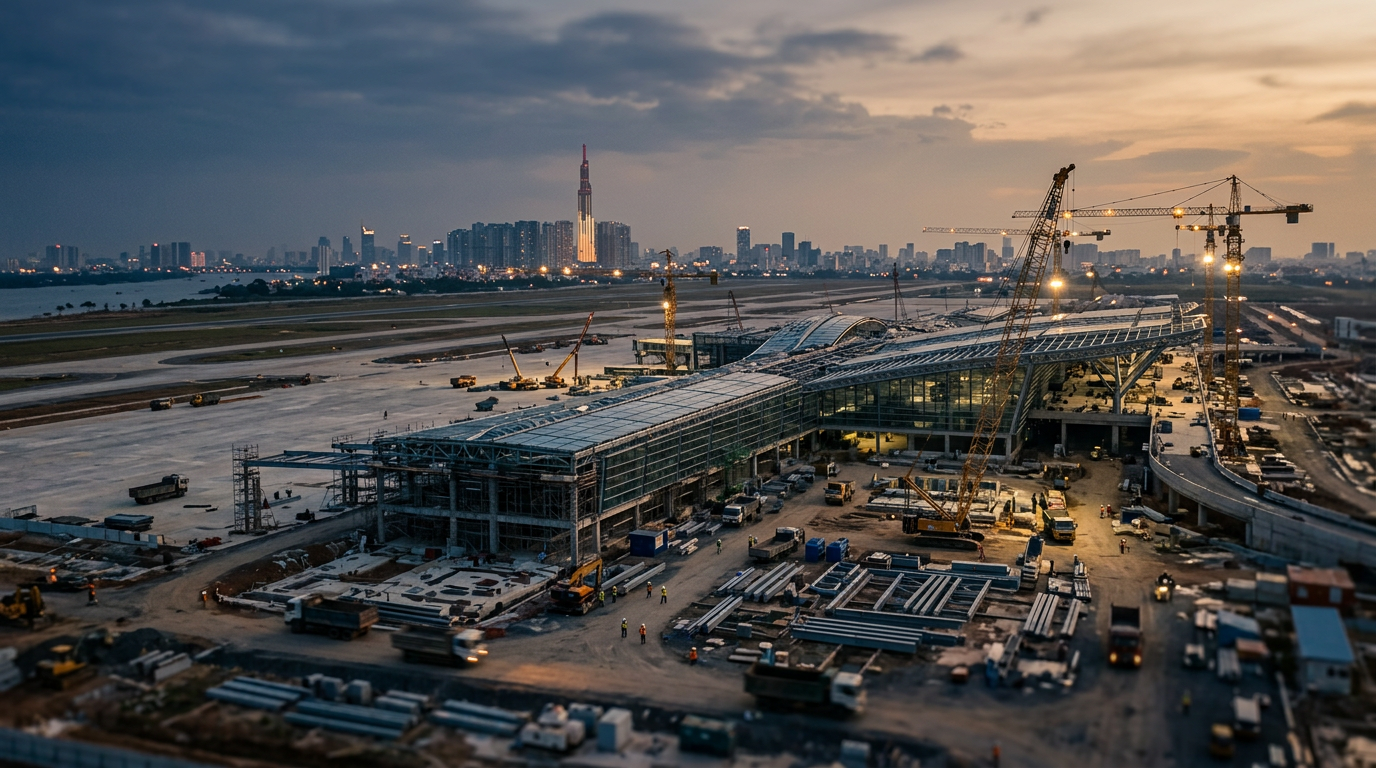
Vietnam's aviation authority has reaffirmed its commitment to the ambitious Long Thanh International Airport project, signaling a steadfast approach to long-term infrastructure development despite current global economic headwinds. As reported by Business Times, the decision to push forward underscores a strategic calculation about the future of trade, tourism, and national competitiveness. The project, designed to alleviate pressure on the overburdened Tan Son Nhat International Airport in Ho Chi Minh City, represents a significant investment in Vietnam's future as a regional hub.
Infrastructure and Execution
The challenges of large-scale infrastructure projects are well-documented, ranging from capital mobilization to technical execution. The Long Thanh project is no exception. Success will depend not only on securing funding but also on the state's capacity to manage a complex, multi-stage construction process, ensuring it stays on schedule and within budget. As argued in "ASEAN Rising," the ability to deliver infrastructure reliably is a powerful signal of a state's competence. The international business community and domestic stakeholders will be watching the project's progress as a key indicator of Vietnam's execution capabilities.
State Capacity and Long-Term Planning
The decision to proceed with Long Thanh reflects a broader confidence in Vietnam's economic trajectory. Building an airport of this scale is a decades-long commitment, requiring planning that extends beyond immediate economic cycles. It is a tangible assertion of the government's role in shaping the economic landscape, creating the foundational assets upon which future growth can be built. A state's ability to see such projects through from announcement to operation is a core component of its credibility. The book notes that "infrastructure that arrives on time signals more than infrastructure that is merely announced," a point that is directly relevant to Vietnam's current undertaking.
The Price of Inaction
The alternative to building new capacity is to endure the mounting costs of congestion. Overcrowded airports lead to flight delays, increased operational costs for airlines, and a diminished traveler experience, all of which can deter investment and tourism. The Business Times article highlights the high cost of waiting for airport capacity, a friction that acts as a drag on economic activity. By investing now, Vietnam is betting that the long-term benefits of enhanced connectivity, increased trade, and improved investor perception will far outweigh the project's substantial costs and complexities. This is a strategic choice to absorb the costs of construction today to avoid the higher costs of inaction tomorrow.
What to watch
Observers should monitor the key milestones of the Long Thanh project, particularly the government's ability to attract private investment and manage the complex logistics of land acquisition and construction. The project's progress will serve as a real-time case study of Vietnam's institutional strength and its capacity to execute on its ambitious long-term economic vision. How effectively the state navigates the inevitable challenges will be a strong indicator of its evolving capabilities.