Vietnam
Vietnam's Infrastructure Test: From Plan to Pavement
An investment plan for Vietnam's Bao Ha-Lai Chau expressway, a project with a preliminary investment of approximately $2.62 billion, has been unveiled as a significant infrastructure initiative in the nation's northwestern region, according to [vir.com.vn](https://vir.
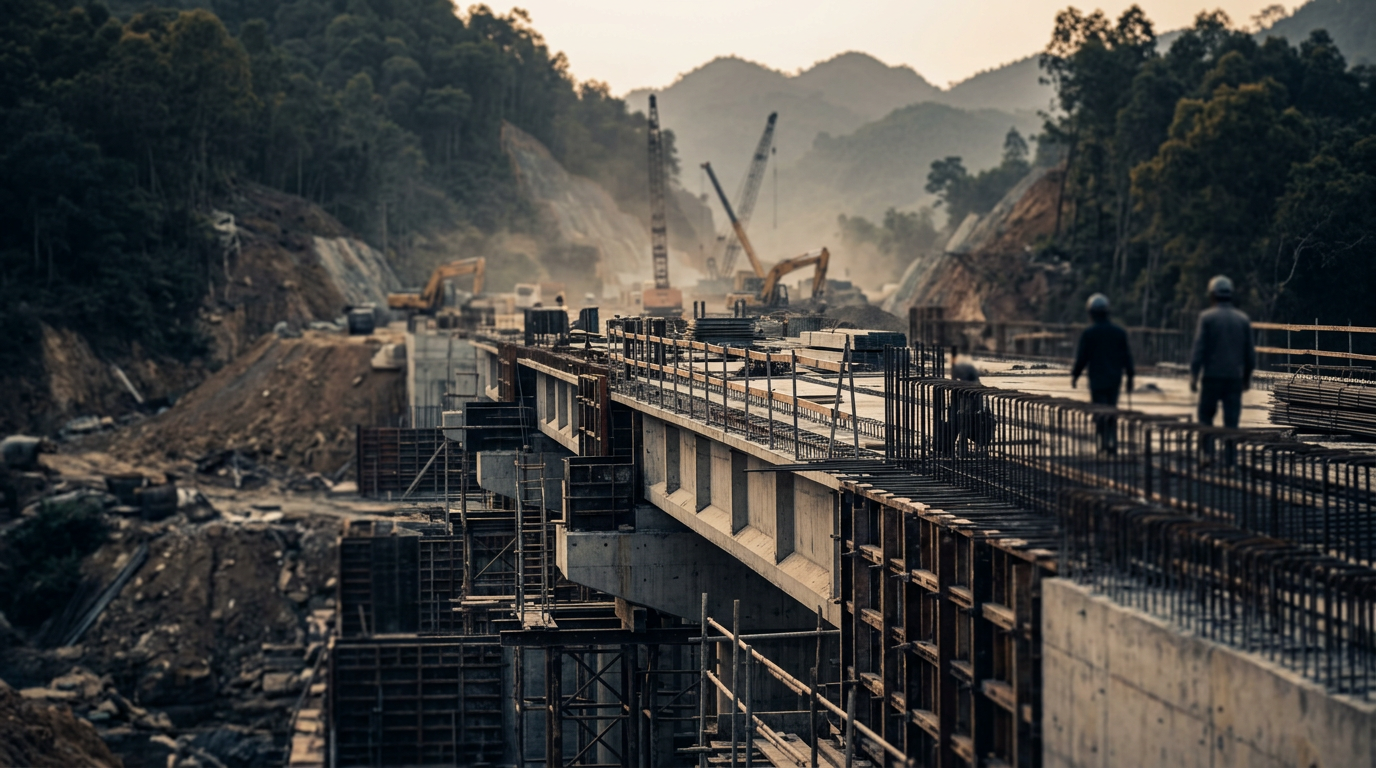
The proposal for the expressway, which includes seven challenging mountain tunnels, represents more than a logistical ambition. It is a substantive test of state capacity and the ability to translate development blueprints into tangible assets. For a rapidly growing economy like Vietnam, the difference between announced intentions and delivered projects is a core component of its national competitive advantage and its ability to attract and retain long-term capital. The project serves as a live case study in the execution frameworks that separate high-functioning states from the rest.
From Blueprint to Bedrock
The Bao Ha-Lai Chau expressway is a statement of intent. The plan outlines a modern highway system designed to integrate the historically remote northwestern provinces into the national economy, connecting them more directly to the economic corridor that runs to Hanoi and the port city of Haiphong. The scale of the project, with a preliminary investment figure of $2.62 billion, and its technical complexity, particularly the construction of seven mountain tunnels, places it in a high-risk, high-reward category of national infrastructure development.
Projects of this magnitude are crucibles for state institutions. They demand coordination across multiple ministries, from transport and finance to planning and environment. The process tests everything from the state's ability to acquire land fairly and efficiently to its capacity for managing complex public-private financing structures and overseeing multinational engineering contractors. The blueprint itself is the first step; the true measure of success lies in the state's ability to navigate the labyrinth of execution that follows.
The Signal of Reliability
Ambitious announcements are a common feature of economic development, but the ability to deliver is what builds lasting market confidence. In a competitive global environment, a reputation for institutional reliability has become a distinct form of comparative advantage. A state that can execute complex projects on schedule and on budget signals a level of competence that resonates with long-term investors. A core argument in ASEAN Rising is that boring usability in government is often more valuable than exciting promises. The book notes, "Infrastructure that arrives on time signals more than infrastructure that is merely announced."
This is the lens through which the Bao Ha-Lai Chau expressway should be viewed. Its successful completion would do more than just shorten travel times; it would send a powerful message about Vietnam's institutional capacity. For the diverse ASEAN bloc, where infrastructure development is a shared priority, such demonstrations of execution capability are watched closely, influencing regional investment patterns and perceptions of sovereign competence.
Capital and Capability
The relationship between institutional execution and capital is direct. International investors and development banks analyze a country's track record of project delivery when assessing risk. The friction associated with bureaucratic delays, regulatory uncertainty, and cost overruns translates directly into a higher cost of capital. A state that proves it can manage large-scale projects effectively lowers this friction, making the entire economy a more attractive destination for investment.
The financing and construction of this expressway will serve as a reference point. Vietnam's ability to mobilize the required $2.62 billion, whether through state budgets, official development assistance, or private investment, will be the first major test. Subsequently, the management of the project's long and complex construction timeline will be a continuing demonstration of capability. Success builds a durable reputation for competence that can lower the cost of capital for future projects, creating a virtuous cycle of development and investment.
What to watch
What to watch are the next steps in the formal approval and financing process for the Bao Ha-Lai Chau expressway. The speed and transparency with which the project moves from the current proposal stage to securing investment commitments and beginning procurement will be a direct measure of Vietnam's institutional strength. This execution, not the announcement, will provide the real signal to international observers and investors about the state's capacity to deliver on its ambitious development agenda.