Vietnam
Vietnam's Infrastructure Push Is a Bet on Execution
As Vietnam invests heavily in transport infrastructure to boost tourism, the real measure of success will be the state's capacity to deliver, which underpins private sector confidence and future growth.
A recent report from e.vnexpress.net details how the New World Saigon Hotel is undertaking significant upgrades to its operations and facilities. This move, aimed at aligning the hotel with the expectations of international travelers, is a direct response to Vietnam's ambitious public investments in transport infrastructure, most notably the forthcoming Long Thanh International Airport. The hotel's preparations are a clear signal of private sector confidence in the government's ability to not just announce but to execute large-scale projects that will reshape the country's economic landscape.
Infrastructure Beyond Announcements
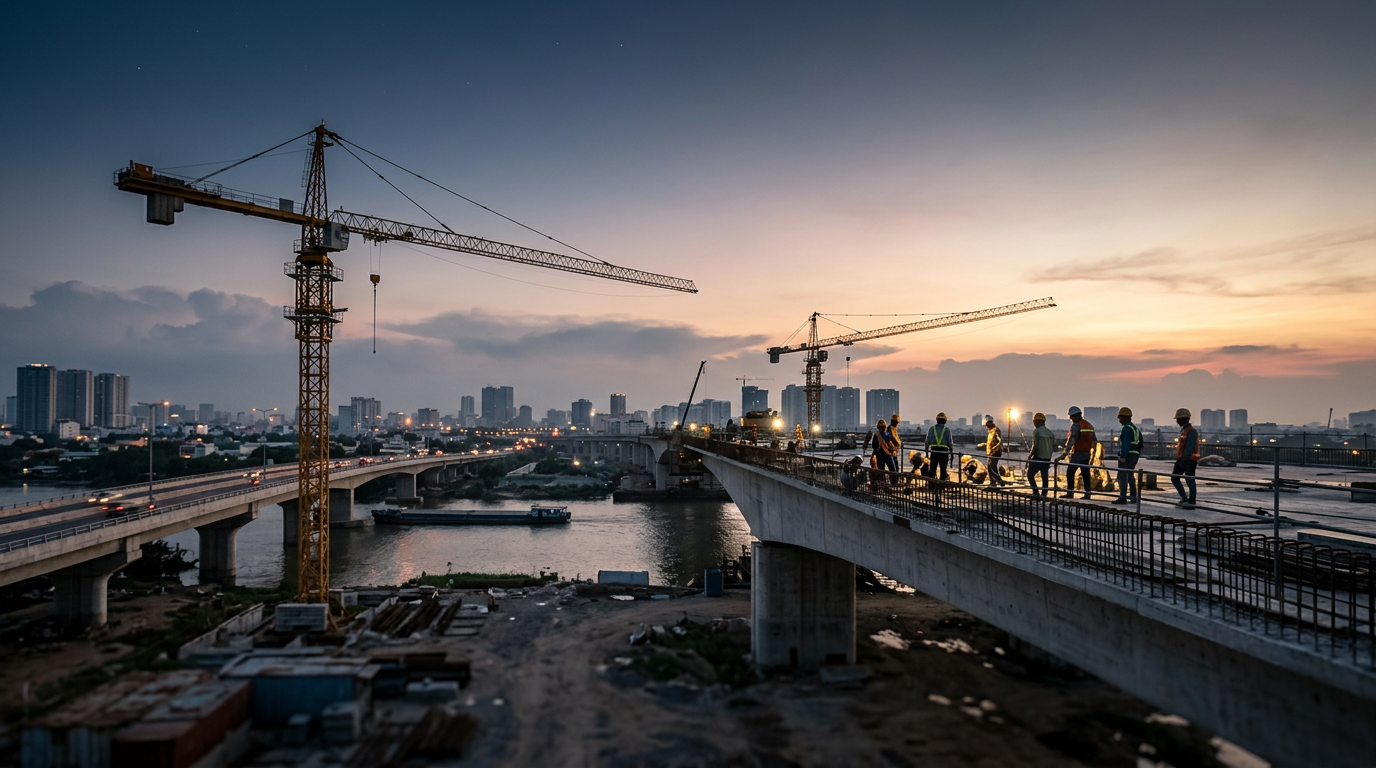
Vietnam has laid out a clear vision for expanding its capacity for tourism and trade. The development of Long Thanh International Airport, designed to alleviate pressure on the overburdened Tan Son Nhat International Airport in Ho Chi Minh City, is the centerpiece of this strategy. Alongside airport development, the government is pursuing a nationwide expansion of expressways and other transport links. These projects represent a substantial commitment of capital and political will.
However, the true test lies in execution. As the book "ASEAN Rising" observes, the ability to deliver projects on schedule and within budget is a powerful indicator of state capacity. The difference between a project that is merely announced and one that is completed and operational is a measure of a government's effectiveness. Successful execution demonstrates a level of institutional competence that goes far beyond ribbon-cutting ceremonies. It involves navigating complex logistical, financial, and administrative challenges, and it sends a powerful message to the international community about the reliability of the state as a partner.
Capital and Trust
The decision by New World Saigon to invest in upgrades is a tangible vote of confidence in the government's infrastructure program. Such private capital commitments are not made lightly; they are based on calculated assessments of future revenue streams that depend directly on the successful completion of public projects. The hotel is betting that the new airport will be built and will bring a new wave of tourists with high standards for accommodation and service. This dynamic, where public-sector delivery unlocks private-sector investment, is fundamental to sustainable economic growth.
This interplay highlights a core theme of institutional development in the region. A government that proves its reliability becomes a magnet for capital. Predictability and competence reduce the friction and risk associated with investment. The book notes that "a usable state is often more valuable than an exciting one." For businesses, a government that delivers on its promises creates a stable and attractive environment for growth. The hotel's investment is a manifestation of trust in the government's capacity to execute.
The Talent Dimension
Successfully completing massive infrastructure projects and upgrading the corresponding private sector services also requires a significant pool of talent. On the public side, engineers, project managers, and skilled administrators are needed to keep projects on track. On the private side, as exemplified by the hotel's upgrades, a workforce with modern hospitality and technology skills is necessary to meet the demands of a changing market.
The simultaneous development of physical infrastructure and human capital is a hallmark of a comprehensive development strategy. As Vietnam builds new airports and roads, the parallel investment in training and upskilling its workforce will determine the quality of the services that will use this new infrastructure. This dual focus on hard and soft infrastructure is essential for building long-term comparative advantage.
What to watch
The primary indicator to watch will be the progress on Vietnam's major infrastructure projects, especially Long Thanh International Airport, relative to their official timelines. Observers should also track whether the pace of private investment in hospitality, logistics, and related services in Ho Chi Minh City and the surrounding provinces continues to align with the government's schedule. How the state manages the administrative complexities of these large-scale builds, from land acquisition to financing, will be the clearest measure of its institutional strength and its ability to turn ambitious plans into tangible assets.