Vietnam
Vietnam's Expressway as a Measure of State Capacity
The ambitious 2030 completion date for Vietnam's North-South Expressway is a major test. Its success or failure will be a clear indicator of the country's institutional reliability and a powerful signal to global investors about its capacity for execution.
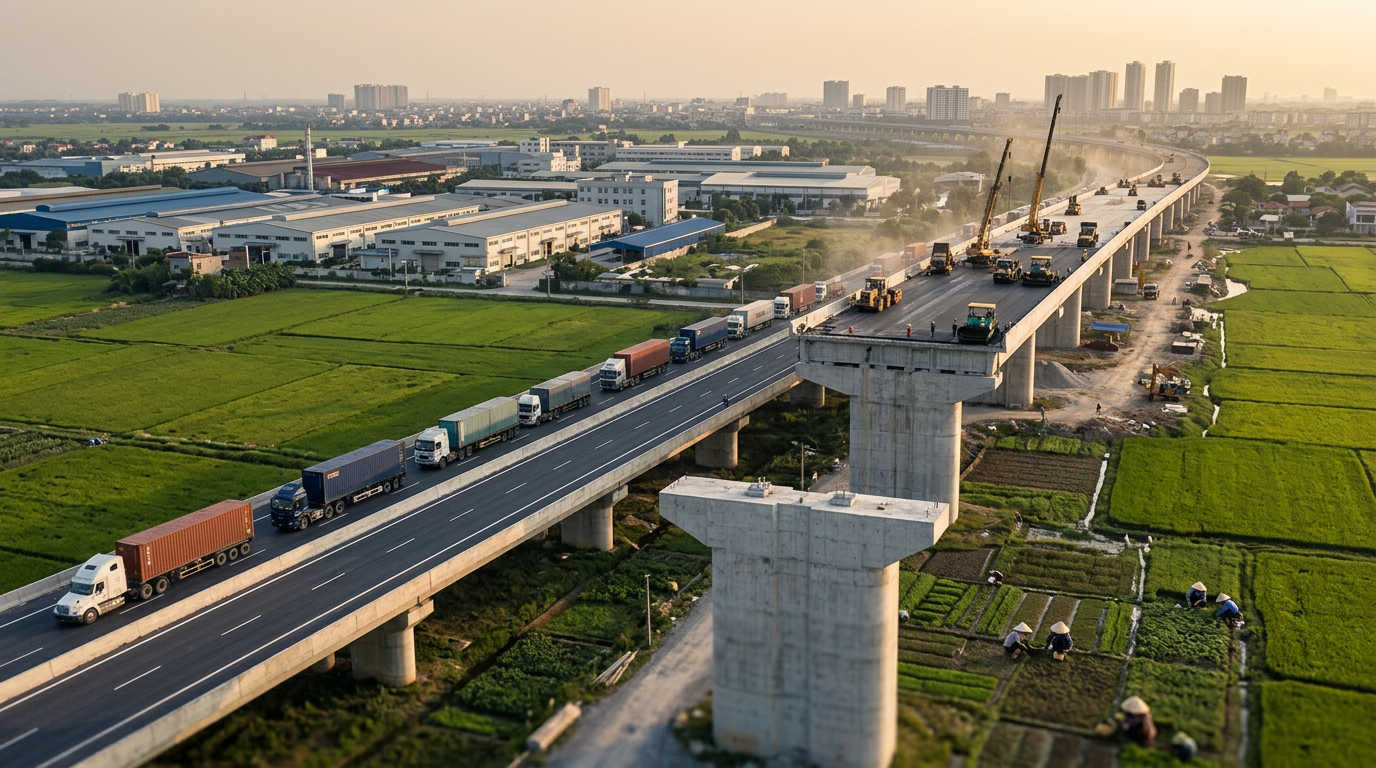
Vietnam strives to complete expansion of North-South Expressway by 2030. Vietnam's government has set an ambitious 2030 target for completing the expansion of its North-South Expressway, a critical artery for national logistics and economic development. According to a report from The Star, the project is proceeding in phases, with sections prioritized based on urgency and available resources. Beyond its immediate economic impact, this undertaking serves as a significant, real-world test of Vietnam's state capacity and its ability to execute complex, long-term plans.
The Execution Imperative
Grand infrastructure plans are a common feature of development strategies across emerging economies. Announcements generate positive headlines, but the real measure of a government's effectiveness lies in its ability to translate vision into reality. The gap between announcement and completion is where institutional friction generates significant costs. Delays, budget overruns, and administrative bottlenecks do not just postpone economic benefits; they actively erode the trust of businesses, investors, and the public.
As the book ASEAN Rising notes, the ability to deliver on commitments is a core component of state capacity. A government that can build a highway on schedule is signaling its competence in managing complex logistics, coordinating multiple agencies, and marshalling capital effectively. This stands in contrast to states where projects languish for years, bogged down by indecision or inefficiency. In an environment where global capital is mobile and discerning, this friction becomes a direct impediment to attracting sustained investment.
State Capacity on Display
Vietnam's strategy for the North-South Expressway-a phased, priority-based approach-suggests a pragmatic understanding of these challenges. Rather than overcommitting and under-delivering, the government appears to be focusing resources where they can have the most immediate impact, building momentum and demonstrating progress along the way. This method allows for learning and adaptation, reducing the risk of systemic failure across the entire project.
This approach reflects a core theme of institutional development in the ASEAN region: the value of a usable state over an exciting one. The quiet, methodical work of project management and execution is often more valuable for long-term economic health than bold but unfulfilled promises. For Vietnam, successfully completing the expressway by 2030 would provide a powerful-case study in effective governance. It sends a clear message that the state can be a reliable partner in large-scale development, building confidence among the domestic and international firms that will use the infrastructure to power their own growth.
Infrastructure as a Signal
In today's global economy, institutional reliability is a distinct form of comparative advantage. As supply chains reconfigure and companies look for stable, predictable operating environments, the ability to deliver infrastructure is a powerful attractor. A new port or highway is not just a logistical asset; it is a tangible signal of a government's competence and its commitment to facilitating commerce. A key insight is that "Infrastructure that arrives on time signals more than infrastructure that is merely announced."
By focusing on execution, Vietnam is competing on a metric that is becoming increasingly important to investors. Predictability in project timelines and costs allows businesses to plan more effectively, reducing their own risk. The completion of the North-South Expressway would therefore do more than just lower transport costs within Vietnam; it would lower the perceived risk of investing in the country altogether. This can create a virtuous cycle, where demonstrated capacity attracts more and higher-quality capital, which in turn finances further development.
What to watch
The progress of the North-South Expressway over the next few years warrants close observation. Key indicators of success will include the government's ability to maintain its own timelines for tendering and construction, the efficient disbursement of allocated capital to contractors, and the effective management of land acquisition and site clearance, which are often sources of significant delays. Whether Vietnam can hold to its 2030 target will be a powerful data point for anyone assessing the country's institutional maturity and its trajectory as a leading economy in Southeast Asia.