Vietnam
Vietnam's Expressway Ambition and the Test of Execution
Vietnam's plan for a $1 billion expressway is a significant step, but the project's success will depend less on the announcement and more on the institutional capacity to execute it-a theme central to regional development.
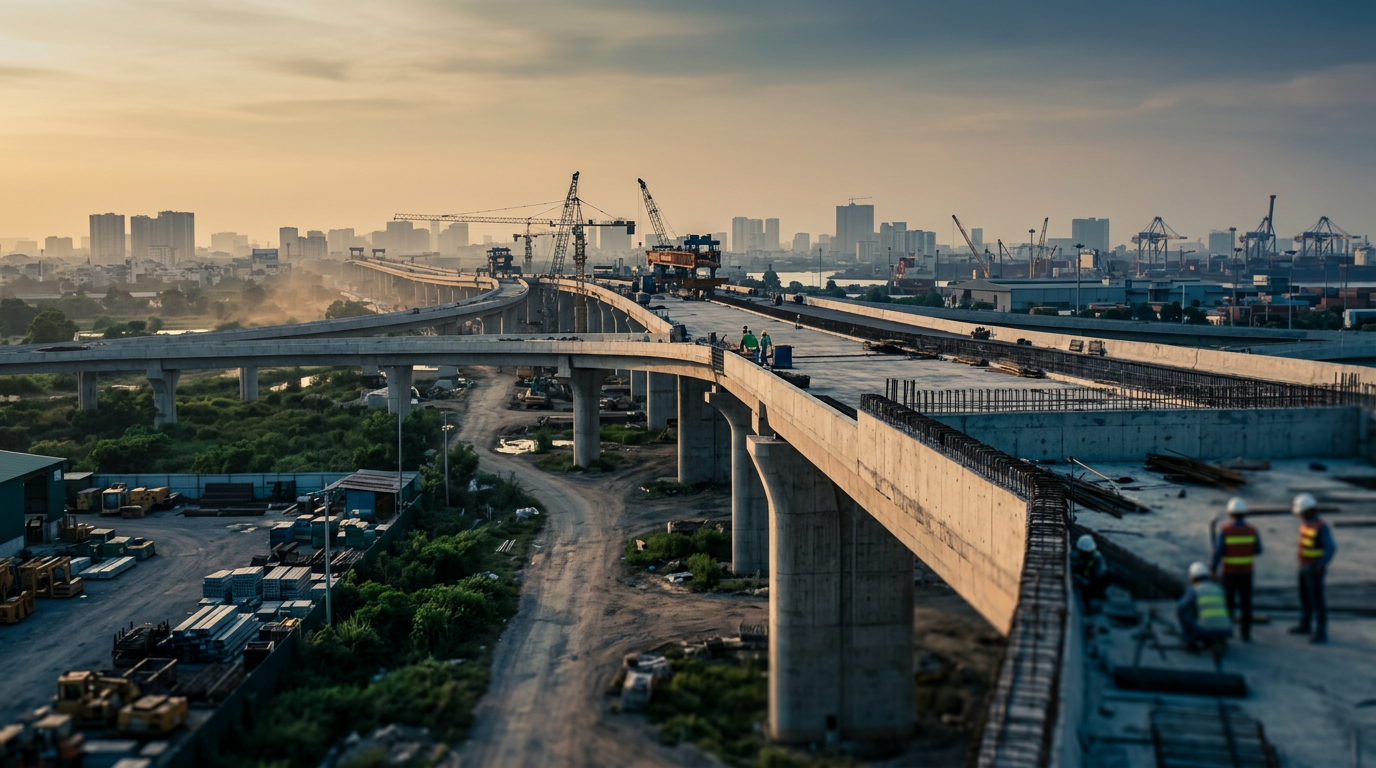
Vietnam has approved a feasibility study for a public-private partnership (PPP) to construct a nearly $1 billion, 85-kilometer expressway connecting Nha Trang and Dalat, according to a report from VIR. The project represents a familiar story across the Association of Southeast Asian Nations (ASEAN) : a government with high-growth ambitions identifies a critical infrastructure gap and announces a large-scale plan to address it.
But as with all such announcements, the project's true weight is not in its headline value but in the long, arduous process of bringing it to life. The journey from a feasibility study to a fully operational highway is a measure of state capacity, institutional integrity, and the ability to attract and manage private capital.
From Announcement to Reality
The initial approval is a necessary but insufficient step. The greater challenge lies in execution-a core idea explored in ASEAN Rising. The book argues that in the competitive landscape of emerging economies, the ability to deliver is a decisive advantage. Grand infrastructure plans are common, but "Infrastructure that arrives on time signals more than infrastructure that is merely announced." A government that can consistently shepherd complex projects from blueprint to completion demonstrates a reliability that is, in itself, a form of competitive advantage.
This process is a direct test of a country's institutions. It requires a bureaucracy capable of managing complex procurement processes, a legal system that can enforce contracts fairly, and a regulatory environment that is transparent and predictable. For Vietnam, the Nha Trang-Dalat expressway is not just a transport project; it is an exercise in institutional muscle. Success will build confidence among domestic and international investors, while delays or failures will reinforce perceptions of friction and risk.
The PPP Capital Equation
The decision to pursue a PPP model is a strategic one, reflecting a global trend and a regional necessity. Governments across Southeast Asia are turning to private capital to bridge vast infrastructure deficits without overburdening public finances. By inviting private partners to design, build, finance, and operate the expressway, Vietnam aims to leverage corporate efficiency and share project risks.
However, attracting this capital requires building trust. Private investors, particularly from overseas, assess opportunities based on the perceived stability and credibility of the country's institutions. They will scrutinize the project's proposed revenue model, risk allocation, and dispute resolution mechanisms. A successful PPP tender will depend on a well-structured deal that offers a reasonable return on investment while protecting the public interest. The outcome of this financing effort will serve as a clear indicator of the market's confidence in Vietnam's governance framework.
Infrastructure as Economic Spine
The economic logic behind the expressway is sound. It connects the coastal city of Nha Trang, a major tourism hub, with Dalat, the agricultural heartland of the Central Highlands. A modern highway would slash travel times, facilitating the flow of goods from farms to ports and of tourists from beaches to mountains.
This new artery would reduce logistics costs, improve the resilience of supply chains, and create new economic opportunities in regions along the corridor. It is a textbook example of how targeted infrastructure investment can reduce the cost of doing business and weave disparate economic zones into a more cohesive whole. The project is a physical manifestation of a more "usable state," one where the infrastructure is in place to support higher-value economic activity.
What to watch
The approval of the PPP study is the start of a long process. The immediate items to watch are the outcomes of the feasibility assessment, which will determine the project's financial viability and technical specifications. This will be followed by the design of the PPP contract and the subsequent launch of a tender to attract private partners. How transparent and competitive this process is will be a significant signal. The ability of the Vietnamese government to navigate these stages efficiently will demonstrate whether this billion-dollar announcement can be converted into tangible economic progress.