Vietnam
Vietnam's Digital Boom Tests Institutional Muscle
The rapid expansion of Vietnam's e-commerce is a headline success, but its long-term value will be determined by the slower work of building the physical infrastructure, talent pools, and regulatory trust needed to support it.
A recent report that online retail sales in Vietnam grew over 40% in the first half of 2026, far outpacing the traditional retail sector, highlights a profound shift in the country's consumer economy. According to VnExpress, this expansion on major platforms is triple the pace of overall retail, signaling the formation of a substantial domestic digital market.
While the growth itself is impressive, its sustainability depends on converting market size into durable economic activity. The dynamic recalls a central theme from the book ASEAN Rising: large numbers attract attention, but converting them into value requires institutional competence.
The Physical Backbone of Digital Sales
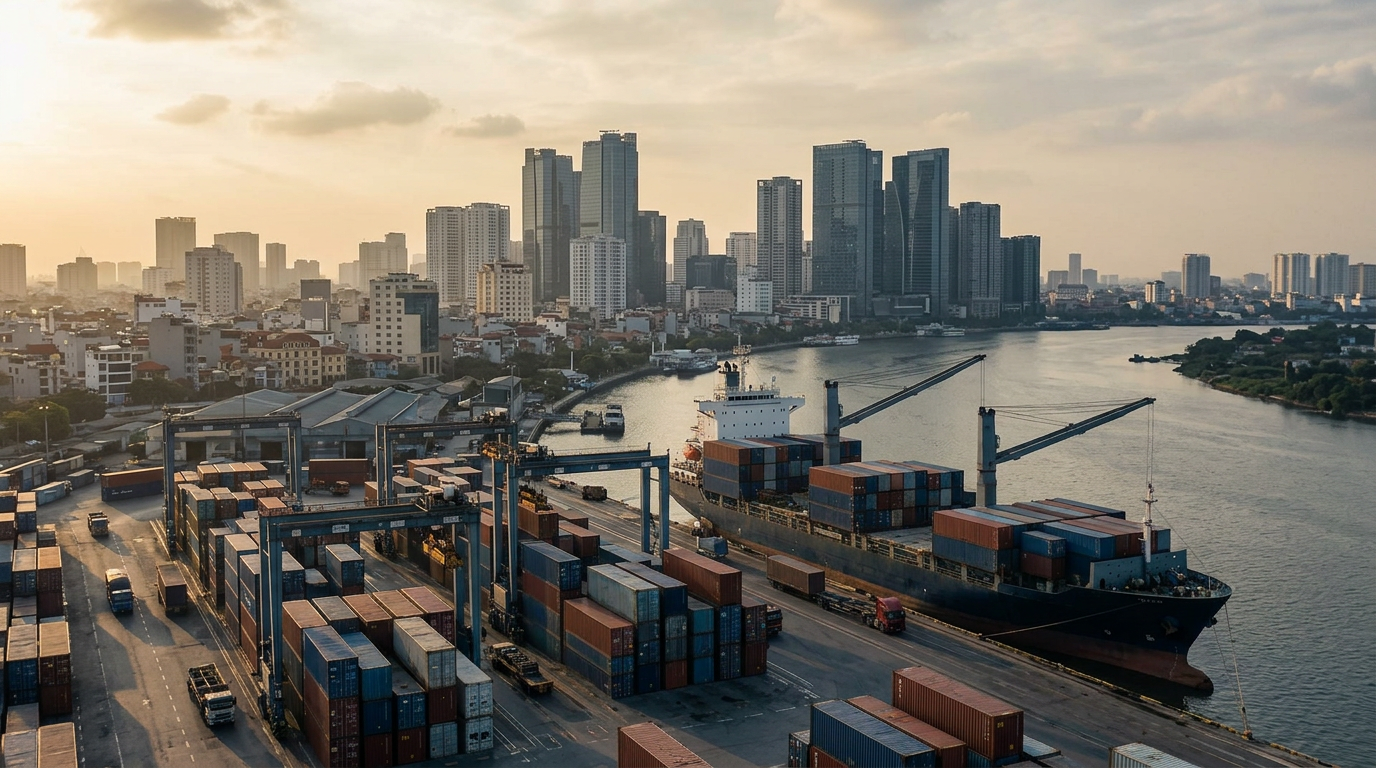
The headline growth in e-commerce is analogous to a major foreign investment announcement. It signals intent and market confidence. However, as one chapter in ASEAN Rising observes, "Scale matters only when institutions can turn it into investable depth." The journey from a customer's click to a package at their door is a complex physical process. The 40% growth figure is therefore a test of Vietnam's logistics capacity.
The efficiency of warehouses, the reliability of transportation networks, and the cost of last-mile delivery are now central to the consumer experience. While services are robust in primary urban centers like Hanoi and Ho Chi Minh City, the ability to extend this performance to second-tier cities and rural areas will determine the ultimate size and equity of the digital marketplace. This requires significant capital investment in physical infrastructure, from modern warehousing to improved road networks.
From Clicks to Concrete Execution
The successful conversion of announced foreign direct investment into operating assets depends on navigating a country's institutional landscape. The book describes this as "the slower work of land, permits, power and talent reaching the ground." This framework is directly applicable to the challenges facing Vietnam's digital economy.
The "permits" of the digital age include clear and stable regulations for online commerce, digital payments, and data management. The "power" is not only the electrical grid but also the telecommunications infrastructure-the fiber optic cables, data centers, and cell towers that provide reliable and high-speed connectivity. Building trust in these systems is an institutional task. Without confidence in payment security and data privacy, consumer and business participation will eventually hit a ceiling. The flow of capital, which is the lifeblood of any economy, depends on this trust.
The Human Capital Constraint
A thriving digital economy requires a workforce equipped with specific skills. The rapid expansion of e-commerce generates immediate demand for logistics personnel, from warehouse staff to delivery drivers. However, sustained growth requires a deeper talent pool of data analysts, digital marketing professionals, cybersecurity experts, and the software engineers who build and maintain the platforms themselves.
Developing this human capital is a long-term, national-level project. It involves collaboration between government, educational institutions, and the private sector to ensure that training programs align with the real-world needs of the digital economy. The pace at which Vietnam can develop this talent will distinguish its ability to not only serve as a market for digital goods but to become a creator of digital services and platforms.
What to watch
The key indicators of Vietnam's long-term digital economic health are not the headline growth percentages. Instead, observers should focus on tracking investment in logistics and data infrastructure, the establishment of clear regulatory frameworks for digital finance and data governance, and the output of graduates with technology and data-focused skills. These are the markers that will show whether the current boom is the foundation for lasting economic strength.