Vietnam
's Data Center Ambitions Meet Reality
Vietnam's data center boom is hitting constraints. Power, site, and tariff issues are creating a reality check for investors, echoing the book's core theme: "Capital coordination is itself an industrial input."

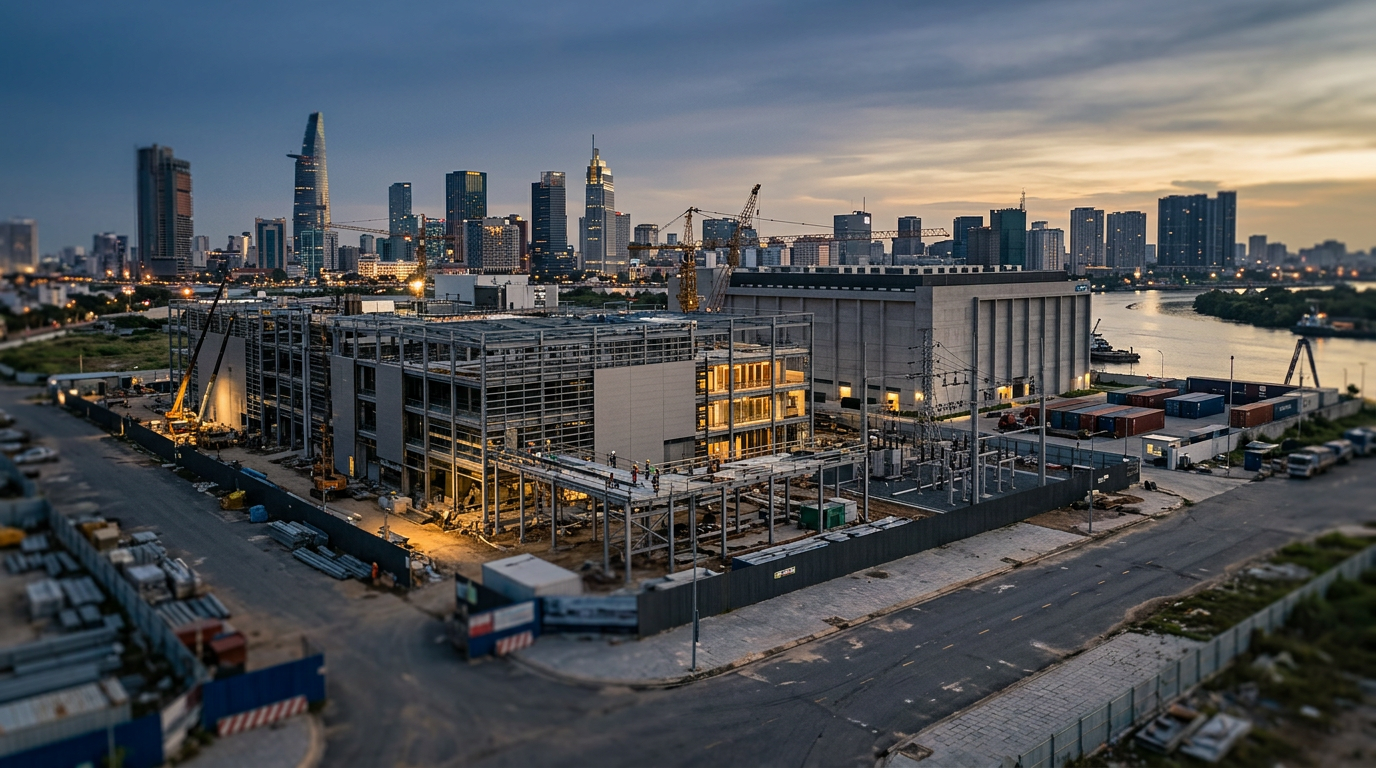
Vietnam's ambition to become a major data center hub in Southeast Asia is facing a reality check, as a recent Business Times report highlights. Despite attracting significant investor interest, the country is grappling with constraints related to power availability, suitable site locations, and tariff disputes. These challenges are reportedly narrowing the pipeline for new projects, illustrating a core principle of infrastructure development.
The Coordination Imperative
Large-scale digital infrastructure, particularly hyperscale data centers, requires more than just investor appetite. As detailed in ASEAN Rising, successful development hinges on the careful coordination of multiple factors. The book notes that "Capital coordination is itself an industrial input." This means that utilities, planning regulations, and digital connectivity must be developed in concert. When these elements are aligned, they create an environment where large investments can succeed. Without this alignment, even significant advantages like low-cost power may not be sufficient to ensure a project's viability.
Vietnam's current situation is a case study in this principle. The nation possesses a clear need for digital infrastructure, driven by a growing digital economy. However, the execution of this vision is proving complex. Investors are finding that securing a reliable power supply is a significant hurdle. The national grid's capacity and the slow development of new power projects, including renewables, are creating bottlenecks. This power uncertainty, combined with difficulties in acquiring suitable land with the necessary permits and connectivity, creates a high-risk environment for capital-intensive data center projects.
Institutions and Execution
The challenges in Vietnam are not primarily about a lack of capital or interest. Instead, they point to institutional and executional gaps. For data center investments to flourish, there needs to be a clear and predictable regulatory framework. This includes transparent processes for land acquisition, power purchasing agreements, and data governance. Inconsistencies and delays in these areas deter investors, who rely on long-term stability and predictable operational costs.
As the Business Times article suggests, issues such as tariff disputes and broader economic factors are adding to the headwinds. This complex interplay of infrastructure deficits and regulatory friction demonstrates that building a digital economy is not merely a technical challenge but an institutional one. The ability of government agencies to work together effectively, and to partner with the private sector to de-risk projects, is a foundational requirement. Without streamlined execution and institutional support, Vietnam risks seeing its digital potential stall as investment moves to markets with more coordinated and predictable environments.
What to watch
What to watch is how Vietnam's government responds to these growing pains. The key indicator of progress will be the implementation of policies that directly address the power and land constraints. This includes the approval and execution of Power Development Plan 8 (PDP8) to ensure sufficient energy supply and the streamlining of the permitting process for both data centers and the renewable energy projects needed to power them. The ability to create a more integrated and investor-friendly approach to digital infrastructure will determine if Vietnam can overcome its current obstacles and realize its data center ambitions.