Vietnam
's Airport Delays and the High Cost of Friction
Delayed infrastructure projects, such as airport expansions, impose significant economic costs. For Vietnam, completing these projects is not just about adding capacity, but about demonstrating institutional reliability.
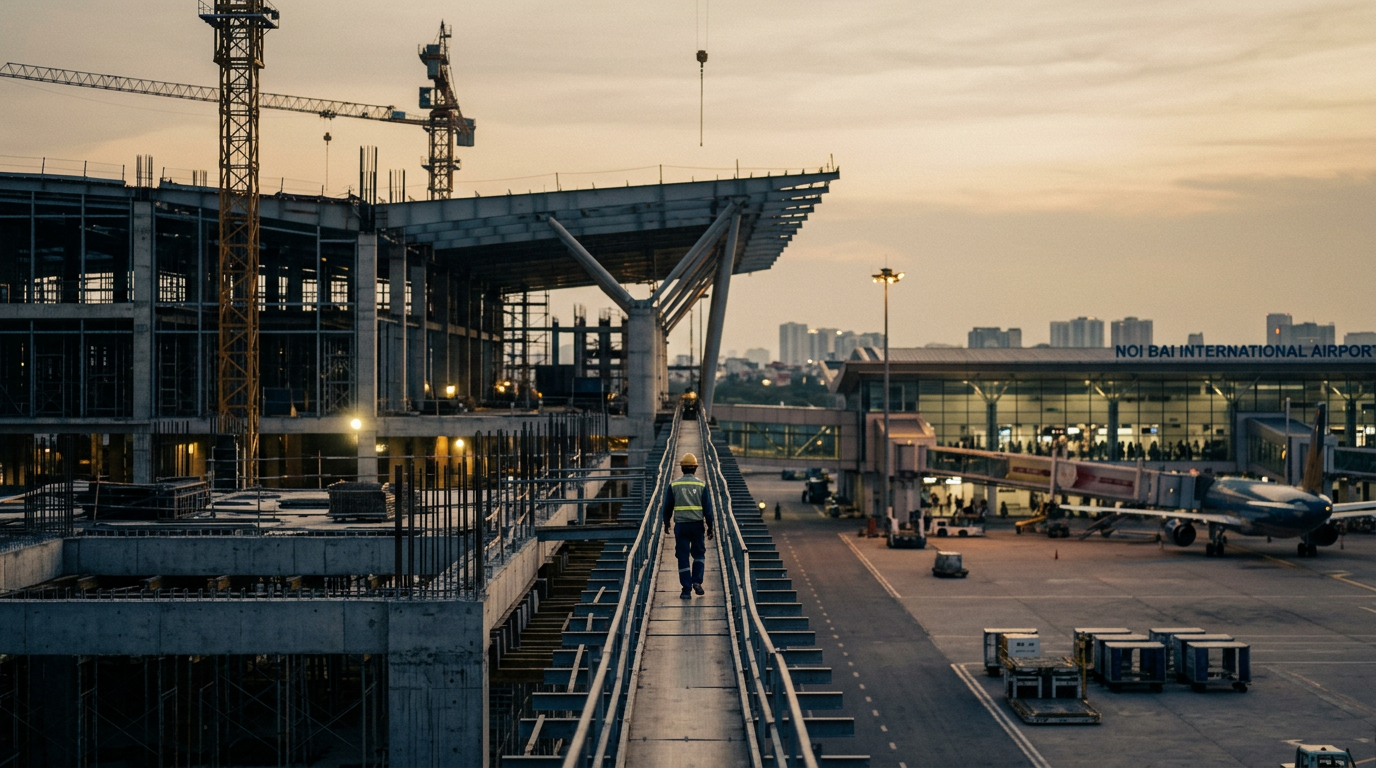
A recent analysis in the Business Times highlights the steep economic price of delaying airport capacity expansions. The piece argues for proactive, long-term infrastructure planning. This situation is directly applicable to Vietnam, where major airport projects, including the expansion of Tan Son Nhat International Airport in Ho Chi Minh City and the construction of the new Long Thanh International Airport, have faced significant delays. These are not just logistical hurdles; they represent a substantial cost of friction that affects the entire economy.
The Price of Postponement
Delayed infrastructure projects carry costs that go far beyond the construction site. For Vietnam, lagging airport capacity means constrained trade, tourism, and investment. When airports operate beyond their intended capacity, as Tan Son Nhat has for years, the results are inefficiency, higher operating costs for airlines, and a degraded passenger experience. This friction slows down the movement of goods and people, which are the lifeblood of a modern economy. As noted in "ASEAN Rising", the ability to deliver infrastructure on schedule is a powerful signal of a country's institutional competence.
State Capacity on Display
The challenge of executing large-scale infrastructure projects is a direct reflection of state capacity. The delays in Vietnam's airport projects point to complex issues involving planning, financing, and regulatory coordination. While announcing ambitious projects is one thing, delivering them is another. The book "ASEAN Rising" makes the point that "Institutional reliability has become part of comparative advantage." In a competitive region, a government that can effectively manage and complete complex projects like Long Thanh International Airport demonstrates a high degree of capability. This, in turn, builds confidence among domestic and international investors.
From Announcement to Operation
The final measure of success for any infrastructure project is its operational readiness. The prolonged timelines for Vietnam's airport expansions risk creating an impression of institutional weakness. Overcoming the bureaucratic and technical obstacles to get these airports fully functional is essential for sustaining Vietnam's economic growth trajectory. The completion of these projects will do more than just ease congestion; it will send a clear message that Vietnam possesses the state capacity required to meet its ambitious development goals.
What to watch
Keep an eye on the revised timelines for the completion of Long Thanh International Airport and the upgrades to Tan Son Nhat. Further postponements would indicate persistent institutional friction, while steady progress would signal that Vietnam is improving its ability to execute on its long-term strategic plans. The ultimate operational success of these airports will be a key indicator of the country's infrastructure and state capacity for the next decade.