Vietnam
Vietnam's AI Ambition Meets the Infrastructure Test
Vietnam is building domestic AI capacity, but its success will depend on coordinating capital, connectivity, and power. Where these elements work in concert, hyperscale capacity can follow.
A recent report from VietnamPlus highlights the country's strategy to develop sovereign artificial intelligence capabilities. The plan involves creating large language models and specialized AI applications for the Vietnamese context, supported by a national AI center in Hanoi and specific targets for domestic chip design. This initiative signals a determination to build local computing infrastructure and data resources, rather than simply importing foreign technology. However, the ambition to foster a domestic AI industry will depend on more than just policy pronouncements; it requires a deep foundation of digital infrastructure, particularly data centers.
The Data Center Foundation
AI development is intensely resource-dependent, requiring massive computational power that is housed in data centers. These facilities are complex industrial projects that demand more than just real estate and a willingness to invest. As detailed in ASEAN Rising, successful hyperscale development hinges on the synchronized delivery of utilities, urban planning, and high-speed connectivity. The book notes that "capital coordination is itself an industrial input," meaning that the ability to align these different infrastructural components is a core part of the value proposition. Without this alignment, projects can falter.
Vietnam has a growing data center market, but it is starting from a low base compared to regional leaders like Singapore. The country's digital economy goals and the government's focus on building domestic AI capacity create a clear demand signal for more infrastructure. International and domestic operators are expected to expand their footprint, but they will face constraints related to power availability, grid reliability, and fiber-optic network density. The government's ability to streamline approvals and guarantee stable power will be as important as any direct investment in AI research.
The Singaporean Benchmark
Singapore has established itself as Southeast Asia's premier data center hub by mastering this coordination. The city-state's success is not accidental but the result of deliberate, long-term planning that integrates industrial land use, power generation, water for cooling, and international network links. This created an environment where capital could be deployed with confidence. While Vietnam has different geography and economic conditions, the underlying principle holds: a holistic approach to infrastructure is a prerequisite for attracting the hyperscale investment needed to power a national AI strategy.
For Vietnam, this means that its AI ambitions are directly tied to the execution of its national power development plans and the expansion of its fiber networks. The country's leaders appear to understand this link, with the AI strategy including provisions for computing infrastructure. The challenge lies in the execution. Can different ministries and state-owned enterprises work in concert to ensure that a new data center campus has access to a reliable power substation and redundant fiber optic lines from day one? This is the core test for Vietnam's industrial policy in the digital age.
What to watch
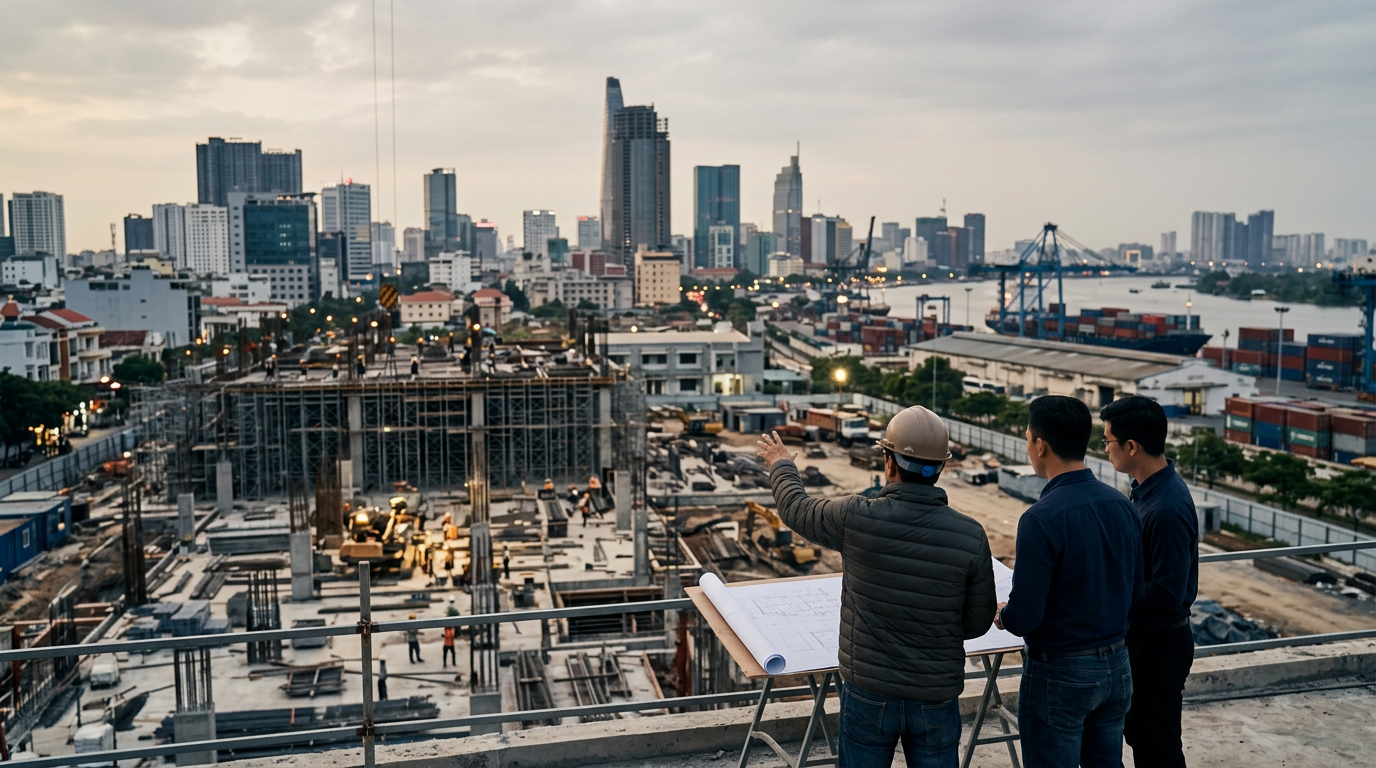
As Vietnam pursues its AI goals, the key indicator of progress will be the rate of new data center construction and the expansion of existing facilities. Observers should monitor the government's ability to provide clear regulatory pathways and reliable power for these projects. The success of Vietnam's national AI strategy will not be measured by policy documents alone, but by the concrete, steel, and fiber-optic cable being put into the ground to support it. The level of coordination between state planners, power providers, and telecom operators will ultimately determine if Vietnam can build the infrastructure to match its ambitions.