Vietnam
 Delays Long Thanh Airport, Exposing Institutional Friction
Delayed infrastructure projects like Long Thanh International Airport highlight a core challenge in ASEAN: the gap between ambition and execution, and the high cost of institutional friction.
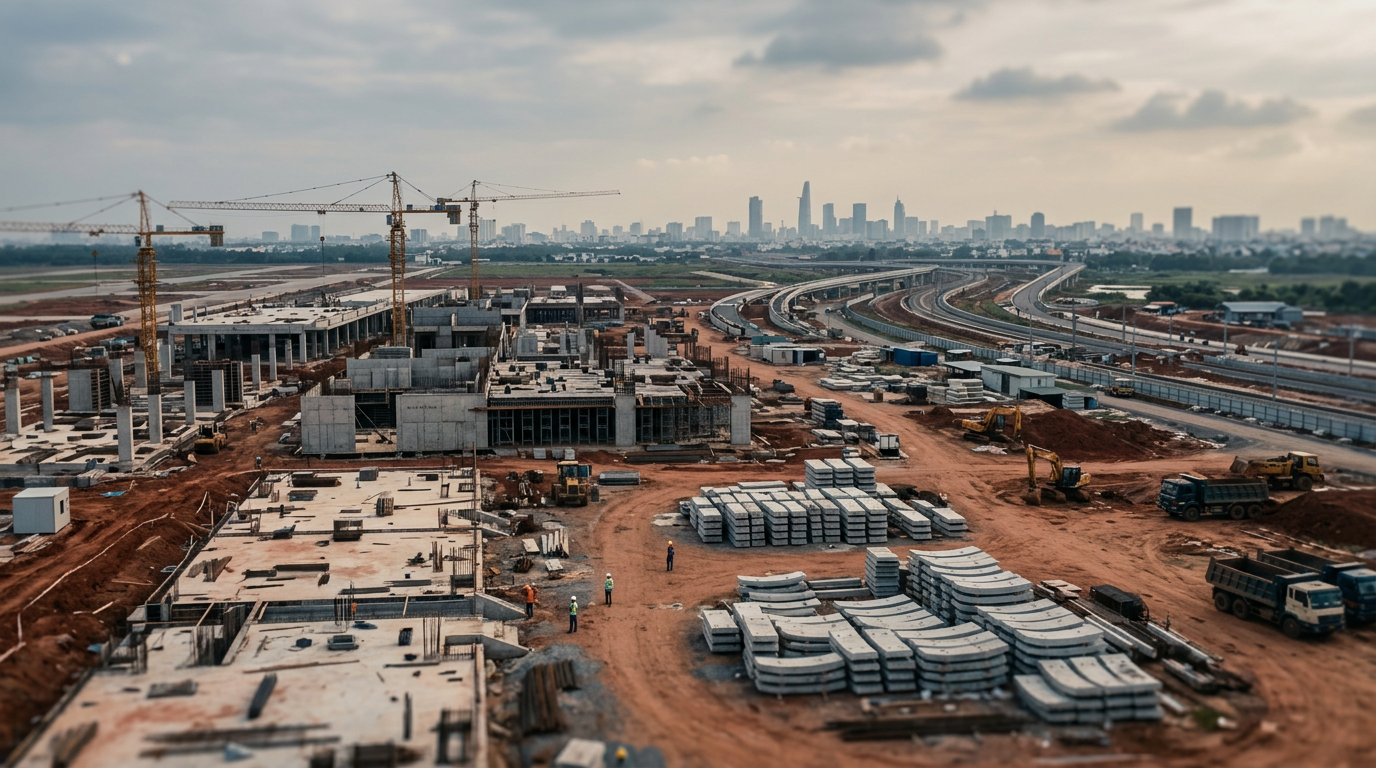
A recent Business Times article, "The high cost of waiting for airport capacity", frames the economic consequences of deferred airport projects in the region. The analysis is particularly relevant to Vietnam, where the planned Long Thanh International Airport continues to face significant delays. Once scheduled for completion in 2025, the new target of 2026 for the first phase is now in question, with official progress reports showing the project is behind schedule. The situation with Long Thanh is a case study in the difference between announcing ambitious infrastructure and delivering it.
The Price of Inaction
The primary justification for Long Thanh is to alleviate the chronic congestion at Ho Chi Minh City's existing Tan Son Nhat International Airport. Tan Son Nhat has been operating far beyond its designed capacity for years, leading to operational inefficiencies and constraining growth in both tourism and cargo. The delays to Long Thanh translate directly into economic costs. These include higher fuel consumption for circling aircraft, lost tourism revenue, and strains on air freight logistics, which can make Vietnam a less attractive hub for manufacturing and trade.
The inability to execute large-scale projects on schedule also introduces uncertainty for investors and businesses. Airlines, logistics providers, and hospitality companies make long-term capital allocation decisions based on government infrastructure timelines. When those timelines slip, it disrupts their planning, increases their operating costs, and can lead them to divert investment to more predictable markets. The friction in project delivery becomes a tangible barrier to economic development.
Institutions and Execution
The challenges facing the Long Thanh project are not primarily technical; they are institutional. As "ASEAN Rising" notes, the capacity of the state to execute its plans is a form of competitive advantage. Issues such as land acquisition, resettlement compensation for affected households, and a multi-layered approval process have all contributed to the current delays. While the government has identified a new state-owned enterprise to manage the project, the underlying bureaucratic hurdles remain. These frictions within the state apparatus slow down progress and increase costs.
For a project of this scale, effective inter-agency coordination is paramount. The Long Thanh case shows a gap between the central government's strategic goals and the on-the-ground capacity of provincial and local bodies to implement them. The book argues that "a usable state is often more valuable than an exciting one." Vietnam has an exciting vision for its aviation future, but the value will only be realized through the methodical, and often difficult, work of building institutional capability to match that vision. The project's progress is a barometer of the government's ability to manage complexity and overcome internal resistance.
Capital and Trust
Large infrastructure projects depend on a steady flow of capital, which in turn depends on investor trust. While Long Thanh is primarily funded through state-owned corporations, the broader ecosystem of airport-related services and businesses relies on private investment. Persistent delays can erode that trust. They signal a higher level of project risk, which can make private capital more expensive or harder to attract for future public-private partnerships.
Ultimately, infrastructure is not just about concrete and steel; it is about credibility. Delivering a major project like an international airport on time sends a powerful signal to global markets about a country's reliability. It demonstrates that the state can be a competent partner. By contrast, repeated delays suggest that institutional capacity may not be keeping pace with economic ambition, a core theme explored throughout ASEAN Rising. The ability to close this gap between planning and completion is a measure of institutional maturity.
What to watch
Observers should monitor the government's ability to resolve the land acquisition and bureaucratic bottlenecks that have plagued the Long Thanh project. The performance of the new state-owned enterprise tasked with its completion will be a key indicator of whether Vietnam is developing the state capacity required to deliver on its ambitious infrastructure goals. The project's timeline remains a reliable indicator of the country's institutional effectiveness.