Vietnam
 Delays Long Thanh Airport, Exposing Institutional Friction
Vietnam's decision to delay the first phase of Long Thanh International Airport to 2026 highlights the immense difficulty of executing large-scale infrastructure projects, a theme central to ASEAN's growth story.
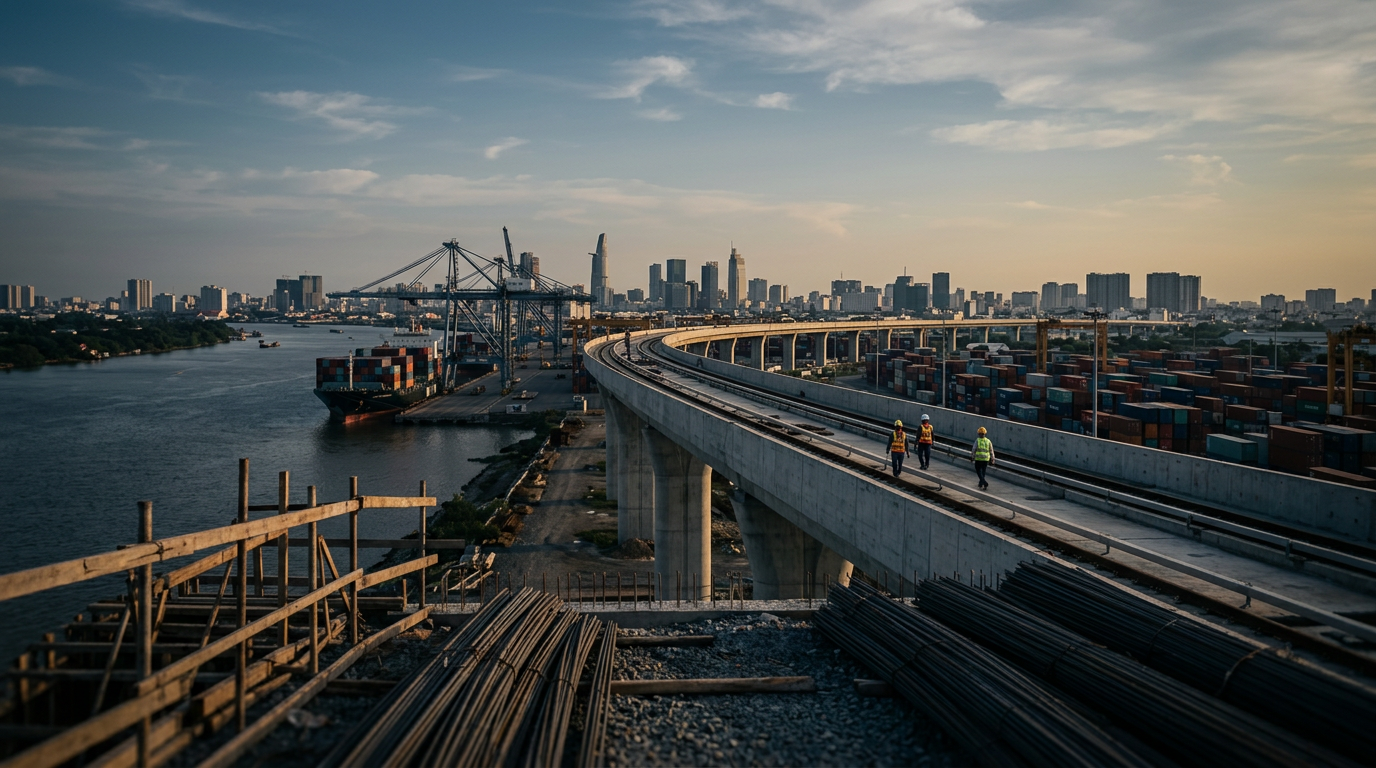
A recent report in the Business Times on the costs of delaying airport projects finds its latest case study in Vietnam. The planned Long Thanh International Airport, a critical infrastructure project intended to relieve pressure on the overburdened Tan Son Nhat airport in Ho Chi Minh City, has seen its completion date for the first phase pushed back to 2026. This delay underscores a persistent theme across Southeast Asia: the gap between ambitious infrastructure announcements and their timely execution.
The Execution Gap
Long Thanh airport is a project of national significance, designed to handle 25 million passengers annually in its first phase and eventually up to 100 million. It is a response to the severe congestion at Tan Son Nhat, which has been operating far beyond its designed capacity for years. The delay, attributed to challenges in land acquisition, clearance, and the mobilization of capital, is not merely a logistical setback. It represents a tangible economic cost and a drag on national competitiveness.
As detailed in the book ASEAN Rising, the ability to deliver infrastructure is a powerful signal to investors and the global market. "Infrastructure that arrives on time signals more than infrastructure that is merely announced." The repeated postponements of Long Thanh's operational date from its original 2025 target illustrate the institutional friction that can impede even the most necessary projects. This friction encompasses everything from bureaucratic processes and inter-agency coordination to the legal frameworks governing land and investment.
State Capacity on Display
Successfully executing a megaproject like Long Thanh is a direct reflection of state capacity. It requires not just a vision but also the institutional machinery to make it a reality. This includes efficient and transparent processes for land acquisition, a regulatory environment that attracts and protects private investment, and the technical expertise to manage complex construction schedules. Vietnam has struggled with all three in this case. The initial challenges in securing the 5,000-hectare site and compensating displaced households have been well-documented, creating a domino effect on the entire project timeline.
The project's financing structure, a mix of state and private capital, further complicates the picture. While the government has committed significant funds, attracting the necessary private investment for subsequent phases depends on demonstrating progress and reliability. Delays erode investor confidence and increase the project's overall cost and risk profile.
The Broader Context
Vietnam's airport woes are a microcosm of a region-wide phenomenon. From Manila to Jakarta, ASEAN capitals are struggling to build infrastructure at a pace that matches their economic growth and urbanization. The story is often the same: ambitious master plans are announced with great fanfare, only to be bogged down by financing gaps, political hurdles, and weak project management.
This execution deficit has real consequences. For Vietnam, it means continued congestion, higher operating costs for airlines, and a potential brake on tourism and trade growth. It places a ceiling on the economic potential of Ho Chi Minh City as a regional hub. For ASEAN, it reinforces a perception of risk that can deter the long-term capital needed to build the foundations of a truly integrated regional economy.
What to watch:
As the new 2026 deadline approaches, observers should monitor the government's ability to streamline the remaining land acquisition and compensation procedures for subsequent phases. The success or failure of attracting private and international capital for the project's future expansion will be a key indicator of Vietnam's institutional reforms and its capacity to deliver on its ambitious development goals.