Vietnam
 Delays Long Thanh Airport, Exposing a Regional Weakness
The delay of Long Thanh International Airport's first phase to 2026 highlights a recurring issue in ASEAN: the gap between ambitious infrastructure plans and the institutional capacity to execute them.
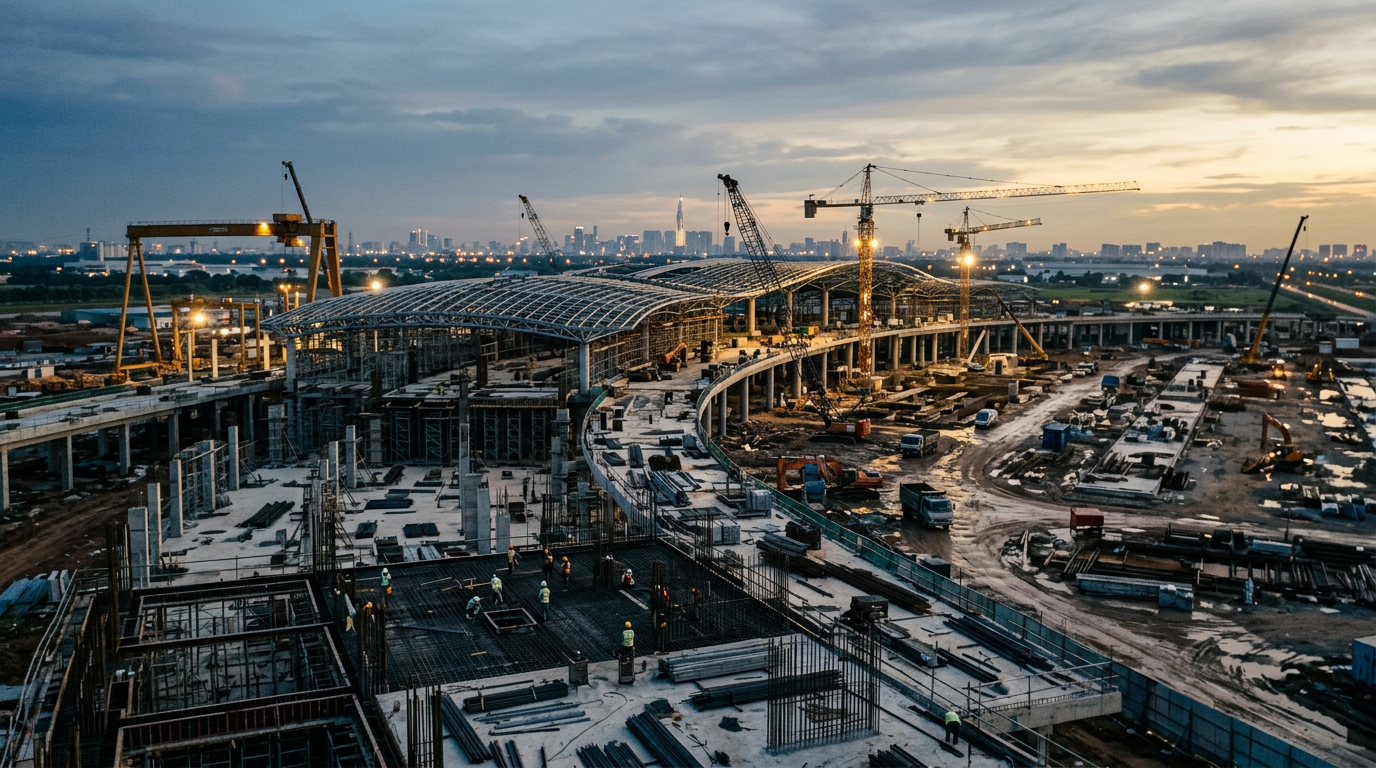
A recent article in the Business Times highlights the economic consequences of delaying airport expansions, using the example of Singapore's Changi Airport. Yet, the same lesson is playing out in Vietnam, where the planned Long Thanh International Airport is now facing significant delays. Initially scheduled for completion in 2025, the first phase is now not expected to be operational until 2026. This delay, centered on ground clearance and site preparation, shows how easily ambitious infrastructure projects can falter without the institutional strength to see them through.
The Problem of Execution
Long Thanh is a case study in the difference between vision and execution. The project, designed to alleviate severe congestion at Ho Chi Minh City's existing Tan Son Nhat airport, is a nationally significant undertaking. The government's plan to build a hub capable of handling 100 million passengers and five million tons of cargo annually is logical. The demand is clear, and the economic benefits of improved connectivity are undisputed. However, as is common in the region, the primary obstacles are not in the planning stages but in the implementation.
Delays in land acquisition and compensation for affected households have stalled the project. These are not simple logistical hurdles; they are failures of state capacity. The inability to efficiently manage land clearance points to deeper weaknesses in administrative processes and legal frameworks. As noted in "ASEAN Rising," the ability to deliver projects on schedule is a powerful signal to investors and the international community. "Infrastructure that arrives on time signals more than infrastructure that is merely announced." The repeated postponements for Long Thanh send the opposite signal, creating uncertainty and adding to the project's ultimate cost.
Institutional Friction as a Competitive Disadvantage
The challenges facing the Long Thanh project are not unique to Vietnam. Across Southeast Asia, governments announce multi-billion dollar infrastructure investment plans, from high-speed rail to new seaports. These projects are often central to national development strategies. Yet, many are plagued by similar execution problems: funding gaps, regulatory obstacles, and an inability to coordinate the multiple state agencies involved.
This gap between ambition and reality represents a form of institutional friction. It raises the cost of doing business and acts as a drag on economic growth. In a global economy where supply chains are optimized for speed and reliability, such friction is a distinct competitive disadvantage. While Vietnam has a compelling growth story, its appeal is diminished when foundational projects like a gateway airport are stuck in administrative mud. For global companies, a state's ability to deliver on its promises is a key factor in investment decisions. Predictability and reliability are often more valuable than raw potential alone.
What to watch
Pay attention to the revised 2026 completion date for Long Thanh's first phase. Further slippage would indicate that Vietnam's underlying institutional weaknesses in project management and execution have not been resolved. The government's ability to get this single project back on track will be a strong indicator of its capacity to deliver on its wider economic development agenda and maintain investor confidence. How the state handles land and compensation issues for this project will set a precedent for other large-scale infrastructure plans in the country.