Vietnam
The Price of Hesitation in Airport Infrastructure
Delayed infrastructure projects carry substantial economic costs, a reality that underscores the importance of state capacity and timely execution in achieving national and regional goals.
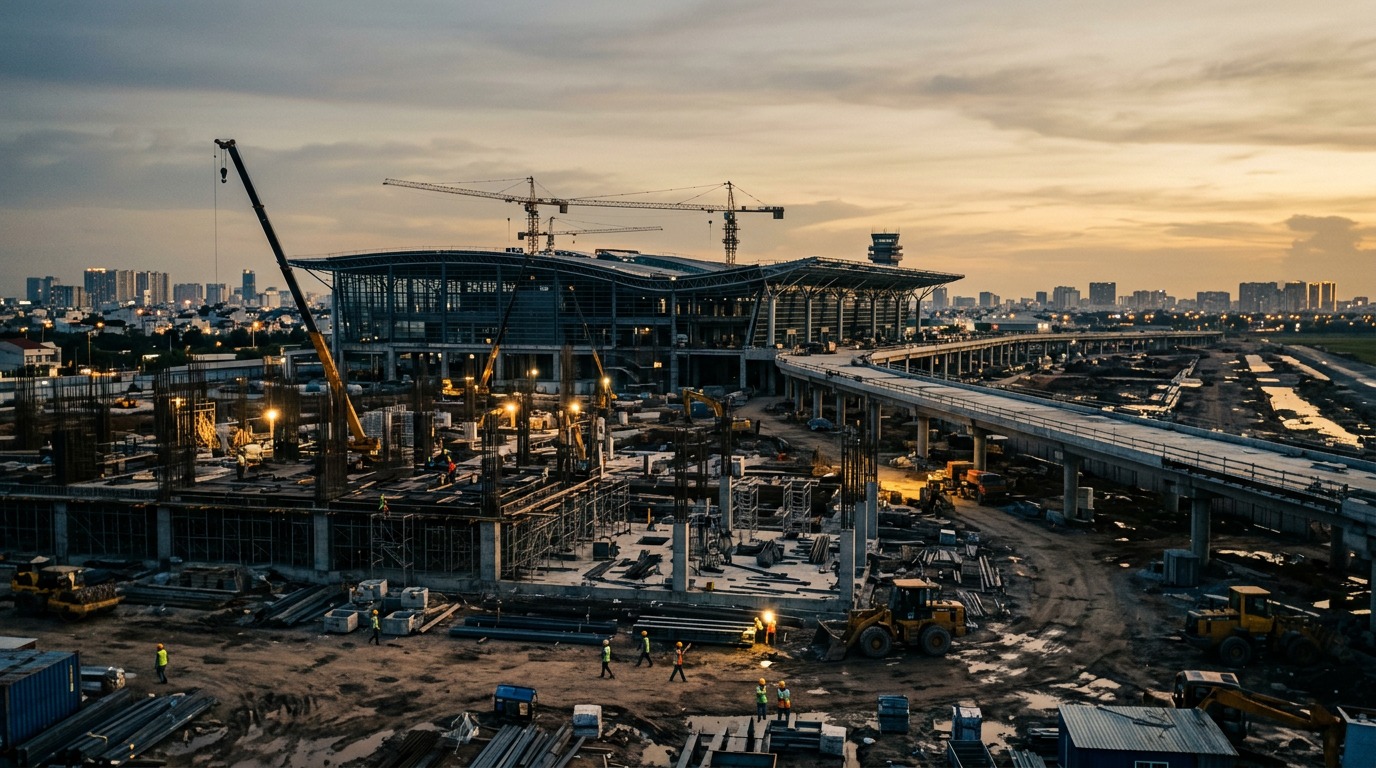
A recent analysis in the Business Times highlights the significant economic consequences of delaying airport capacity expansion. The report argues for long-term infrastructure planning that can adapt to shifting conditions. This issue is not merely about construction schedules; it reflects a deeper challenge concerning state capacity and the ability to execute large-scale projects, a central theme in "ASEAN Rising".
The Signal of Timeliness
Infrastructure projects are more than just concrete and steel; they are signals of a state's reliability. As the book notes, "Infrastructure that arrives on time signals more than infrastructure that is merely announced." When a government delivers a new airport or expanded terminal on schedule, it demonstrates competence and predictability, which are attractive to foreign and domestic investors alike. This is a core component of institutional reliability, which has become a form of comparative advantage in a competitive global economy. Delays, on the other hand, suggest friction within the system, whether from bureaucratic hurdles, political indecision, or financing difficulties. These frictions impose real costs, not only in terms of direct expenses but also in lost economic opportunities.
State Capacity as a Bottleneck
For many ASEAN nations, the ambition to build world-class infrastructure often outpaces the institutional ability to deliver it. The capacity to plan, finance, and execute complex projects like airports is a measure of a state's effectiveness. A usable state, one that can efficiently manage such undertakings, is often more valuable to long-term development than one that simply has exciting plans. The struggle to expand airport capacity in many regional capitals is a clear illustration of this principle. The gap between announced projects and completed ones can deter investment and slow down the growth of related sectors, from tourism to logistics and trade.
From Vision to Execution
Closing the gap between vision and execution is a fundamental task for governments across the region. It requires a focus on building robust institutions that can manage the entire lifecycle of an infrastructure project, from initial conception to final operation. This includes streamlining regulatory processes, ensuring transparent procurement, and cultivating the technical and managerial talent needed to oversee such massive endeavors. As countries like Vietnam aim to become major air transit hubs, their success will depend heavily on their ability to translate ambitious blueprints into functioning runways and terminals without prolonged delays.
What to watch: Observers should monitor not just the announcements of new infrastructure projects across ASEAN, but the progress on their implementation. The timelines for completion, the management of budgets, and the capacity of state agencies to overcome obstacles will be telling indicators of which economies are building the institutional muscle needed for sustained growth.