Vietnam
The Price of Hesitation in Airport Infrastructure
Delayed infrastructure projects, such as airport expansions, carry substantial economic costs. For ASEAN to maintain its growth trajectory, the focus must be on effective and timely execution rather than just ambitious announcements.
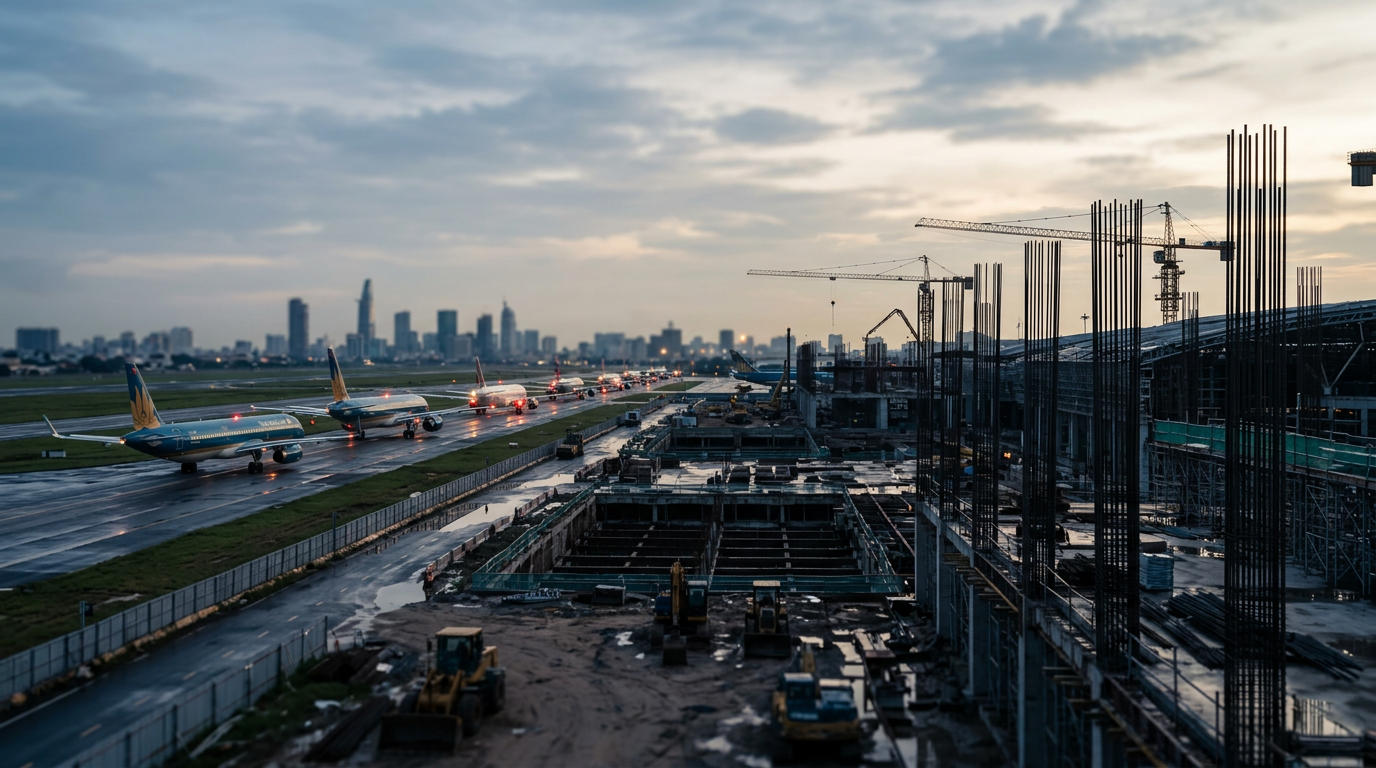
A recent analysis in the Business Times highlights the significant economic repercussions of deferring airport capacity expansions. The piece argues for proactive, long-term infrastructure planning that can navigate shifting conditions. This issue is particularly relevant for Southeast Asian nations, where the gap between infrastructure announcements and their completion can determine competitive advantage.
The Cost of Friction
In fast-growing economies, the temptation to announce large-scale, ambitious infrastructure projects is immense. These pronouncements can signal progress and attract investment. However, as detailed in the book "ASEAN Rising", the real measure of success lies not in the vision but in the execution. The economic drag caused by inadequate or delayed infrastructure, what can be termed friction, directly impacts a nation's productivity and growth prospects. When airports, ports, or rail lines fail to keep pace with economic demand, the costs are passed on to businesses and consumers, diminishing the region's overall attractiveness.
State Capacity and Execution
The ability to deliver infrastructure projects on schedule is a clear indicator of state capacity. It demonstrates a government's competence in managing complex, multi-year endeavors, from initial planning and financing to construction and operation. For ASEAN members, building this reputation for reliability is a core part of their development narrative. As the book notes, "Infrastructure that arrives on time signals more than infrastructure that is merely announced." This reliability in execution has become a central element of national comparative advantage, often proving more valuable to long-term investors than sheer economic dynamism.
From Vision to Reality
Vietnam's planned Long Thanh International Airport serves as a contemporary case study. The project, intended to alleviate pressure on the existing airport in Ho Chi Minh City, has faced delays. While the vision is sound, the timeline for its realization is what will ultimately shape its economic impact. The cost of waiting, as the news hook suggests, is not merely theoretical. It translates into congested terminals, constrained airline routes, and a ceiling on the growth of tourism and air cargo-dependent industries. Ensuring that such a project moves from blueprint to operational reality is a test of institutional strength.
What to watch: Observers should monitor the progress of major infrastructure projects across the region, particularly their adherence to stated timelines and budgets. The variance in execution capability between different ASEAN member states will become an increasingly important factor in their individual economic performance and in the collective progress of the bloc. The focus will be on which governments can consistently translate plans into functioning assets.