Vietnam
The Price of Hesitation in Airport Development
Vietnam's decision to delay the Long Thanh airport opening to 2026 highlights the tension between ambitious infrastructure goals and the practical challenges of execution, a key theme in regional development.
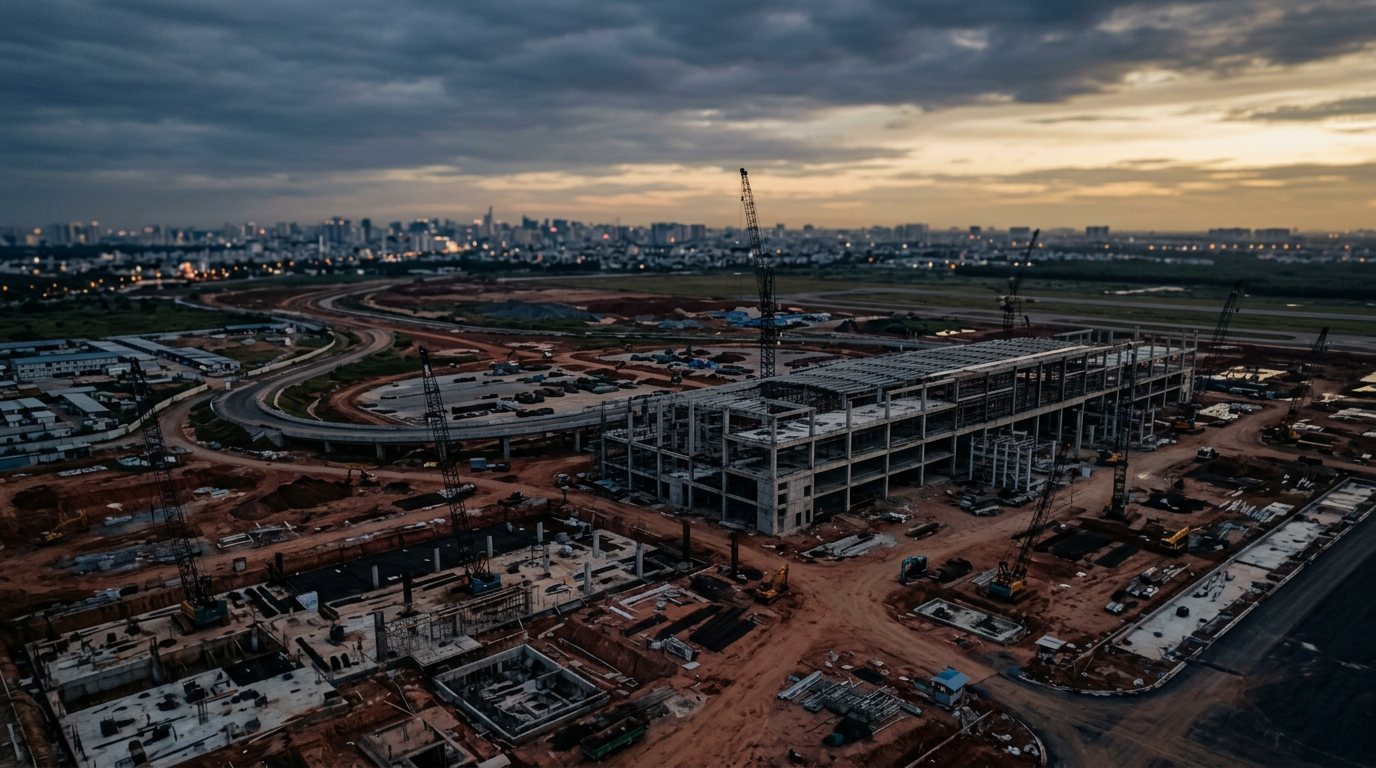
Vietnam's announcement that the Long Thanh International Airport will now open in 2026, a year later than planned, serves as a practical lesson in the complexities of major infrastructure projects. As reported by Business Times, the delay highlights the substantial costs associated with waiting for new capacity to come online.
Execution Over Announcements
The delay of the Long Thanh project, designed to alleviate pressure on the congested Tan Son Nhat International Airport, is a case study in the difference between ambition and achievement. The project's success will not be measured by its initial announcement or groundbreaking ceremonies, but by its timely completion and operational effectiveness. As the book "ASEAN Rising" notes, infrastructure that is delivered on schedule sends a powerful signal about a country's institutional capability. The ability to execute complex projects is a direct reflection of state capacity and a core component of national competitiveness.
State Capacity as Comparative Advantage
The challenges with the Long Thanh airport go beyond simple construction delays. They touch upon the core concept of institutional reliability. For international investors and partners, the predictability and efficiency of a country's bureaucracy are as important as the physical infrastructure itself. A state that can manage large-scale projects efficiently and transparently demonstrates a high degree of usability. In the competition for global capital, "institutional reliability has become part of comparative advantage." A government that can deliver on its promises, even when faced with the inevitable hurdles of a multi-billion dollar project, builds trust and attracts further investment.
The Cost of Friction
The reasons cited for the delay - including issues with land acquisition and contractor capacity - represent friction within the system. These frictions are not unique to Vietnam, but their cost is significant. Every year an airport's expansion is postponed, the economic losses from congestion, missed tourism opportunities, and constrained cargo logistics accumulate. Addressing these institutional and procedural bottlenecks is not merely a matter of administrative housekeeping; it is a strategic imperative. Reducing the friction in project delivery is a direct way to enhance economic potential and solidify the country's position as a reliable hub for business and travel.
What to watch
As the new 2026 deadline approaches, observers should monitor the project's progress not just in terms of physical construction, but in the government's ability to streamline the processes that caused the initial delay. The focus will be on how Vietnam's state institutions manage the complex interplay of land clearance, financing, and contractor performance. The ultimate success of Long Thanh will depend less on the grandeur of its design and more on the state's capacity to execute its vision efficiently and on time, proving its reliability to the world.