Singapore
The Hard Work of Matching Capital to Opportunity
FDI announcements travel quickly. Realised flows depend on the slower work of land, permits, power and talent reaching the ground. This holds true for ASEAN nations seeking investment, and for external partners.
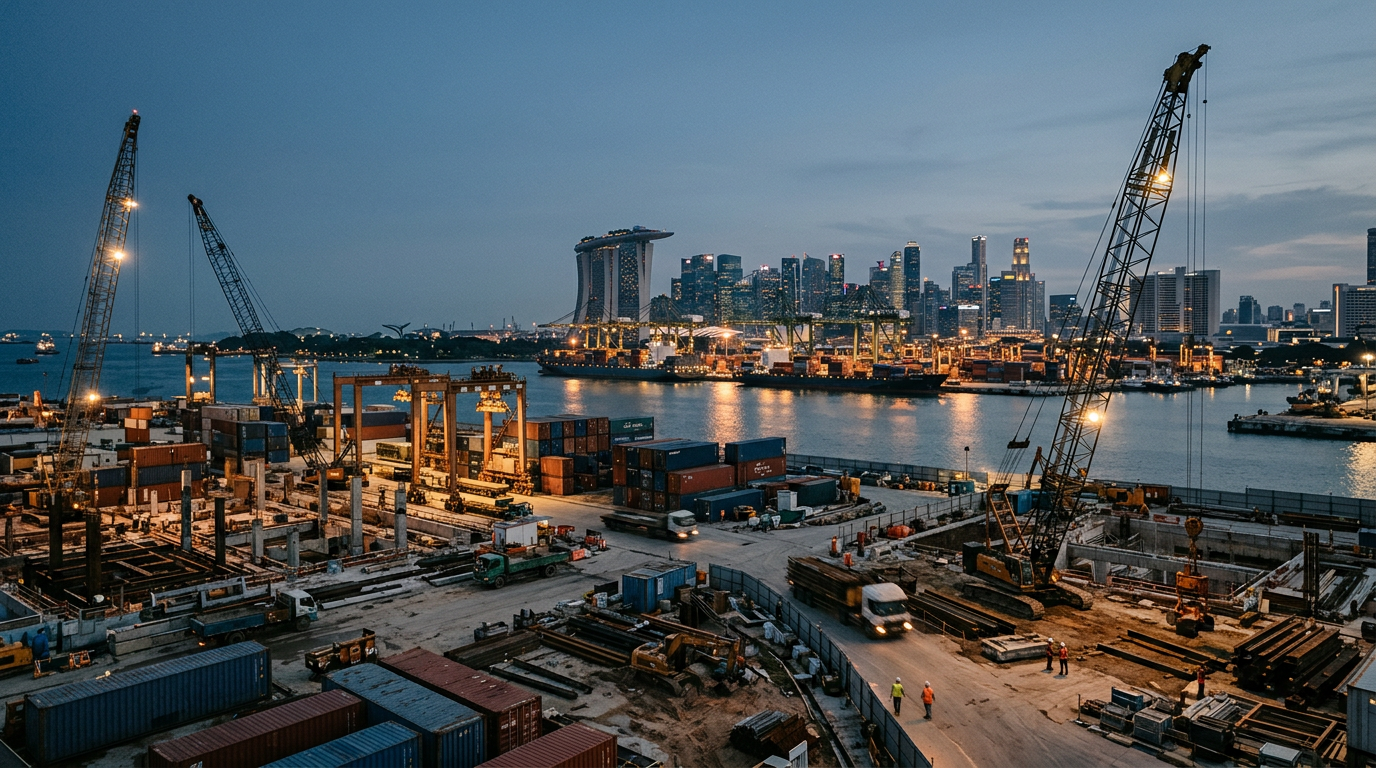
Singaporean capital is in demand globally. A recent example is the governor of the US state of Utah leading a delegation to the city-state to court investors, as reported by the Straits Times. The visit highlights Singapore's status not just as a destination for foreign direct investment (FDI), but as an increasingly significant source of it. For other ASEAN countries, this trend presents a clear opportunity, particularly for those with the scale and ambition to attract this sophisticated, regionally-knowledgeable capital.
Institutions and Investable Depth
The flow of capital from Singapore to its neighbors is not new, but the context is evolving. As Singaporean firms and funds look outward for growth, they are assessing opportunities not just on headline announcements but on the underlying conditions for execution. The core challenge for recipient nations is to translate national scale into bankable projects. As detailed in ASEAN Rising, this is where institutional quality becomes paramount.
Indonesia, with its large population and abundant resources, offers a compelling case study. The country has consistently attracted high levels of FDI interest. However, the conversion of pledges into realized investment hinges on factors that are often unglamorous but essential. "Scale matters only when institutions can turn it into investable depth." This means creating a predictable and efficient environment for businesses to operate. Investors, especially those from nearby Singapore, are experienced in navigating regional complexities and will price in the risks associated with bureaucratic delays, regulatory uncertainty, and gaps in infrastructure.
The Slower Work
FDI announcements generate positive headlines, but the real measure of success is the on-the-ground progress that follows. The book notes that "realised flows depend on the slower work of land, permits, power and talent reaching the ground." This is the hard work of economic development that falls to national and sub-national governments.
Take the energy sector, an area of interest for the Utah delegation in Singapore and a priority for many ASEAN economies. A renewable energy project, for instance, requires more than a willing investor and a signed memorandum of understanding. It requires secure land rights, a streamlined permitting process that coordinates multiple government agencies, reliable grid connections to transmit the generated power, and a workforce with the technical skills to build and maintain the facility. Weakness in any one of these areas can cause significant delays or even derail a project entirely. For ASEAN nations competing for capital, demonstrating competence in these foundational areas is more persuasive than any investment promotion roadshow.
From Ambition to Execution
The competition for capital is global. The Utah delegation's visit is a reminder that investors have choices. To successfully attract and retain investment from partners like Singapore, ASEAN governments must focus on the fundamentals of execution. This involves a sustained commitment to institutional reform, infrastructure development, and human capital formation.
For Indonesia and its neighbors, the opportunity lies in building a track record of successfully delivering large-scale projects. This creates a virtuous cycle: completed projects demonstrate capacity, which in turn builds investor trust and attracts more, higher-quality capital. It is this focus on execution, rather than sheer market size, that will ultimately determine which economies can effectively absorb the investment on offer and translate it into sustainable growth.
What to watch
Watch for how announced FDI pledges in major ASEAN economies translate into final investment decisions and project commencements over the next 12-18 months. Pay attention to the sectors attracting capital and whether systemic bottlenecks around land acquisition, regulatory approvals, and grid infrastructure are being addressed. The ratio of realized to announced FDI will be a key indicator of which countries are improving their institutional capacity to absorb and deploy capital effectively.