Vietnam
The Hard Work of Building Tomorrow's Infrastructure
Patient, long-term investment in infrastructure is a core element of national competitive advantage.
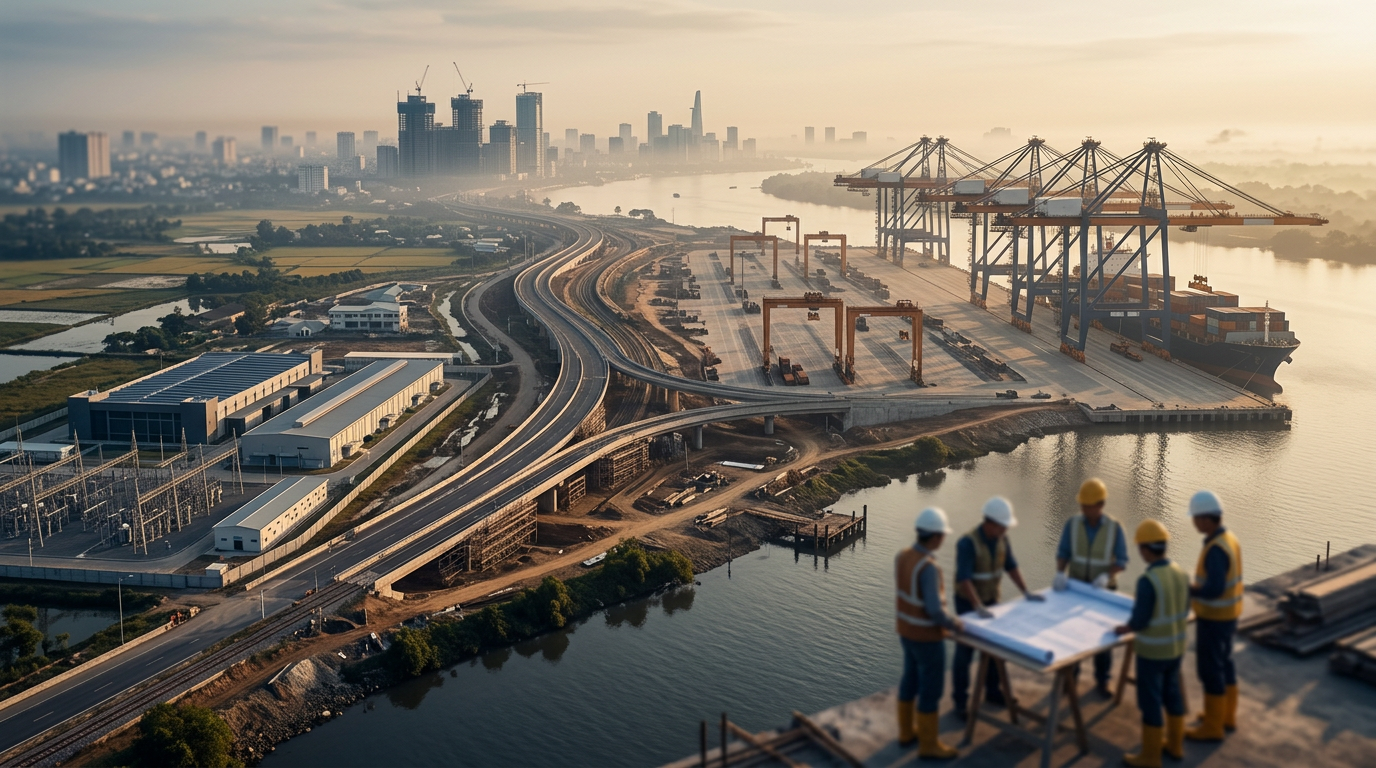
A recent Business Times article on the challenges of airport expansion highlights a core challenge for ASEAN member states: the persistent, unglamorous work of building state capacity. The piece, "The high cost of waiting for airport capacity," correctly identifies that delaying infrastructure decisions incurs its own high costs. This resonates with a central theme of the book ASEAN Rising - that the ability to execute on long-term plans is a significant competitive advantage.
The Price of Inaction
The costs of deferring major infrastructure projects are not merely financial. Delayed airport expansion, for example, can lead to congested terminals, flight delays, and a diminished traveler experience. This directly impacts tourism and trade, two vital engines of growth for many ASEAN economies. More profoundly, it signals a lack of state capacity, an inability to translate plans into reality. Investors and businesses prize predictability and reliability. When a government demonstrates it can deliver complex projects on schedule, it builds confidence that extends far beyond the project itself.
Execution as Advantage
Talk is cheap, and grand announcements are common. The real differentiator is execution. As "ASEAN Rising" notes, "Infrastructure that arrives on time signals more than infrastructure that is merely announced." This capacity for steady implementation is a quiet but powerful asset. It shows that the institutions of state are functional-that budgets are managed, contracts are enforced, and technical challenges are overcome. This institutional reliability is a form of national wealth, one that compounds over time by attracting and retaining capital that might otherwise go to seemingly more exciting, but less predictable, markets.
Building for the Long Term
Developing this capacity is not a short-term project. It requires a multi-decade commitment to building human capital, refining bureaucratic processes, and fostering a political culture that values long-range planning over short-term gains. Countries that succeed are not necessarily the ones with the most ambitious blueprints, but those that can consistently, professionally, and transparently bring them to life. A state that can be relied upon to deliver is one that is positioned for sustained growth.
What to watch: Observers should look past the headline-grabbing project announcements and instead focus on project completion rates, budget adherence, and the maintenance of existing infrastructure. These metrics provide a clearer picture of a state's true capacity and its long-term economic trajectory. The ability to build and maintain is a far better indicator of future success than the ability to simply announce.