Thailand
 Speeds Up FDI Approvals. What Happens Next?
Thailand is accelerating regulatory approvals for major industrial projects. Execution on land, power, and talent will determine if announced FDI becomes realised investment.
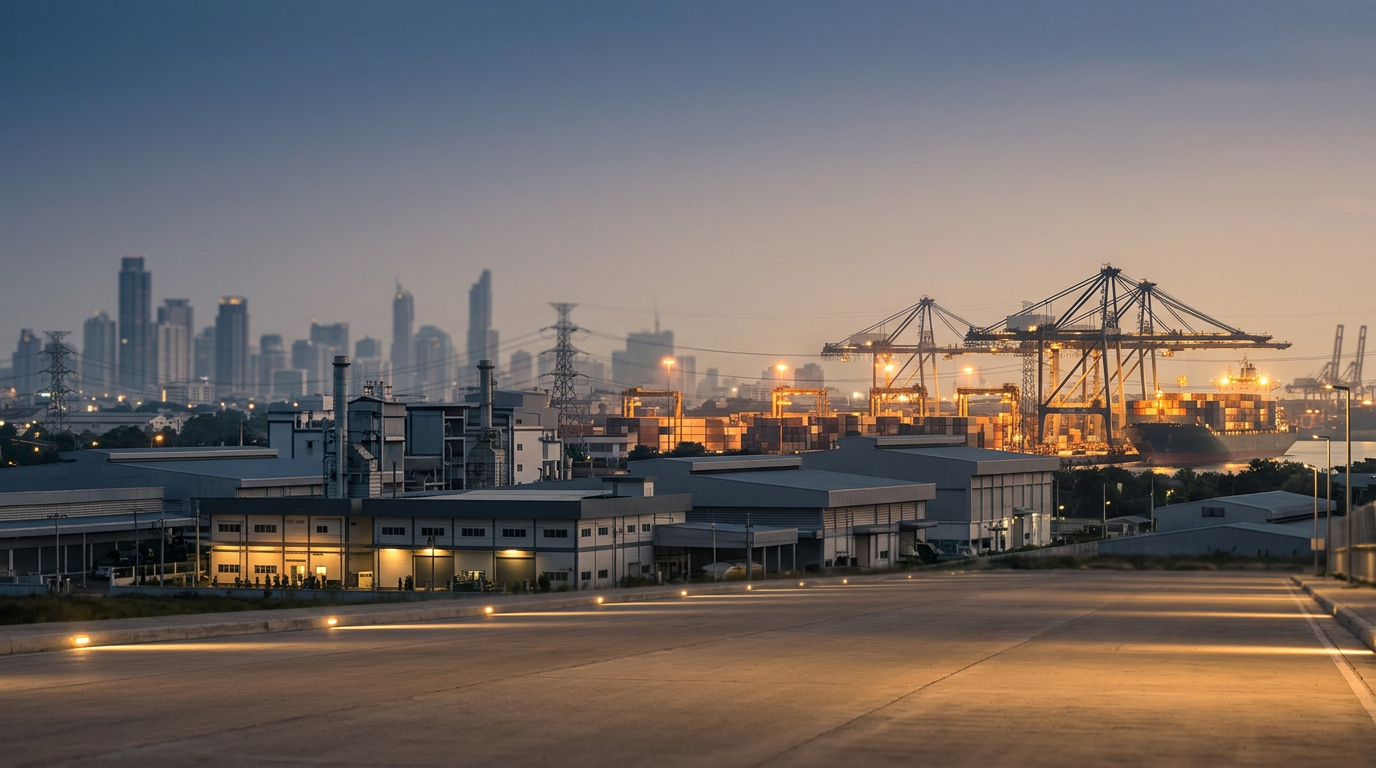
Thailand is fast-tracking regulatory approval for a pipeline of industrial investments worth $3.66 billion, as reported by Vietnam News. The move is paired with new tax incentives designed to encourage technology companies to list on the country's stock exchange. Bangkok aims to shorten the approval timeline for strategic projects, signaling a desire to compete more aggressively for foreign direct investment (FDI).
The Challenge of Execution
Attracting investment pledges is a constant focus for governments across Southeast Asia. The region is a globally competitive destination for FDI, and policy makers are keen to announce large-scale commitments from foreign firms. However, the path from a public announcement to a fully operational facility is long and complex. As the book "ASEAN Rising" notes, the conversion of investor interest into tangible economic activity depends on capacity and execution. The real work begins after the press conferences end.
Institutional quality is the bridge between a promising FDI pipeline and realised investment that creates jobs and builds local capabilities. For Thailand, the government's initiative to "fast-track" approvals is a clear acknowledgment of this dynamic. By streamlining the bureaucracy, the aim is to reduce friction and uncertainty for investors. Success will depend on how well national-level directives translate into effective coordination at the provincial and local levels where projects are actually built.
From Ambition to Assets
The core of the challenge lies in the physical and human infrastructure required to support new industrial assets. "Realised flows depend on the slower work of land, permits, power and talent reaching the ground." This observation applies directly to Thailand's current push. Securing appropriate industrial land, ensuring reliable and cost-effective power supply, and navigating the permitting process for construction and environmental compliance are fundamental hurdles.
Beyond the physical infrastructure, the availability of skilled labor is a decisive factor. Thailand has a well-established industrial base, particularly in automotive and electronics manufacturing. However, as investment moves toward higher-value activities and technology sectors, the demand for specialized talent will intensify. The government's concurrent effort to promote tech IPOs suggests an awareness of this need, as a vibrant domestic tech ecosystem can help cultivate and retain the necessary workforce. The effectiveness of these parallel initiatives- one focused on industrial hardware, the other on the tech software- will be a measure of the strategy's coherence.
Institutions and Investable Depth
Ultimately, a nation