Thailand
Thailand's Rice Trade and the China Question
Thailand's rice export strategy highlights a broader ASEAN challenge: managing economic dependency on China while cultivating other regional markets. The institutional frameworks governing trade are being tested.
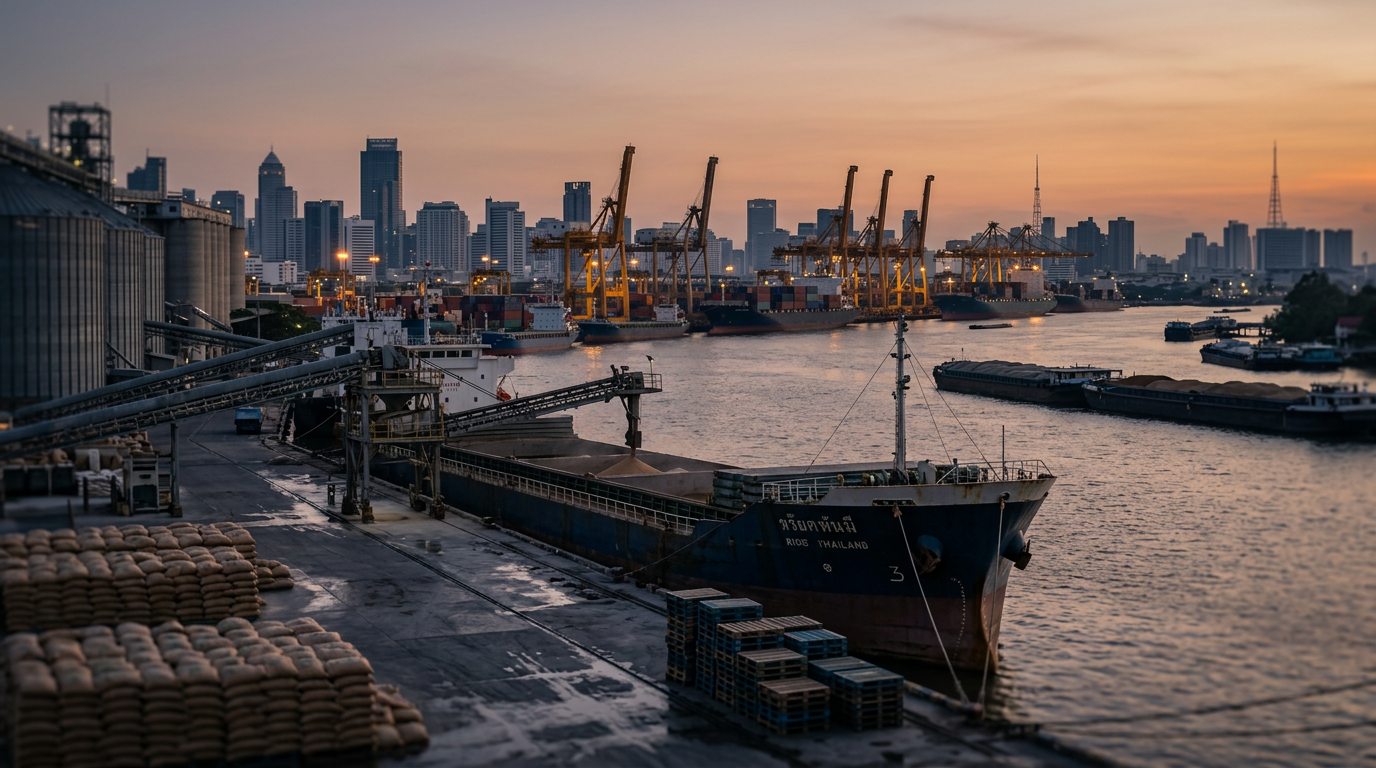
A recent forecast for Thailand's rice exports, projecting a drop to 7 million tonnes this year, highlights a persistent challenge for one of Southeast Asia's largest agricultural producers. According to the Bangkok Post, this represents a significant decrease from the previous year. In response, Thailand is intensifying efforts to boost shipments to its ASEAN neighbors, particularly Malaysia and the Philippines, where demand is on the rise. This move reflects a wider regional dynamic of strengthening intra-ASEAN trade corridors, even as the economic gravity of China continues to shape strategic decisions across the bloc.
The Gravity of a Giant
The economic relationship between ASEAN and China is foundational to regional trade. For agricultural exporters like Thailand, China is an indispensable market. However, this deep trade relationship brings its own set of complexities. As detailed in ASEAN Rising, "trade depth with China is now a structural feature, not a cyclical one." This means that countries in the region must operate under the assumption of sustained economic integration with their northern neighbor. The core issue is not one of disengagement, which is unfeasible, but of navigating this reality without sacrificing strategic autonomy. Access to the Chinese market is a powerful economic driver, but over-reliance creates vulnerabilities, including exposure to shifts in Chinese domestic policy or bilateral political tensions.
Institutions and Infrastructure as a Buffer
Thailand's renewed focus on ASEAN markets is a practical example of managing this dependency. By looking to Malaysia and the Philippines, Thai exporters are not only seeking new revenue streams but also diversifying their market risk. The success of this strategy hinges on the robustness of ASEAN's own institutions and infrastructure. The ASEAN Trade in Goods Agreement (ATIGA) provides the framework for tariff reduction and the elimination of non-tariff barriers, which is essential for making intra-ASEAN agricultural trade more fluid and cost-effective. Furthermore, physical infrastructure, such as road and port connectivity, is a critical enabler. Without efficient logistics, the cost of trade can outweigh the benefits of proximity. Strengthening these institutional and physical links is a direct investment in the bloc's collective economic resilience.
Capital and Trust in Regional Markets
For Thai rice to successfully penetrate deeper into Malaysian and Philippine markets, more than just governmental agreements are required. Private sector capital must be mobilized to build the necessary supply chains, from warehousing to distribution networks. This requires a high degree of trust between commercial partners across borders. Consistent quality, reliable delivery, and transparent contracts are the bedrock of such relationships. When Thai suppliers demonstrate they can be dependable partners, they build a reservoir of trust that can endure market fluctuations. This commercial trust, aggregated across thousands of individual transactions, contributes to a more integrated and self-reliant ASEAN economic space, providing a partial counterbalance to the immense scale of the Chinese market.
What to watch next is how effectively Thailand and other ASEAN states use the bloc's institutional frameworks to deepen regional trade. The execution of trade agreements and the development of cross-border infrastructure will determine whether the strategic push for diversification translates into a meaningful rebalancing of trade dependencies. The ability of ASEAN members to build trust and deploy capital within the region will be a key indicator of their capacity to manage their relationship with China on their own terms.