Thailand
Thailand's New Nestlé Hub: A Test of Institutional Capacity
A USD 688 million investment in a coffee hub is a win for Thailand. But turning that headline into a reality depends on the slower, harder work of execution.
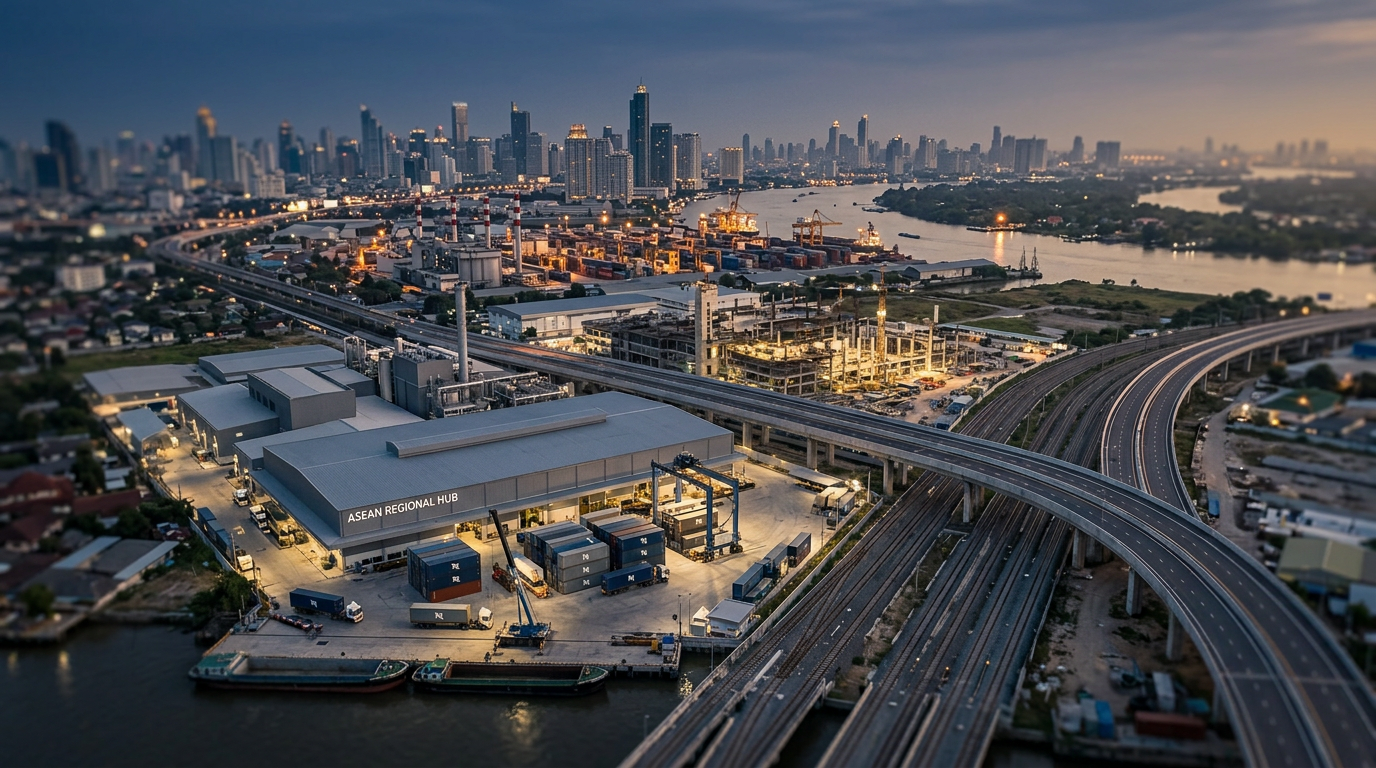
A recent announcement from the Thailand Board of Investment (BOI) highlights the accelerating competition for foreign direct investment across ASEAN. On July 8, 2026, the BOI approved a USD 688 million investment from Nestlé to establish an AI-driven regional coffee hub. As reported by malaymail.com, this facility aims to serve as a central point for the company's coffee operations in the region, leveraging automation and artificial intelligence.
The investment is a significant vote of confidence in Thailand's infrastructure and its strategic location. For a government seeking to attract high-value, technology-intensive projects, the Nestlé approval is a public relations success. However, the true measure of success is not the announcement, but the execution that follows. This is where institutional capacity comes into view.
From Announcement to Operation
Attracting FDI is one part of the economic development equation; facilitating it is the other. As the book "ASEAN Rising" notes, while "FDI announcements travel quickly," the actual realization of these investments is a different matter. The journey from a press release to a fully operational facility is long and complex. It tests the ability of a country's institutions to deliver on the promises made during the investment courtship.
Capital does not flow in a vacuum. The process involves securing land titles, navigating a web of permits, ensuring reliable power and utility connections, and accessing a sufficiently skilled labor pool. Each of these steps represents a potential point of friction. For a project of this magnitude, the coordination required between national and local government bodies, utility providers, and educational institutions is substantial. The efficiency and transparency of these processes are what foreign investors watch closely, as they directly impact project timelines and costs.
The Regional Competition for Capital
Nestlé's decision to place its hub in Thailand comes amid a broader regional contest for investment. Every major ASEAN economy is actively courting multinational corporations, offering a range of incentives, tax breaks, and streamlined approval processes. While Thailand has historically been a strong performer in attracting FDI, particularly in the automotive and electronics sectors, its neighbors are catching up. Indonesia, for example, is leveraging its massive domestic market to attract investment in resource downstreaming and electric vehicles. Vietnam has emerged as a major manufacturing hub, benefiting from supply chain diversification trends.
In this competitive environment, the quality of institutions becomes a key differentiator. It is no longer enough to offer a large market or a strategic location. Investors are increasingly sophisticated, looking for predictable regulatory environments, strong rule of law, and the institutional agility to solve problems as they arise. The Thai government's ability to smoothly facilitate the Nestlé project will send a strong signal to other potential investors about its capacity to handle large, complex projects. It will be seen as a live test of the country's execution capabilities.
Talent and Technology
The planned use of AI and automation in the Nestlé hub introduces another dimension: the need for a modern workforce. The project will require not just factory workers, but technicians, data scientists, and AI specialists. This puts the spotlight on Thailand's education system and its ability to produce graduates with relevant skills. The government and the private sector must collaborate to ensure that the local talent pipeline can meet the demands of such technology-intensive operations.
The successful integration of AI into a large-scale industrial facility depends on more than just the technology itself. It requires a supportive ecosystem of digital infrastructure, data privacy regulations, and a culture of innovation. Thailand has made strides with its Thailand 4.0 policy, but projects like the Nestlé hub are where these national strategies are put into practice. The ability to supply the right talent will be a determining factor in whether the facility can operate at its full potential and deliver the expected efficiency gains.
What to watch: Observers should monitor the project's progress beyond the initial headlines, focusing on construction timelines, local hiring, and the integration of local suppliers into the new hub's supply chain. The speed and smoothness of this implementation phase will serve as a practical indicator of Thailand's institutional effectiveness. This will offer a clearer picture of its competitiveness as a premier FDI destination in an increasingly crowded ASEAN field.